
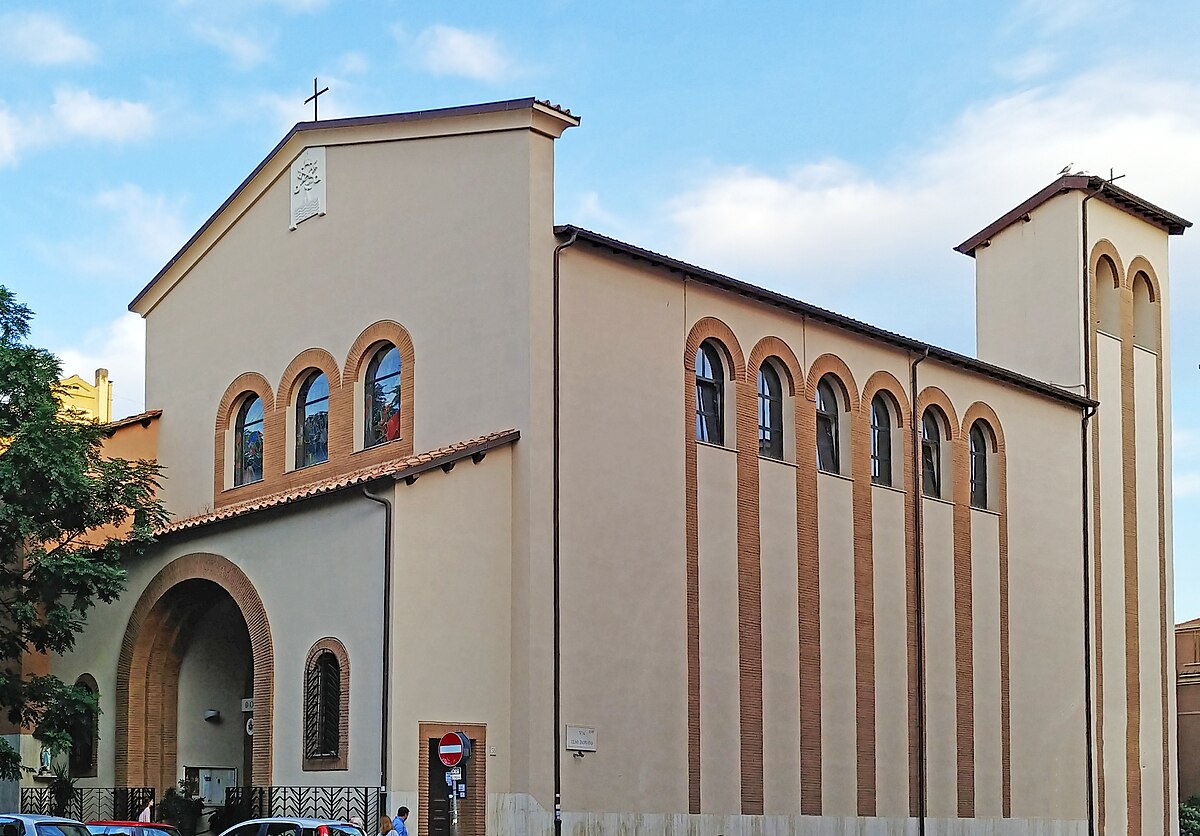
Santa Paola Romana is a figure of historical and religious significance, particularly within the context of early Christian history. Born on May 5, 347 AD, into an aristocratic Roman family, she descended from the illustrious families of the Scipios and the Gracchi. Her life, marked by devout Christian faith and profound personal sacrifices, has earned her a place in the annals of Christian hagiography. This article delves into the life, legacy, and significance of Santa Paola Romana, exploring the key moments that shaped her journey and her lasting impact on Christian tradition.
Early Life and Marriage
Santa Paola Romana was born during the reign of Constantine II, a time when Christianity was beginning to solidify its influence across the Roman Empire. Paola was raised in an environment of privilege and wealth, characteristic of Roman nobility. Her marriage to Toxotius, a Roman nobleman, resulted in the birth of five children: four daughters and one son. Despite her noble birth and the comforts that came with it, Paola’s life would soon be marked by sorrow and spiritual transformation.
At the age of 32, Paola faced a profound personal tragedy—the death of her husband. This event had a devastating impact on her, plunging her into a deep period of mourning and reflection. Seeking solace, she turned to Santa Marcella, a fellow widow, who introduced her to a monastic way of life. This marked the beginning of Paola’s transition from a life of wealth and privilege to one of asceticism and spiritual devotion.
Spiritual Journey and Association with Saint Jerome
One of the most significant influences in Santa Paola Romana’s life was her association with Saint Jerome, one of the most important Christian scholars of the time. After spending time in the desert near Antioch, Jerome returned to Rome, where he was appointed as secretary to Pope Damasus I. In this role, he was responsible for revising the Latin texts of the Bible, an endeavor that would later culminate in the creation of the Vulgate, the authoritative Latin version of the Bible.
During his time in Rome, Jerome became well-known among the Roman aristocracy, particularly among noblewomen. Despite facing criticism and slander, he continued his mission to spread Christian knowledge and teachings. Paola, along with Marcella, became one of his most devoted followers. Their knowledge of Greek, unusual for women of their time, allowed them to engage deeply with the scriptures and the teachings of Jerome. He became their spiritual guide, leading them on a path of intense religious devotion.
Paola’s Family and Personal Sacrifices
Santa Paola Romana’s dedication to her faith extended to her children, particularly her daughters. Her eldest daughter, Blesilla, was noted for her intelligence and quickly became a favored pupil of Jerome. However, Blesilla’s frail health could not withstand the rigors of the ascetic life she adopted, and her untimely death sparked controversy and criticism directed at Jerome. This event was a severe blow to Paola, but it also strengthened her resolve to continue her spiritual journey.
Paola’s second daughter, Paulina, also died young, further adding to Paola’s grief. Eustochium, her third daughter, was the only one to survive into adulthood. Under Jerome’s guidance, Eustochium was educated in the principles of Hebrew philology and committed herself to a life of scholarly virginity, a path that was highly unusual and challenging for women of her time.
The Pilgrimage to the Holy Land
After the death of Pope Damasus, Jerome’s position in Rome became precarious, and he decided to leave the city. In 385 AD, he embarked on a pilgrimage to the Holy Land, accompanied by Paola and several other pious women. This journey was a significant turning point in Paola’s life. Upon reaching Palestine and later Egypt, Paola fully embraced the ascetic lifestyle, dedicating herself to the study of scripture and the establishment of monastic communities.
In Bethlehem, Paola played a crucial role in assisting Jerome with his translation of the Bible into Latin. Her knowledge of Hebrew and her unwavering support were instrumental in this monumental task. Paola also used her considerable wealth to fund the construction of monasteries in Bethlehem—one for men and another for women. These institutions served as centers for Christian learning and spiritual practice, and they were essential in spreading the monastic tradition in the Holy Land.
Final Years and Legacy
Despite her noble origins, Santa Paola Romana’s later years were marked by material poverty. Having spent her wealth on religious endeavors, she faced financial difficulties, yet she remained steadfast in her faith. Paola spent her final years in Bethlehem, where she continued to live a life of rigorous asceticism. She died on January 26, 406 AD, at the age of 59. Her remains were buried in the Basilica of the Nativity in Bethlehem, a testament to her deep connection to the Holy Land.
Santa Paola Romana is venerated as the Patron Saint of Widows, a reflection of her life’s journey from a grieving widow to a revered spiritual figure. Her feast day is celebrated on January 26 each year. Paola’s life is a powerful example of devotion, sacrifice, and the transformative power of faith. Her close association with Saint Jerome and her contributions to the early Christian monastic tradition have left an indelible mark on Christian history.
Historical Context and Influence
The life of Santa Paola Romana must be understood within the broader historical context of the early Christian Church. The 4th century was a period of significant transformation for Christianity, as it transitioned from a persecuted sect to an established religion within the Roman Empire. The conversion of Emperor Constantine and the subsequent Edict of Milan in 313 AD, which granted religious tolerance to Christians, were pivotal in this shift. However, the Church was still in the process of defining its doctrines and practices, and figures like Paola played a crucial role in shaping the spiritual landscape of the time.
Paola’s life also sheds light on the role of women in the early Church. Although women were generally excluded from formal positions of authority, figures like Paola and Marcella demonstrated that women could exert significant influence through their devotion, scholarship, and patronage. Paola’s dedication to monasticism and her support of Jerome’s work underscore the important, yet often overlooked, contributions of women to the development of Christian theology and practice.
Conclusion
Santa Paola Romana’s life is a testament to the profound impact that individual faith and sacrifice can have on the broader religious community. Her journey from a life of privilege to one of poverty and spiritual devotion illustrates the transformative power of Christian belief. As a close associate of Saint Jerome, she played a vital role in the development of early Christian monasticism and the dissemination of Christian teachings.
Her legacy continues to inspire, particularly among those who seek to understand the early Christian Church’s history and the role of women within it. Santa Paola Romana remains a significant figure in Christian history, celebrated for her unwavering faith, her intellectual contributions, and her enduring influence on Christian monasticism.


