
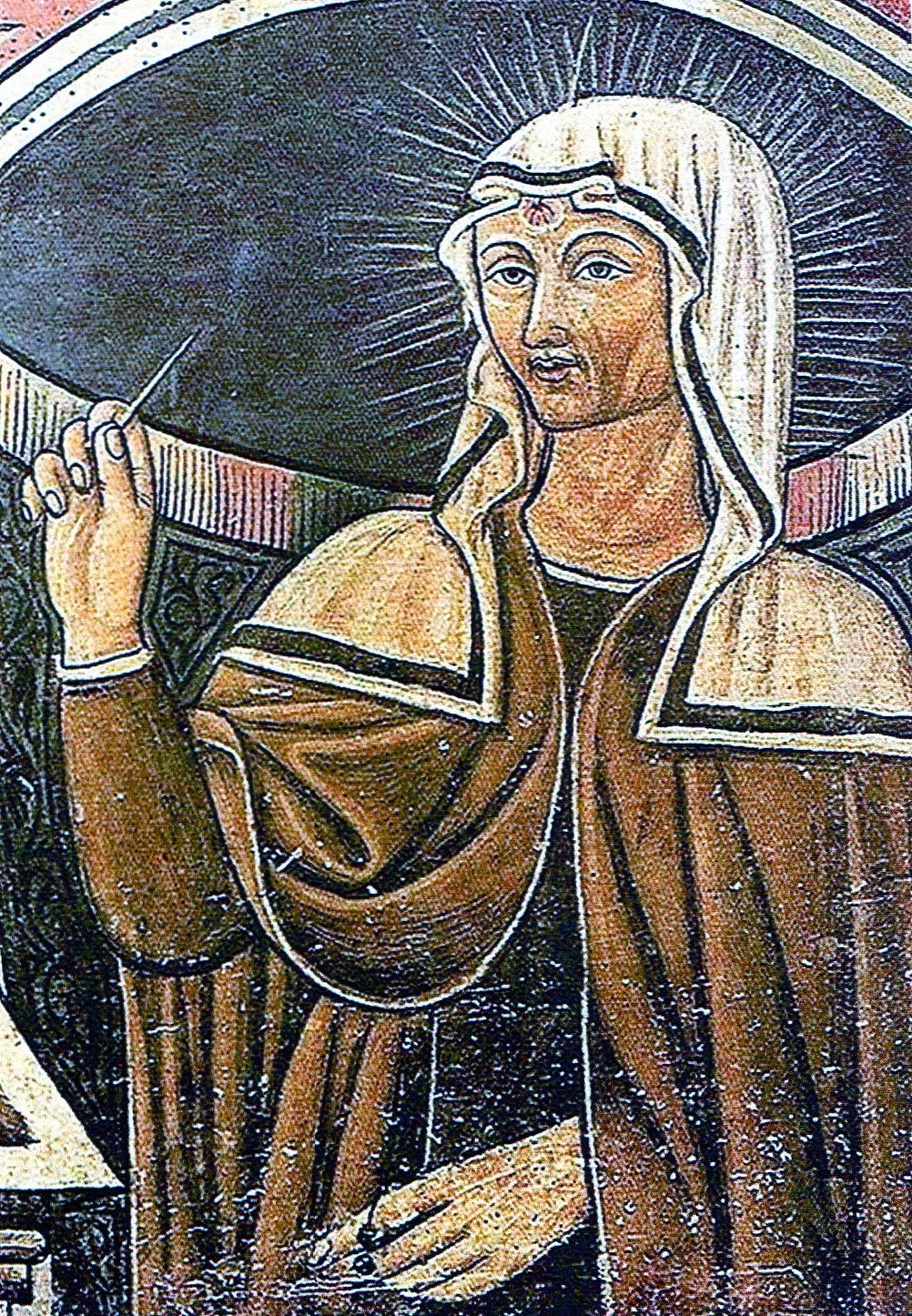
Santa Rita da Cascia, born around 1381 in the small village of Roccaporena near Cascia in Italy, is one of the most venerated saints in the Catholic Church. Known as the “Saint of the Impossible” and the “Advocate of Desperate Cases,” her life story is one of profound faith, immense suffering, and extraordinary devotion. Her journey from a simple peasant girl to a revered saint reflects the deep spiritual and cultural significance she holds within Christian tradition.
Early Life and Background
Santa Rita was born Margherita Lotti, the only child of Antonio Lotti and Amata Ferri. Her parents were deeply religious and well-respected in their community for their role as “peacemakers” in the volatile political environment of the time, which was marked by conflicts between the Guelphs and Ghibellines, two opposing factions in medieval Italy. From an early age, Rita showed signs of spiritual depth, with a strong inclination towards a life devoted to God.
Despite her desire to enter a convent, Rita obeyed her parents’ wishes and married Paolo di Ferdinando Mancini, a young man from a prominent family. Paolo, although well-intentioned, had a fiery and violent temperament, a stark contrast to Rita’s gentle nature. Despite these challenges, Rita was a devoted wife, and through her patience and love, she managed to soften Paolo’s character, leading him towards a more peaceful and devout life.
Tragedy and Loss
Rita and Paolo had two sons, Giacomo Antonio and Paolo Maria. For a time, Rita’s life was filled with the simple joys of family, prayer, and the fulfillment of her duties as a wife and mother. However, this period of relative peace was shattered by a tragic event that would shape the rest of her life. Paolo was murdered in an act of vendetta, a common occurrence in the tumultuous social landscape of medieval Italy.
The loss of her husband was devastating for Rita, but it was her sons’ response to the murder that caused her the greatest anguish. Influenced by the culture of revenge that permeated their society, her sons sought to avenge their father’s death. Desperate to prevent them from committing a grave sin, Rita prayed fervently that God would take her sons’ lives rather than allow them to succumb to the cycle of violence. Her prayers were answered, and both sons died of natural causes within a year of their father’s death.
This sequence of events left Rita alone in the world, bereft of her family but with her faith unshaken. It was at this point that she sought to fulfill her long-held desire to enter a convent and dedicate her life entirely to God.
A Life Devoted to Faith
Rita’s path to the religious life was not an easy one. She sought admission to the Augustinian convent of Santa Maria Maddalena in Cascia, but was initially refused. The nuns were reluctant to accept a widow and mother, particularly one whose family had been involved in such violent disputes. However, Rita’s persistence, coupled with her acts of charity and peacemaking, eventually won them over, and she was accepted into the convent in 1417.
For the next 40 years, Rita lived a life of deep spirituality, penance, and service. She was known for her humility, obedience, and profound love of God. Her devotion was further manifested through various mystical experiences, the most significant of which occurred one Good Friday. After participating in the traditional procession of the Christ’s Passion, Rita received the stigmata—a wound on her forehead, symbolizing a thorn from Christ’s crown. This wound remained with her for the rest of her life, a constant reminder of her union with Christ’s suffering.
Mystical Experiences and Miracles
Santa Rita’s life in the convent was marked by numerous mystical experiences, which contributed to her growing reputation for holiness. Her stigmata was not merely a physical wound but a profound spiritual experience that connected her to the Passion of Christ. The wound caused her intense pain, but Rita bore it with remarkable patience and even joy, seeing it as a gift that allowed her to share in Christ’s suffering.
In addition to the stigmata, several miracles were attributed to Rita during her lifetime and after her death. These miracles, often related to her intercession in desperate and seemingly impossible situations, solidified her reputation as a powerful advocate for those in need. One of the most famous miracles occurred shortly before her death when a cousin visited her and asked if there was anything she wanted. Rita requested a rose from her garden, despite it being winter. The cousin, skeptical, went to the garden and found a single blooming rose, which she brought to Rita. This event is commemorated each year on her feast day, May 22, with the blessing of roses.
Canonization and Legacy
Santa Rita’s life of extraordinary faith and her reputation for miracles led to her veneration as a saint almost immediately after her death on May 22, 1457. However, it was not until May 24, 1900, that Pope Leo XIII officially canonized her, recognizing her as a saint of the Catholic Church. Her canonization was a significant event, affirming her status as a model of Christian virtue and as a powerful intercessor for those in desperate situations.
Today, Santa Rita is one of the most beloved saints in the Catholic tradition, especially in Italy and among Italian communities worldwide. She is often invoked as the patron saint of impossible causes, marital difficulties, and parenthood, reflecting the trials she endured in her own life. Her shrine in Cascia, where her relics are housed, is a major pilgrimage site, attracting thousands of visitors each year who seek her intercession and offer prayers for her help in their own struggles.
The Cultural and Historical Impact of Santa Rita
Santa Rita’s life and legacy extend far beyond her role as a religious figure. She is a symbol of hope and resilience, particularly for those who find themselves in seemingly insurmountable circumstances. Her ability to forgive those who wronged her and her unwavering faith in the face of immense personal suffering resonate deeply with people across cultures and generations.
In the broader context of the Catholic Church, Santa Rita’s story is a powerful example of the transformative power of faith. Her life illustrates the Christian ideal of forgiveness and the belief that divine grace can lead individuals to overcome the most difficult challenges. This message is particularly relevant in today’s world, where many people struggle with issues such as family conflict, loss, and the search for meaning in suffering.
Santa Rita’s veneration is also a testament to the role of women in the history of the Church. Despite living in a time when women’s roles were largely confined to the domestic sphere, Rita’s life and her recognition as a saint highlight the significant spiritual contributions that women have made throughout history. Her story serves as an inspiration to countless women who look to her as a model of strength, compassion, and faith.
Modern Devotion and Influence
The devotion to Santa Rita remains strong in the contemporary world. Her feast day on May 22 is celebrated with great fervor in many parts of the world, particularly in Italy, Spain, and Latin America. The ritual of blessing roses on her feast day is a poignant reminder of her connection to the miraculous and her enduring presence in the lives of her devotees.
In addition to her role as a religious figure, Santa Rita has been the subject of numerous works of art, literature, and film. Her life story, with its dramatic elements of love, loss, and redemption, continues to captivate the imagination of artists and writers. These cultural representations further cement her status as a figure of enduring significance in both religious and secular contexts.
The shrine in Cascia remains a focal point for devotion to Santa Rita. Pilgrims from around the world visit the sanctuary, seeking her intercession and drawing inspiration from her life. The site has become a place of reflection and spiritual renewal, where people come to connect with the legacy of a woman who, despite facing incredible hardships, remained steadfast in her faith.
Conclusion
Santa Rita da Cascia’s life is a powerful testament to the enduring power of faith, forgiveness, and perseverance. Her journey from a small village in Italy to the altars of churches around the world reflects the profound impact that one person’s faith can have on the world. As the patron saint of impossible causes, her legacy continues to offer hope and solace to millions who turn to her in their moments of greatest need.
Her story is not just a tale of religious devotion but also a narrative of human resilience and the capacity to overcome adversity through faith and love. Santa Rita’s life and legacy remind us that even in the darkest of times, there is always the possibility of grace and redemption.


