
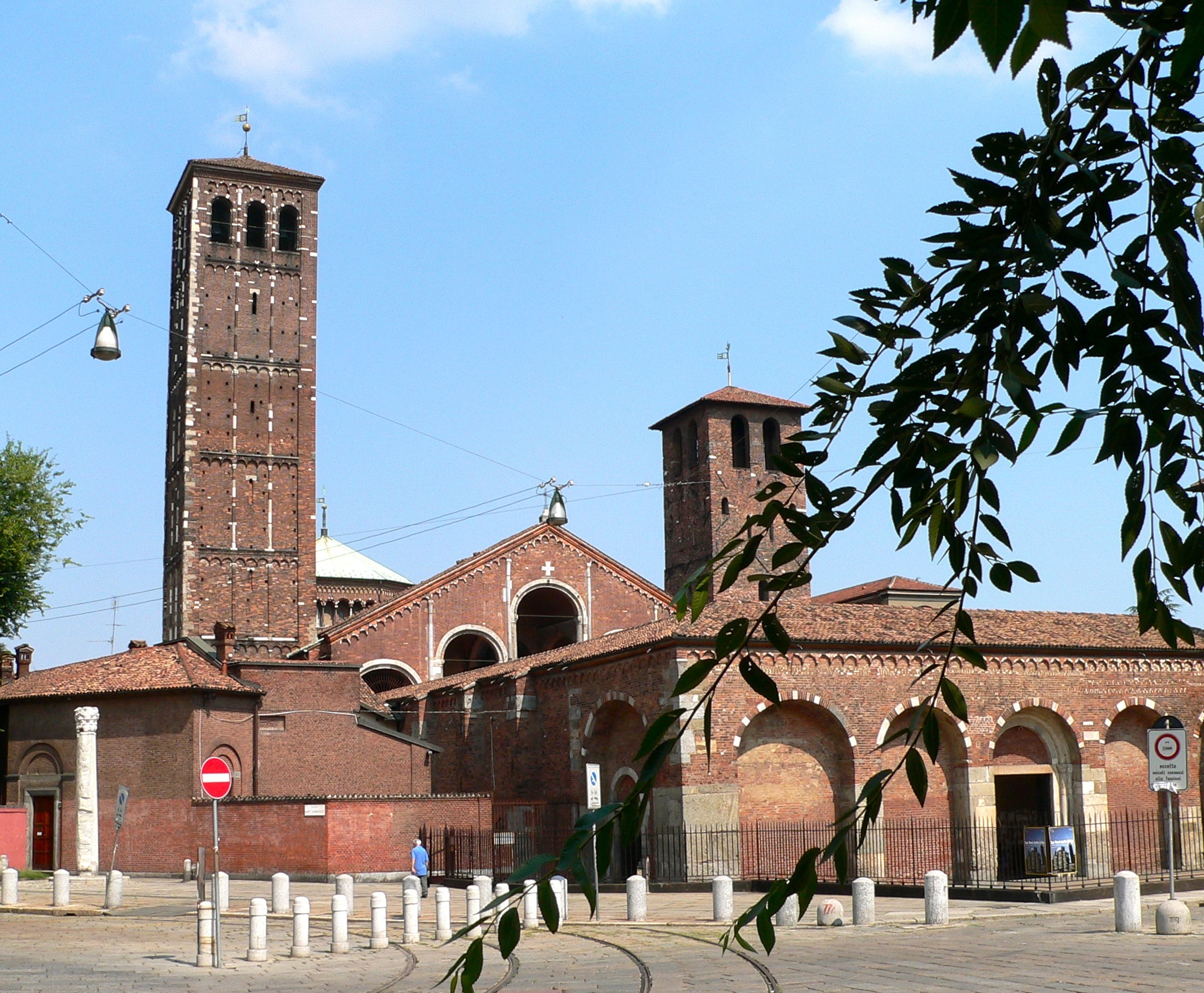
Sant’Ambrogio, known in Latin as Aurelius Ambrosius, was born around 330 AD in Trier, a city in what is now Germany, to a Roman family. He is one of the most revered figures in Christian history, remembered for his profound impact on the development of the Christian church and his role in shaping Christian doctrine during a pivotal time in the Roman Empire. As the Bishop of Milan, he played a crucial role in the early church’s efforts to establish itself amidst various theological disputes and political pressures. This article delves into the life of Sant’Ambrogio, exploring his early years, rise to prominence, significant contributions, and lasting legacy in the Christian faith.
Early Life and Background
Sant’Ambrogio was born into a Roman family of considerable standing. His father was a high-ranking official, the Prefect of Gaul, a role that involved overseeing the administration of a vast territory within the Roman Empire. From a young age, Ambrogio was exposed to the complexities of Roman governance and the responsibilities that came with power. This upbringing played a crucial role in shaping his character and his future approach to leadership within the Christian church.
Legend has it that when Ambrogio was still an infant, a swarm of bees settled on his face while he lay in his crib. Remarkably, the bees did not sting him but instead left behind a drop of honey. His father interpreted this unusual event as an omen of his son’s future eloquence and sweetness of speech, a prophecy that many believe was fulfilled through his later oratory and writings.
After the death of his father, Ambrogio returned to Rome with his family, where he pursued an education in rhetoric, a critical skill for anyone aspiring to public office in the Roman Empire. His education in Rome was comprehensive, covering law and classical literature, and it prepared him well for a career in public service. Ambrogio soon began practicing law and served in administrative roles in the Roman provinces of Emilia and Liguria.
Rise to Prominence: Becoming Bishop of Milan
Ambrogio’s rise to prominence within the Christian church was as unexpected as it was transformative. In 374 AD, while serving as the governor of Emilia and Liguria, he was present in Milan during a heated dispute between Catholics and Arians over the appointment of a new bishop. Arians, who believed that Christ was created by God and not co-eternal with Him, were at odds with the Catholics, who upheld the doctrine of the Trinity, which posits that the Father, Son, and Holy Spirit are of the same substance and eternally existent.
As governor, Ambrogio was tasked with maintaining order during this contentious period. His attempts to mediate between the opposing factions were so admired that, despite being a catechumen (a Christian not yet baptized), he was unexpectedly acclaimed by the people as the new Bishop of Milan. Ambrogio initially resisted the appointment, feeling unworthy and unprepared for such a significant spiritual role. He even attempted to flee Milan to avoid the responsibility. However, after a period of reflection and encouragement from Christian leaders, he accepted the role, seeing it as a divine calling.
Ambrogio immediately began a rigorous path of theological study and preparation for his new role. He was baptized, ordained, and consecrated as bishop on December 7, 374 AD. This date is now commemorated as his feast day, celebrating his profound impact on the church and Christian doctrine.
Ambrogio’s Impact on Christianity
As Bishop of Milan, Ambrogio quickly emerged as a central figure in the Christian church, renowned for his intellect, eloquence, and unwavering commitment to the faith. He became a staunch defender of the Nicene Creed, which affirms the doctrine of the Trinity and rejects Arianism. His writings and sermons often focused on theological clarity and pastoral care, and he played a pivotal role in shaping the church’s approach to doctrine and discipline.
Ambrogio’s influence extended beyond theology. He was a skilled diplomat and advisor, engaging directly with Roman emperors and using his position to influence state policy in favor of the church. His relationship with Emperor Gratian, for example, was instrumental in the emperor’s decision to remove the altar of the goddess Victory from the Roman Senate, a significant step in the declining status of paganism within the empire. Ambrogio also persuaded Emperor Theodosius I to adopt Catholic Christianity as the official state religion of the Roman Empire, a monumental shift that would shape the future of Christianity in Europe and beyond.
One of Ambrogio’s most famous acts as bishop was his confrontation with Emperor Theodosius I following the massacre of 7,000 people in Thessalonica in 390 AD. Ambrogio publicly rebuked the emperor, insisting that he perform public penance for his actions. This bold stance underscored the authority of the church over even the highest temporal powers, a precedent that would have far-reaching implications for the relationship between church and state in the centuries to come.
Miracles and Legends Surrounding Sant’Ambrogio
Sant’Ambrogio’s life is surrounded by numerous legends and miracles that reflect his status as a revered figure in Christian history. One such legend speaks of Ambrogio discovering a nail from the True Cross, the cross upon which Jesus Christ was crucified. This relic was believed to have been embedded in a horse’s bridle, which Ambrogio identified while passing by a blacksmith struggling to forge it. Today, a nail, said to be from the True Cross, is housed in the altar of Milan’s Cathedral, known as the Duomo, serving as a powerful symbol of Ambrogio’s spiritual insight and connection to the divine.
Another popular legend recounts Ambrogio’s encounter with the devil at a Roman column in Milan. According to the tale, the devil, frustrated by Ambrogio’s holiness, tried to tempt him but ended up ramming his horns into the column in a fit of rage. The column, known as the “Devil’s Column,” still stands today outside the Basilica of Sant’Ambrogio, with two distinct holes that are said to emit a sulfuric smell and echo the sounds of hell when one places their ear against them. This story is emblematic of Ambrogio’s reputed ability to resist evil and protect his flock from spiritual harm.
Perhaps the most dramatic legend associated with Ambrogio is his miraculous intervention in the Battle of Parabiago in 1339, long after his death. According to the legend, Ambrogio appeared on the battlefield on a white horse, wielding a sword, and led the Milanese troops to victory against the forces of Lodrisio Visconti. This miraculous appearance is believed to have turned the tide of the battle and is celebrated as a sign of Ambrogio’s enduring spiritual presence and protection over Milan.
The Cult of Sant’Ambrogio
Sant’Ambrogio died on April 4, 397 AD, in Milan, but his influence did not end with his death. He left behind a significant legacy of theological writings, hymns, and liturgical practices that continue to shape Christian worship and doctrine. As one of the four original Doctors of the Church, along with Saints Augustine, Jerome, and Gregory the Great, Ambrogio’s teachings have been foundational to the development of Western Christianity.
Ambrogio’s feast day, celebrated on December 7, marks the anniversary of his ordination as Bishop of Milan and is a major celebration in the city. He is the patron saint of Milan, where he is venerated alongside other local saints such as Saint Charles Borromeo and Saint Galdino. His relics are housed in the Basilica of Sant’Ambrogio in Milan, which remains a major pilgrimage site and a testament to his enduring influence.
Ambrogio is also considered the patron saint of beekeepers, a title that reflects the legend of the bees that foretold his future eloquence. This association with bees symbolizes Ambrogio’s role as a guardian of the faith and a cultivator of wisdom and knowledge within the church.
Ambrogio’s Contributions to Christian Liturgy and Music
One of Sant’Ambrogio’s most lasting contributions to the Christian tradition is his influence on liturgical practices and church music. He is credited with developing a distinct form of chant, known as Ambrosian chant, which is still used in the liturgy of the Ambrosian Rite, practiced primarily in the Archdiocese of Milan. This form of chant, characterized by its simplicity and solemnity, was intended to foster a spirit of worship and contemplation among the faithful.
Ambrogio was also a prolific hymn writer, and several hymns attributed to him are still sung in Christian liturgies today. His hymns were designed to be both theological and didactic, teaching the core tenets of the faith while encouraging personal devotion. The most famous of these is the “Te Deum,” a hymn of praise that has become a staple of Christian worship services worldwide.
Legacy and Influence
The legacy of Sant’Ambrogio extends far beyond his lifetime. He is remembered not only for his theological writings and liturgical contributions but also for his role in shaping the relationship between the church and the state, a dynamic that would have profound implications for the development of Western civilization. His insistence on the moral authority of the church over secular rulers established a precedent that would influence the power dynamics between the papacy and European monarchies for centuries.
Ambrogio’s writings, particularly his treatises on ethics and Christian living, have been influential in the development of Christian moral theology. His emphasis on humility, charity, and the moral responsibilities of both clergy and laity set a standard for Christian conduct that continues to resonate within the church today.
In Milan, Ambrogio’s influence is still felt strongly. The city’s identity as a center of Catholic faith and culture is deeply intertwined with his legacy. The Basilica of Sant’Ambrogio, built over his burial site, remains one of Milan’s most important churches and a center of pilgrimage, reflecting the enduring devotion to this remarkable bishop.
Conclusion
Sant’Ambrogio’s life and work represent a critical period in the history of Christianity, a time when the church was finding its place in a rapidly changing world. His intellectual rigor, pastoral care, and unwavering commitment to the faith helped to shape the future of Christianity and established standards of conduct and belief that continue to influence the church today. Through his writings, hymns, and the stories of his life and miracles, Sant’Ambrogio remains a powerful figure of inspiration and guidance, reminding us of the enduring power of faith, wisdom, and courage in the face of adversity.


