
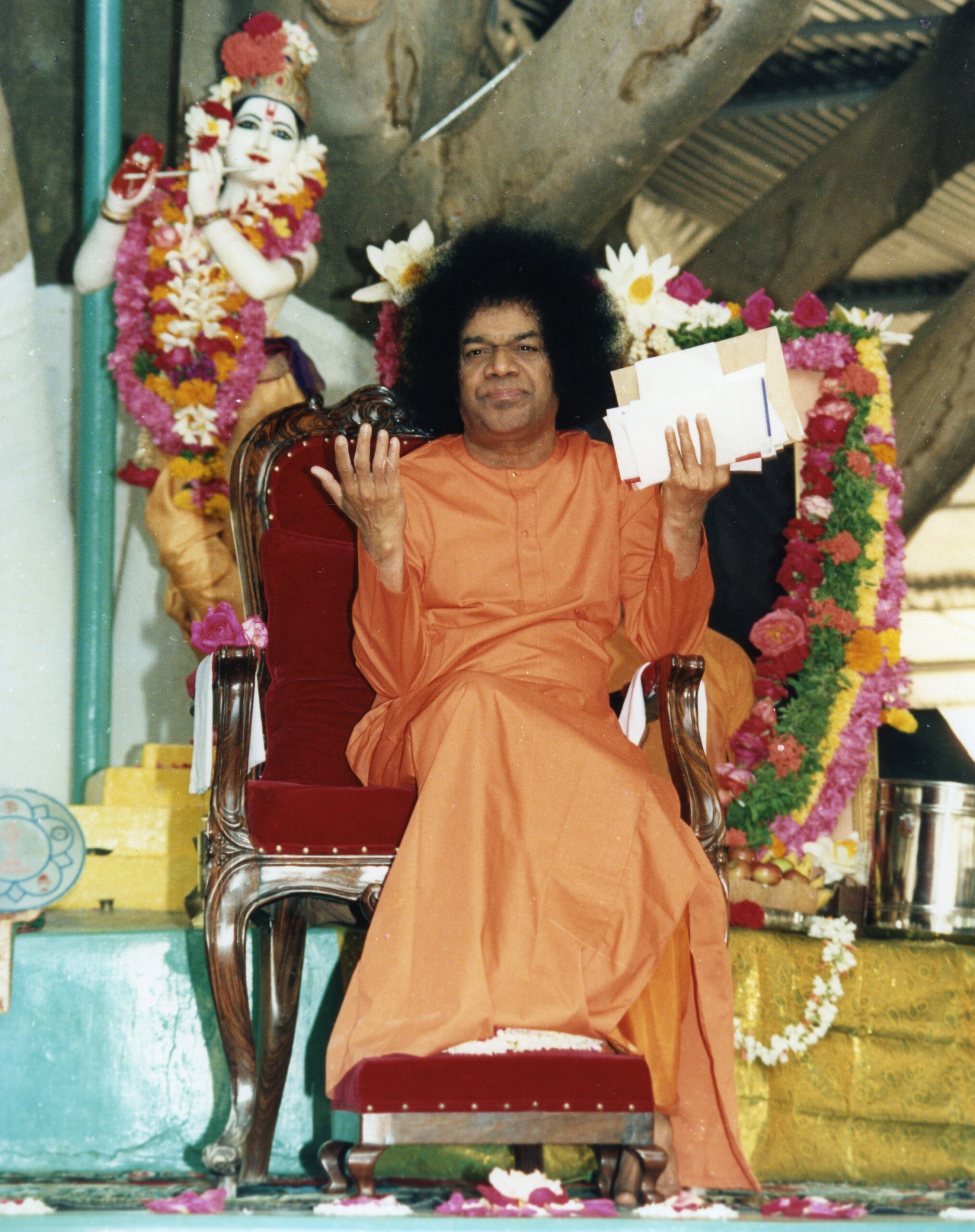
Sathya Sai Baba, born Sathya Narayana Raju Ratnakaram on November 23, 1926, in the small village of Puttaparthi in Andhra Pradesh, Southern India, is a figure whose influence and teachings have resonated globally, inspiring millions. His life, though rooted in the traditions of India, extends beyond cultural and national boundaries, earning him a unique place in both spiritual and popular contexts.
Early Life and Divine Claim
Sathya Sai Baba’s early life was steeped in the spiritual traditions of his homeland. At the tender age of 14, he made a profound and bold declaration: he was the reincarnation of Shirdi Sai Baba, a revered spiritual figure who had passed away in 1918. This claim was not just a momentary statement; it was the foundation of his identity, as he went on to identify himself as the second incarnation of Kalki, the avatar of the Kali Yuga, a concept deeply rooted in Hindu eschatology.
His proclamation was met with a mixture of awe, skepticism, and fervent devotion. In a land where spirituality and mysticism are interwoven with daily life, such a declaration held significant weight. Sathya Sai Baba’s followers grew rapidly, drawn not only by his spiritual teachings but also by the miracles he was reported to perform.
Spiritual Teachings and Philosophy
The core of Sathya Sai Baba’s teachings centers around the belief that all humans are inherently divine. He emphasized the importance of self-realization, urging his followers to rediscover their innate divinity. His teachings, while rooted in Hindu philosophy, were universal in their appeal, transcending religious boundaries. Sathya Sai Baba often spoke about the fundamental unity of all religions, advocating for the understanding that all paths lead to the same ultimate truth.
One of his key messages was the importance of love and service to humanity. He taught that true spirituality is expressed through selfless service to others. This belief was not just preached; it was practiced and institutionalized through various initiatives that he spearheaded during his lifetime.
Grandi Opere Sociali (Great Social Works)
Sathya Sai Baba’s teachings were not confined to spiritual discourses; they manifested in tangible social projects that had a profound impact on millions of lives. Among his most significant contributions were the establishment of the Sathya Sai Institute of Higher Learning, the Sri Sathya Sai Institute of Higher Medical Sciences, and the Sathya Sai Drinking Water Project.
-
Sathya Sai Institute of Higher Learning: This educational institution was founded with the aim of providing holistic education that integrates secular knowledge with spiritual wisdom. The institution emphasizes character development alongside academic excellence, embodying Sai Baba’s belief that education should not only prepare individuals for professional success but also for ethical and spiritual living.
-
Sri Sathya Sai Institute of Higher Medical Sciences: Sai Baba’s vision for healthcare was equally ambitious. He believed that healthcare should be accessible to all, regardless of economic status. To this end, he established hospitals that offer advanced medical treatments free of cost. These institutions are not just medical facilities; they are embodiments of his philosophy of selfless service.
-
Sathya Sai Drinking Water Project: Access to clean drinking water is a fundamental human right, and recognizing this, Sathya Sai Baba launched an ambitious project to provide safe drinking water to millions of people in the drought-prone areas of Andhra Pradesh. This project, which continues to benefit countless individuals, stands as a testament to his commitment to addressing basic human needs.
Miracles and Controversies
Sathya Sai Baba’s fame in the West was significantly bolstered by the media’s focus on his reported miracles. These included materializations of objects, miraculous healings, and other supernatural phenomena. While these acts drew a significant following, they also attracted skepticism and criticism, with detractors questioning the authenticity of these miracles.
Interestingly, Sathya Sai Baba himself often downplayed the importance of these miracles. He described them as mere tools to attract people’s attention, stating that his true miracle was the transformation of the human heart. This distinction is crucial in understanding his approach to spirituality, where the emphasis was always on inner transformation rather than external displays of power.
Global Influence and Legacy
Sathya Sai Baba’s influence extended far beyond the borders of India. His message of love, unity, and selfless service found resonance in diverse cultures and communities around the world. The Sathya Sai Organization, which he founded, has branches in numerous countries, promoting his teachings through service activities, educational programs, and spiritual gatherings.
His legacy is particularly strong in the area of interfaith dialogue. In a world often divided by religious differences, Sathya Sai Baba’s teachings advocate for harmony and understanding between different faiths. He emphasized that all religions are valid paths to the same divine source, a message that has gained him followers from various religious backgrounds.
Final Days and Passing
In the final years of his life, Sathya Sai Baba’s health began to decline. In March 2011, he was hospitalized in critical condition at a facility that he himself had established. Despite the best efforts of his medical team, Sathya Sai Baba passed away on April 24, 2011, at the age of 85.
His passing marked the end of an era for his devotees, but his teachings and the institutions he founded continue to thrive. The impact of his life’s work is seen in the ongoing operations of the educational, medical, and humanitarian projects he initiated.
Historical Context and Broader Impact
To fully appreciate Sathya Sai Baba’s impact, it is essential to consider the broader historical and cultural context of India during his lifetime. Born in the early 20th century, during a period of significant social and political upheaval in India, Sathya Sai Baba’s message of spiritual unity and service to humanity resonated with a population that was grappling with the challenges of colonialism, independence, and modernization.
His emphasis on education and healthcare as fundamental human rights was particularly revolutionary in a country where access to these services was often limited by socioeconomic status. By providing free education and healthcare, Sathya Sai Baba challenged the prevailing norms and set new standards for what was possible in terms of social welfare.
Moreover, his teachings on the unity of all religions came at a time when India was experiencing religious tensions. His message of tolerance and understanding was not just spiritual but also deeply practical, offering a path to peaceful coexistence in a diverse society.
Conclusion
Sathya Sai Baba remains a figure of immense influence, both in India and globally. His teachings, centered on love, service, and the divinity of all beings, continue to inspire millions. While his life was not without controversy, the enduring legacy of his work in education, healthcare, and social welfare is undeniable.
As we reflect on his life and contributions, it is clear that Sathya Sai Baba’s message is as relevant today as it was during his lifetime. In a world that often seems divided, his teachings on the unity of all religions and the importance of selfless service offer a powerful antidote to the challenges we face. His life serves as a reminder that true spirituality transcends ritual and dogma, focusing instead on the transformative power of love and compassion.


