
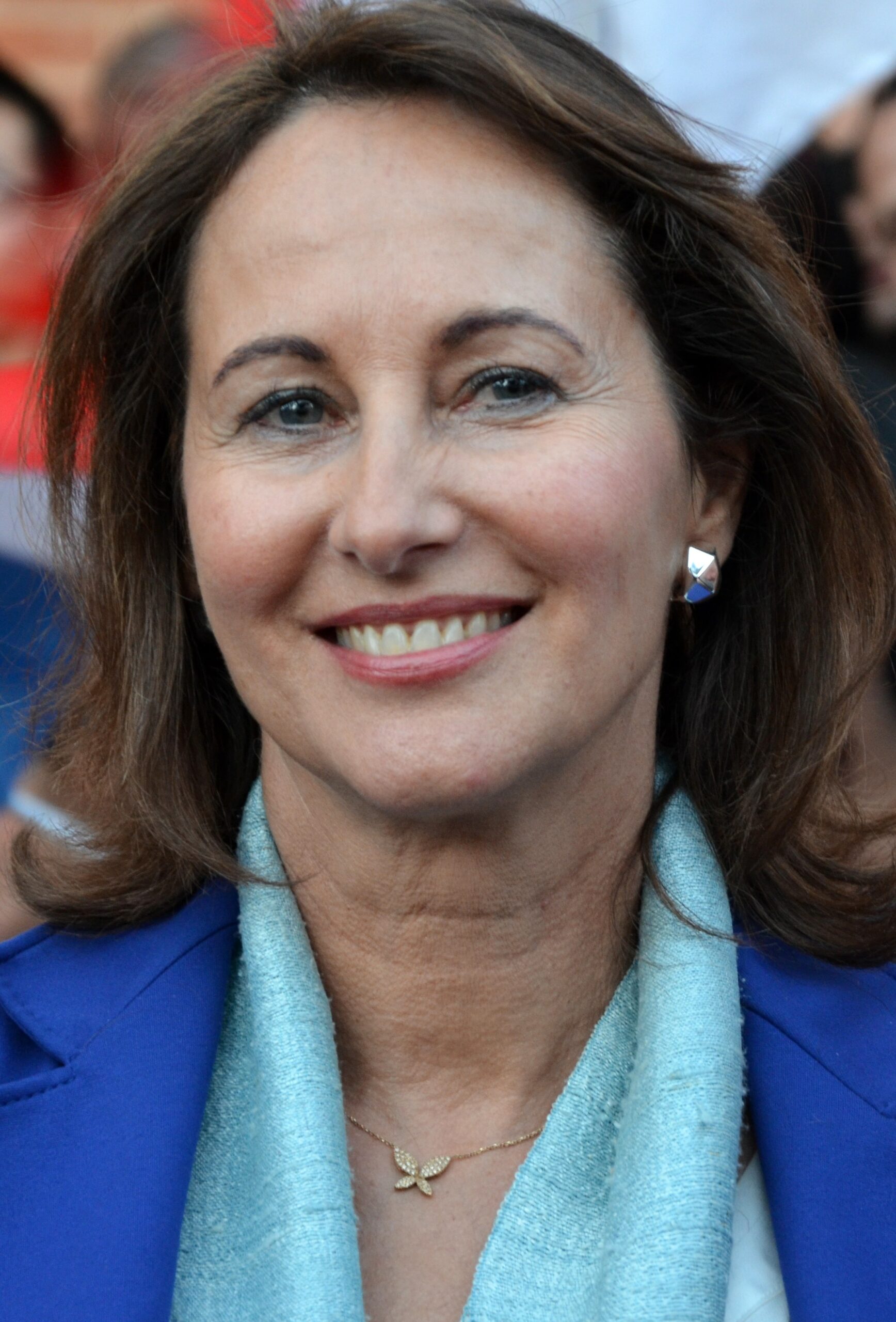
Ségolène Royal, born Marie-Ségolène Royal on September 22, 1953, in Dakar, Senegal, is a prominent French politician known for her deep influence in French politics, especially within the Socialist Party. Royal’s life and career are marked by her resilience, groundbreaking achievements, and her role as a powerful female figure in a predominantly male political landscape. This article delves into the life, career, and legacy of Ségolène Royal, exploring her journey from a military upbringing in Senegal to her candidacy for the French presidency in 2007.
Early Life: Military Upbringing and Education
Ségolène Royal’s early life was shaped by her family’s military background. Born in Dakar, then a part of French West Africa, she was the daughter of Colonel Jacques Royal, a deeply conservative and devout Catholic, and Hélène Dehaye, a passionate botanist who struggled with the limitations imposed by her husband’s authoritarian nature. Royal was the fourth of eight children, growing up in a strict household influenced by her father’s traditional values.
In 1960, when Royal was just seven years old, her family moved to Martinique, where she attended school run by the nuns of the Saint-Joseph de Cluny congregation in Fort-de-France. This early education instilled in her a strong sense of discipline and resilience, qualities that would later define her political career.
The family returned to France in 1964, settling in the small town of Chamagne in the Vosges region of Lorraine. Here, Royal excelled in her primary and secondary studies, attending a strict all-girls Catholic school in Épinal, as per her father’s wishes. Despite the conservative environment, Royal developed a strong desire to pursue higher education, particularly in the fields of law and economics.
Breaking Away: Higher Education and Legal Battles
Ségolène Royal’s determination to pursue a university education was met with strong opposition from her father, who did not believe that women should pursue higher education. However, Royal’s resolve was unshakable. In 1968, she declared her intention to study law and economics at the University of Nancy, a decision that set her on a path of defiance against her father’s conservative beliefs.
Royal’s parents separated during this time, with her mother leaving the family home due to Jacques Royal’s authoritarian behavior. This separation resulted in financial difficulties, but Royal was determined to support herself through her studies. She worked various jobs, including as a bookseller in Lorraine and later in Dublin during the summer of 1971.
In a bold move, Royal decided to take legal action against her father for refusing to grant her mother a divorce, which was intended to deprive her of financial support. The case, which Royal won only after her father’s death in 1981, showcased her early commitment to justice and equality, values that would later become central to her political platform.
Academic and Political Ascent: Sciences Po and ENA
After earning her law degree from the University of Nancy, Ségolène Royal continued her academic journey at the prestigious Institut d’Études Politiques de Paris, commonly known as Sciences Po, in 1975. This institution has produced many of France’s top political leaders, and Royal was no exception. Her time at Sciences Po provided her with a solid foundation in political science and public administration.
In 1978, Royal took the next significant step in her career by enrolling at the École Nationale d’Administration (ENA), the most elite graduate school in France, responsible for training the nation’s top civil servants and political leaders. ENA was where Royal’s political ambitions truly began to take shape. During her time at ENA, she met François Hollande, who would later become a prominent figure in French politics and her long-term partner.
Royal and Hollande’s relationship blossomed during their time at ENA, and they went on to have four children together. Their partnership, both personal and political, would become a significant aspect of Royal’s life and career.
Early Political Career: From Magistrate to Adviser
Upon completing her education at ENA in 1980, Ségolène Royal chose a career in the judiciary, becoming an administrative magistrate. However, her path soon diverged towards politics when she caught the attention of Jacques Attali, a close adviser to President François Mitterrand. Recognizing Royal’s potential, Attali appointed her as a technical adviser at the Élysée Palace, where she served from 1982 to 1988, focusing on youth, sports, and later social affairs.
Royal’s time at the Élysée Palace was a formative period in her political career, allowing her to gain valuable experience in governance and public administration. It was during this time that she fully embraced the principles of the Socialist Party, aligning herself with its ideals of social justice, equality, and progressive change.
Entering the Political Arena: Deputy and Ministerial Roles
In 1988, François Mitterrand, then President of France, encouraged Ségolène Royal to run for a parliamentary seat in the Deux-Sèvres department. Despite the region being a stronghold of the right, Royal won the election, marking the beginning of her legislative career. Her victory was a testament to her growing popularity and her ability to connect with voters across the political spectrum.
As a deputy, Royal quickly made a name for herself by championing various social causes. She fought against violence, particularly domestic violence, and was a vocal advocate for children’s rights. Her efforts in securing the designation of origin for goat cheese “chabichou” and promoting the recognition of local livestock breeds also highlighted her commitment to protecting regional interests.
Royal’s success as a deputy led to her appointment as Minister of the Environment in 1992 under Prime Minister Pierre Bérégovoy. During her tenure, she implemented significant environmental policies, including measures to protect natural reserves and reduce pollution. Her work earned her widespread recognition and solidified her reputation as a capable and dedicated public servant.
A Rising Star: Ministerial Success and Regional Leadership
After serving as Minister of the Environment, Ségolène Royal continued to climb the political ladder. From 1997 to 2002, under Prime Minister Lionel Jospin, she held various ministerial positions, including Minister for School Education and Minister for Family and Childhood. In these roles, Royal focused on improving the French education system, promoting gender equality, and enhancing social services for families.
One of Royal’s most notable achievements during this period was her work on gender equality. She introduced policies aimed at increasing the representation of women in government and business, making her a pioneer in the fight for gender parity in French politics.
In 2004, Royal took on a new challenge by running for and winning the presidency of the Poitou-Charentes region. Her leadership in this region earned her the nickname “La Zapatera” (the female Zapatero), in reference to the progressive Spanish Prime Minister José Luis Zapatero. Like Zapatero, Royal was known for her commitment to social justice, environmental sustainability, and progressive reforms.
The 2007 Presidential Campaign: Breaking Barriers
Ségolène Royal’s political career reached its zenith in 2006 when she announced her candidacy for the French presidency. Running as the Socialist Party’s nominee, Royal became the first woman in French history to reach the second round of a presidential election, a groundbreaking achievement that shattered long-standing gender barriers in French politics.
Royal’s campaign was marked by her emphasis on social justice, environmental sustainability, and participatory democracy. She advocated for policies aimed at reducing income inequality, expanding access to education and healthcare, and promoting renewable energy. Her campaign also focused on involving citizens in the decision-making process, a novel approach that resonated with many voters.
In the first round of the 2007 presidential election, Royal secured over 9.5 million votes, advancing to the second round against the center-right candidate, Nicolas Sarkozy. Despite a hard-fought campaign, Royal ultimately lost to Sarkozy, who won 53% of the vote. While her defeat was a disappointment, her candidacy marked a significant moment in French history, demonstrating that a woman could compete at the highest levels of political power.
Post-Presidential Campaign: Continued Influence and Leadership
Following her loss in the 2007 presidential election, Ségolène Royal remained an influential figure in the Socialist Party and French politics. In 2008, she ran for the position of the party’s First Secretary, aiming to succeed her former partner, François Hollande. In a closely contested election, Royal narrowly lost to Martine Aubry by just 102 votes, a result that highlighted her enduring influence within the party.
Despite this setback, Royal continued to play a prominent role in French politics. She remained active in the Socialist Party, advocating for progressive policies and supporting various social causes. Her commitment to environmental issues, in particular, remained a central focus of her political work.
Personal Life and Legacy
Ségolène Royal’s personal life has often been intertwined with her political career. Her long-term relationship with François Hollande, which began during their time at ENA, was both a personal and political partnership. The couple had four children together before separating in 2007, shortly after Royal’s presidential campaign.
Royal’s legacy in French politics is defined by her groundbreaking achievements and her unwavering commitment to social justice and equality. As a trailblazer for women in politics, she has inspired a new generation of female leaders in France and beyond. Her advocacy for environmental sustainability and gender equality has left a lasting impact on French society, and her work continues to influence political discourse in the country.
Conclusion: Ségolène Royal’s Enduring Impact
Ségolène Royal’s life and career are a testament to her resilience, determination, and commitment to public service. From her early battles against conservative norms to her historic run for the French presidency, Royal has consistently demonstrated her ability to challenge the status quo and fight for progressive change.
As a politician, Royal has been a pioneer in many areas, including gender equality, environmental protection, and participatory democracy. Her influence extends beyond her electoral achievements, as she has played a key role in shaping the direction of the Socialist Party and advancing the cause of social justice in France.
While her bid for the presidency in 2007 ultimately fell short, Ségolène Royal’s impact on French politics and society is undeniable. Her legacy as a trailblazer for women in politics and a champion of progressive values will continue to inspire future generations of leaders.


