
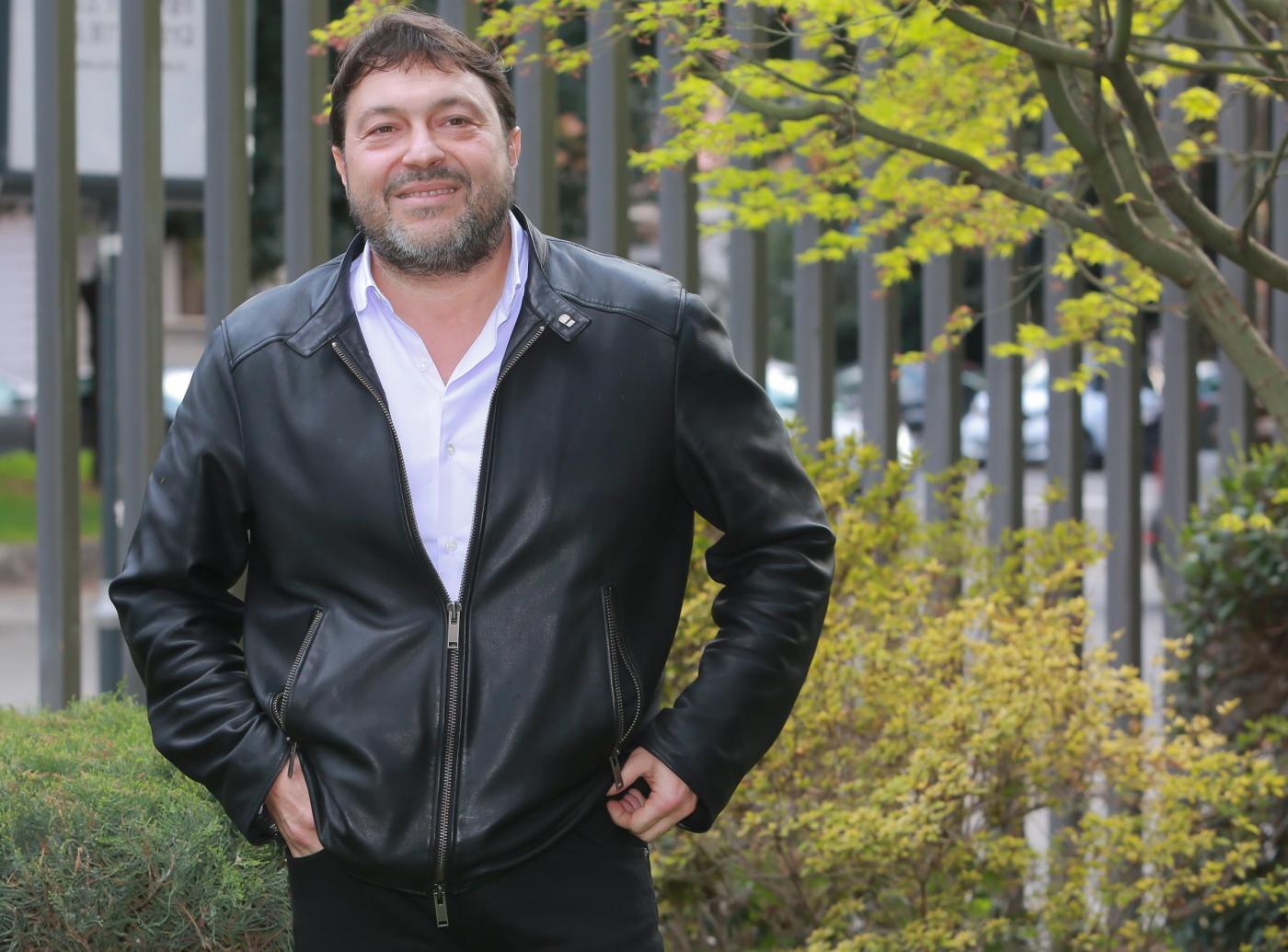
Sigfrido Ranucci, born on August 24, 1961, in Rome, is one of Italy’s most respected investigative journalists. Known for his fearless reporting and dedication to uncovering the truth, Ranucci has built a career that has earned him a reputation as a stalwart of Italian journalism. Over the years, he has delved into some of the most challenging and controversial issues, exposing corruption, organized crime, and environmental scandals. His work has not only influenced public discourse in Italy but has also made significant contributions to global journalism.
Early Life and Education
Sigfrido Ranucci was born and raised in Rome, where he developed an early interest in literature and writing. He pursued his passion for storytelling by enrolling at La Sapienza University, one of Italy’s most prestigious educational institutions. Ranucci graduated with a degree in Italian literature, a field that would provide him with the analytical skills and deep cultural understanding necessary for a career in journalism.
His academic background laid the foundation for his later work, allowing him to approach complex issues with a nuanced perspective. It wasn’t long before Ranucci transitioned from academia to the world of journalism, where he would make his mark as a rigorous and dedicated investigative reporter.
Early Career in Journalism
Ranucci began his journalism career at Paese Sera, a well-known Italian newspaper, where he gained valuable experience covering various topics. However, it was in 1989, when he joined the TG3 news team of Italy’s public broadcaster RAI, that his career truly began to take shape. At TG3, Ranucci covered a wide range of topics, including sports, current affairs, and crime, quickly establishing himself as a versatile journalist with a keen eye for detail.
In the mid-1990s, Ranucci’s career took a significant turn as he began collaborating with TG3 Primo Piano, Rai News, and Rai International. His work during this period was marked by a growing focus on investigative journalism, particularly in areas that had not been thoroughly explored by the mainstream media. This shift in focus would define the rest of his career.
Investigative Reporting and International Recognition
By 1999, Sigfrido Ranucci had become a prominent investigative reporter for RAI, covering some of the most challenging assignments in the Balkans. His in-depth reporting on the conflicts and their aftermath in this volatile region demonstrated his ability to navigate complex and dangerous environments, bringing critical issues to the forefront of public consciousness.
In 2001, Ranucci was in New York covering the aftermath of the September 11 terrorist attacks. His reporting on this tragic event highlighted his ability to convey the human impact of global events with empathy and clarity.
However, it was his investigative work on organized crime that truly set Ranucci apart. In 2001, during an investigation into mafia-related massacres, Ranucci uncovered a previously unreleased interview with Paolo Borsellino, one of Italy’s most prominent anti-mafia magistrates. In the interview, Borsellino discussed the connections between the mafia, Silvio Berlusconi, the former Prime Minister of Italy, and Marcello Dell’Utri, a close associate of Berlusconi. The interview, which was conducted just hours before the Capaci massacre that claimed the life of Borsellino’s colleague Giovanni Falcone, provided critical insights into the mafia’s infiltration of Italian politics.
Ranucci’s relentless pursuit of the truth in this and other investigations earned him the Silver Satellite Gran Prix Television World award in 2000 for his exposé on the illegal disposal of radioactive waste, titled “Valzer dei veleni.” In 2002, he received another Silver Satellite Television News Festival award for his investigation into the use of depleted uranium in military weapons, titled “Polveri maledette.” These awards highlighted Ranucci’s growing reputation as a journalist who was unafraid to tackle issues of immense complexity and danger.
Major Investigations and Awards
The early 2000s were a period of intense activity for Sigfrido Ranucci, as he continued to push the boundaries of investigative journalism. In 2003, he received the European Journalism Award Penne Pulite for his investigation “Testimoni a perdere,” which shed light on the struggles faced by witnesses in mafia trials. His work highlighted the significant risks and challenges that ordinary citizens face when they decide to stand up against organized crime.
Ranucci’s work in 2004 and 2005 further solidified his status as one of Italy’s leading investigative journalists. In 2004, he was awarded a special mention at the Ilaria Alpi Prize for his investigation “Veleni di Stato,” which uncovered the illegal disposal of hazardous waste in Somalia. This investigation was particularly poignant, as it touched on the very issue that Ilaria Alpi, a fellow Italian journalist, was investigating when she was murdered along with her cameraman Miran Hrovatin in Somalia in 1994.
In 2005, Ranucci was once again recognized at the Ilaria Alpi Prize, this time for his investigation “Servitù militari,” which examined the deaths of Italian soldiers who had served in the Balkans and at military testing sites in Italy. These investigations demonstrated Ranucci’s commitment to exposing the hidden costs of military conflicts and the impact they have on both soldiers and civilians.
Ranucci’s dedication to investigative journalism took him to Sumatra in 2005, where he reported on the devastating impact of the Indian Ocean tsunami. His coverage of the aftermath of this natural disaster once again showcased his ability to convey the human stories behind the headlines, bringing attention to the ongoing struggles of survivors.
Joining Report and Continued Success
In 2006, Sigfrido Ranucci joined the team of Report, one of Italy’s most respected and widely viewed investigative journalism programs. His work on Report brought him into the homes of millions of Italians, where his in-depth investigations continued to expose corruption, environmental disasters, and social injustices.
One of Ranucci’s most significant investigations at Report was “Fallujah la strage nascosta” (Fallujah: The Hidden Massacre), which aired in 2006. This investigation revealed the use of white phosphorus, a chemical weapon, by the United States military during the battle for Fallujah in Iraq. The investigation was met with widespread acclaim, earning Ranucci the Colomba d’Oro per la Pace (Golden Dove for Peace), the Golden Umbrella Festival Gran Prix News and Documentaries, and yet another Ilaria Alpi Prize. The impact of this investigation was profound, bringing international attention to the ethical and legal implications of the use of such weapons in conflict.
In 2007, Ranucci was honored with the Maria Grazia Cutuli International Journalism Award for his courageous reporting on the human toll of wars. He also received the Mario Francese Prize in recognition of his ongoing work against organized crime. These awards underscored Ranucci’s commitment to journalism that holds those in power accountable, no matter the risks involved.
Literary Contributions and Continued Investigations
In addition to his work on television, Sigfrido Ranucci has made significant contributions to the literary world. In 2009, he co-authored the book “Ecofollie” with Milena Gabanelli, the creator and long-time host of Report. The book delved into the failures and controversies surrounding nuclear waste disposal in Italy, further highlighting Ranucci’s commitment to environmental issues.
In 2010, Ranucci published “Il patto: da Ciancimino a Dell’Utri,” a book that provided an in-depth look at the alleged negotiations between the Italian state and the mafia, based on the testimony of an informant. This book added another layer to the ongoing public discourse about the relationship between the state and organized crime in Italy.
Throughout the 2010s, Ranucci continued to produce groundbreaking investigations. His work included exposing financial misconduct, uncovering political corruption, and shedding light on environmental disasters. His investigations, such as “I Vicerè,” which examined a massive financial scandal in the city of Catania, and “Il Cavaliere del Lavoro,” which uncovered a hidden art collection belonging to Parmalat’s disgraced CEO Calisto Tanzi, demonstrated his ability to tackle a wide range of issues with the same rigor and determination.
Leadership of Report and Legacy
In 2017, Sigfrido Ranucci was named the host and lead journalist of Report, taking over from Milena Gabanelli. His appointment marked a new chapter in the program’s history, but Ranucci’s commitment to investigative journalism remained unchanged. Under his leadership, Report continued to produce hard-hitting investigations that challenged the status quo and provided a platform for stories that might otherwise go unheard.
Ranucci’s leadership has been marked by a continued focus on accountability, transparency, and the public’s right to know. His work has inspired a new generation of journalists in Italy and around the world, many of whom look to Report as a model for investigative journalism.
In recognition of his contributions to journalism, Ranucci has received numerous awards and honors throughout his career. In 2017, he was awarded the Tonino Carino Prize for investigative journalism, further solidifying his status as one of Italy’s most respected journalists.
Conclusion
Sigfrido Ranucci’s career is a testament to the power of journalism to effect change and hold those in power accountable. From his early days at TG3 to his leadership of Report, Ranucci has consistently demonstrated a commitment to uncovering the truth, no matter the risks involved. His investigations have exposed corruption, environmental disasters, and human rights abuses, making him a vital voice in Italian and international journalism.
As he continues to lead Report, Sigfrido Ranucci’s legacy is one of courage, integrity, and an unwavering dedication to the principles of investigative journalism. His work serves as a reminder of the importance of a free press in a democratic society and the role that journalists play in safeguarding the public interest.


