
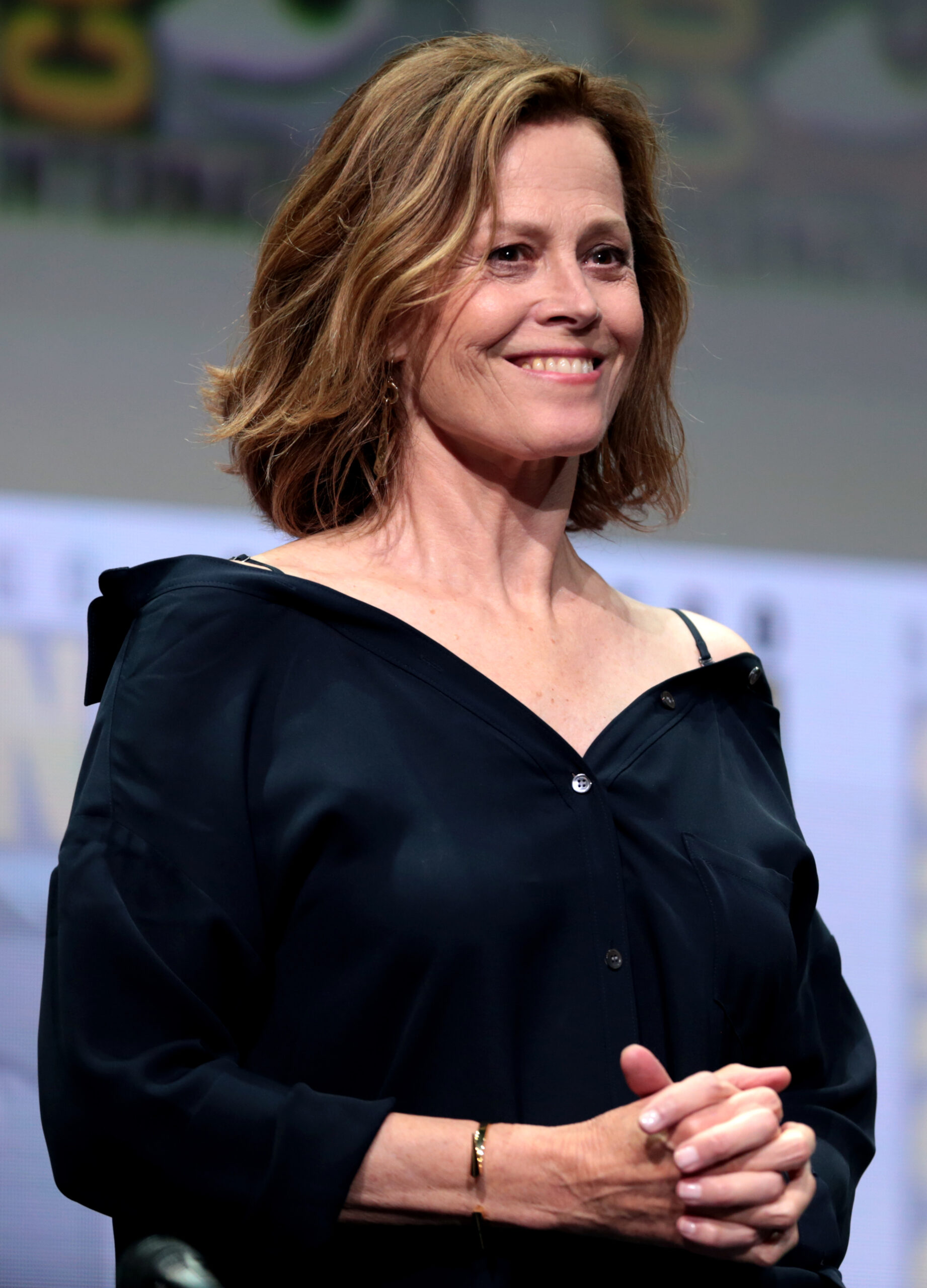
Sigourney Weaver, born Susan Alexandra Weaver on October 8, 1949, in New York City, is an iconic American actress celebrated for her versatile roles in science fiction, drama, and comedy. With a career spanning over five decades, Weaver has established herself as a powerhouse in Hollywood, known for her commanding screen presence, intellectual depth, and ability to transcend genre boundaries. From her breakout role in Alien to her continuing work in the Avatar franchise, Weaver’s journey is a testament to her talent, resilience, and passion for the craft of acting.
Early Life and Education
Sigourney Weaver was born into a prominent entertainment family. Her father, Sylvester “Pat” Weaver, was the president of NBC, and her mother, Elizabeth Inglis, was an English actress. Raised in an environment where the arts were highly valued, Weaver was exposed to the world of television and film from a young age. However, her early years were marked by a sense of insecurity, particularly due to her height. Standing taller than most of her peers, Weaver often felt out of place, which contributed to a deep-seated lack of confidence during her adolescence.
At the age of 14, Weaver made a significant change in her life by adopting the name “Sigourney,” inspired by a character from F. Scott Fitzgerald’s novel The Great Gatsby. This marked the beginning of her journey toward self-discovery and acceptance, setting the stage for her future career in acting.
Weaver’s interest in acting blossomed during her high school years. After graduating, she enrolled at Sarah Lawrence College before transferring to Stanford University, where she earned a Bachelor of Arts in English. She then pursued a Master of Fine Arts at the Yale School of Drama, where she honed her craft alongside classmates like Meryl Streep. Weaver’s time at Yale was instrumental in shaping her acting style, blending intellectual rigor with emotional depth.
Early Career and Breakthrough with Alien
After completing her studies, Sigourney Weaver began her career on the stage, performing in various Broadway productions and Off-Broadway plays throughout the 1970s. Her early work included roles in soap operas like Somerset and a brief appearance in Woody Allen’s Annie Hall (1977). However, it was her performance in Ridley Scott’s Alien (1979) that catapulted her to international stardom.
In Alien, Weaver portrayed Ellen Ripley, a character that would become one of the most iconic heroines in cinematic history. Ripley was not just a survivor; she was a leader and a warrior, embodying strength, intelligence, and resilience. Weaver’s portrayal challenged the traditional gender roles of the time, making Ripley a symbol of female empowerment in a genre typically dominated by male protagonists. The film’s success led to three sequels—Aliens (1986), Alien 3 (1992), and Alien: Resurrection (1997)—with Weaver reprising her role in each. Her performance in Aliens earned her an Academy Award nomination for Best Actress, a rare achievement for a role in a science fiction film.
Diversification and Continued Success in the 1980s and 1990s
Following the success of Alien, Sigourney Weaver quickly became one of the most sought-after actresses in Hollywood. She showcased her versatility by taking on a wide range of roles in different genres. In 1982, she starred in Peter Weir’s The Year of Living Dangerously, a political drama set in Indonesia, opposite Mel Gibson. Her portrayal of Jill Bryant, a British embassy officer, further demonstrated her ability to bring complexity and depth to her characters.
Weaver’s career continued to flourish with her roles in films like Ghostbusters (1984) and Ghostbusters II (1989), where she played Dana Barrett, a cellist who becomes entangled in a supernatural adventure. These films were commercial hits and showcased Weaver’s comedic timing and ability to balance humor with drama.
In 1988, Weaver delivered two of the most memorable performances of her career in Gorillas in the Mist and Working Girl. In Gorillas in the Mist, she portrayed Dian Fossey, the American primatologist who dedicated her life to studying and protecting gorillas in Rwanda. Weaver’s portrayal of Fossey was both powerful and poignant, earning her another Academy Award nomination for Best Actress. Her performance brought attention to the plight of gorillas and highlighted Weaver’s commitment to environmental and animal rights causes, leading her to become an ambassador for the Dian Fossey Gorilla Fund.
In Working Girl, Weaver played the role of Katharine Parker, a cunning and manipulative corporate executive. Her performance earned her an Academy Award nomination for Best Supporting Actress, making her the first actress to be nominated for both lead and supporting roles in the same year, although she did not win in either category.
The 1990s: Challenges and New Directions
The 1990s were a decade of both triumphs and challenges for Sigourney Weaver. While she continued to deliver strong performances, her relationship with the Academy Awards remained complicated. In 1993, she was offered the lead role in The Piano, directed by Jane Campion, but her agent declined the role on her behalf without consulting her. The part ultimately went to Holly Hunter, who won an Oscar for her performance. Weaver’s disappointment led to her firing her agent, marking a turning point in her career.
Despite this setback, Weaver continued to take on challenging roles. In 1994, she starred in Roman Polanski’s Death and the Maiden, a psychological thriller that explored themes of justice, trauma, and revenge. Working with Polanski and the renowned acting coach Jack Waltzer helped Weaver evolve her approach to acting. She began to balance her intellectual understanding of her characters with a more emotional and instinctual connection, enhancing her performances’ authenticity and impact.
Throughout the decade, Weaver demonstrated her ability to transition between genres with ease. She starred in thrillers like Copycat (1995), where she played a criminal psychologist, and dramas like The Ice Storm (1997), directed by Ang Lee. In The Ice Storm, Weaver delivered a critically acclaimed performance as Janey Carver, a woman trapped in a loveless marriage, struggling with her identity and desires amidst the societal changes of the 1970s.
The 2000s: Reinvention and New Horizons
As the new millennium dawned, Sigourney Weaver continued to reinvent herself. In 2001, she starred in the dark comedy Heartbreakers, alongside Jennifer Love Hewitt, playing a mother-daughter con artist duo. Weaver’s comedic talents were on full display, proving once again her ability to handle a wide range of roles.
Weaver also embraced new challenges by working with emerging directors and exploring different genres. In 2009, she reunited with director James Cameron for the groundbreaking science fiction epic Avatar, where she played Dr. Grace Augustine, a scientist committed to understanding and protecting the alien world of Pandora. Avatar was a monumental success, becoming the highest-grossing film of all time (until it was surpassed by Avengers: Endgame in 2019). Weaver’s performance was praised for its emotional depth and her ability to convey a deep connection to the environment and the indigenous people of Pandora.
In addition to her work in Avatar, Weaver continued to take on diverse roles in films like The Village (2004) directed by M. Night Shyamalan, and Vantage Point (2008), a political thriller. Her versatility and willingness to tackle new challenges kept her relevant in an industry that often favors younger actors.
The 2010s and Beyond: Continuing Legacy and Future Projects
The 2010s saw Sigourney Weaver continuing to build on her legacy as one of Hollywood’s most respected actresses. She appeared in a variety of films, from independent productions to major studio releases. Notable performances include her role in Chappie (2015), directed by Neill Blomkamp, and her return to the Ghostbusters franchise in Ghostbusters: Afterlife (2021).
Weaver also made her mark on television, starring in series like Political Animals (2012), where she played a former First Lady turned Secretary of State, earning a Golden Globe nomination for her performance.
Weaver’s passion for acting remains undiminished as she approaches her seventh decade in the industry. She has expressed a desire to continue working for as long as possible, with aspirations to play a wide range of characters, including the iconic Miss Marple from Agatha Christie’s detective novels.
As she looks to the future, Weaver is set to reprise her role as Dr. Grace Augustine in the upcoming Avatar sequels, which will further explore the world of Pandora and its inhabitants. Her involvement in these highly anticipated films speaks to her enduring relevance and ability to captivate audiences across generations.
Personal Life and Advocacy
Beyond her illustrious acting career, Sigourney Weaver is known for her commitment to various social and environmental causes. She is an active supporter of the Dian Fossey Gorilla Fund and has used her platform to raise awareness about wildlife conservation. Weaver is also a passionate advocate for political and environmental issues, often using her influence to promote sustainability and social justice.
Weaver’s personal life is marked by her long-term marriage to Jim Simpson, a filmmaker, and the couple’s daughter, Charlotte, born in 1990. Despite the demands of her career, Weaver has maintained a strong and supportive family life, balancing her professional and personal responsibilities with grace.
Legacy and Impact
Sigourney Weaver’s impact on the film industry is undeniable. As a trailblazer for women in Hollywood, she has broken barriers and challenged stereotypes, paving the way for future generations of actresses. Her ability to embody complex, multifaceted characters has earned her a place among the greats of cinema.
From Ellen Ripley in Alien to Dr. Grace Augustine in Avatar, Weaver’s performances have left an indelible mark on popular culture. Her legacy is not only one of artistic achievement but also one of empowerment and advocacy, using her voice to champion causes close to her heart.
As she continues to work on new projects, Sigourney Weaver remains a beloved and respected figure in the entertainment industry. Her dedication to her craft, combined with her commitment to making a difference in the world, ensures that her influence will be felt for years to come.


