
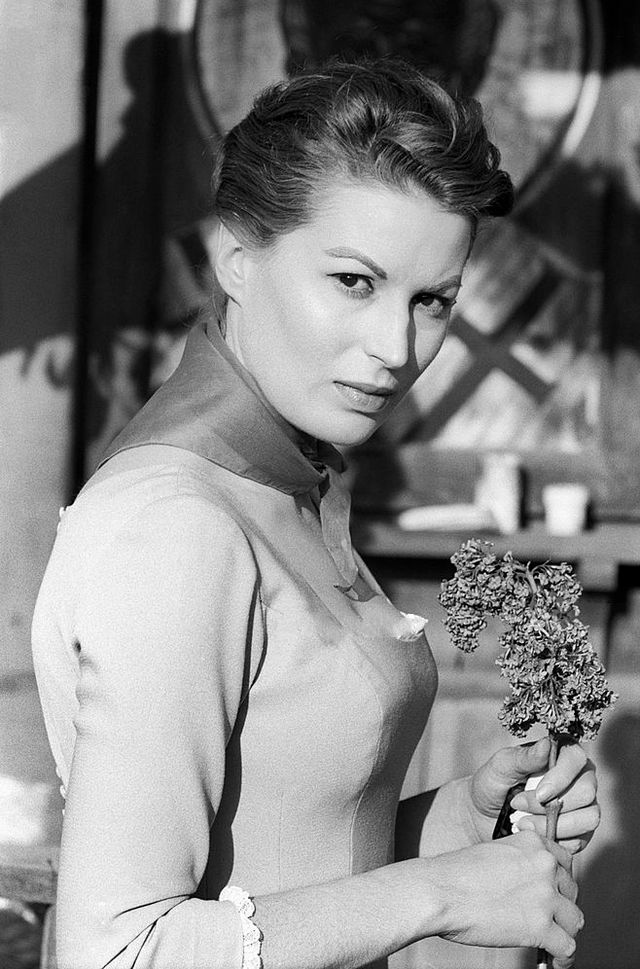
Silvana Mangano remains one of the most iconic figures in Italian cinema, a testament to the golden era of Italian film and a symbol of grace, beauty, and talent. Born on April 21, 1930, in Rome, Italy, Silvana Mangano’s life and career were marked by her remarkable ability to captivate audiences with her powerful performances and her elegant presence on screen. From her early beginnings as a model to her rise as an international film star, Mangano’s journey is a fascinating tale of success, challenges, and resilience. This article delves into the life highlights of Silvana Mangano, exploring her age, fame, and the significant milestones that defined her career.
Early Life and Beginnings in Modeling
Silvana Mangano was born into a modest family in Rome. Her mother was an English housewife, while her father worked as a railway worker, originally from Sicily. Growing up in the culturally rich yet economically challenging environment of Rome in the 1930s, Mangano developed an early interest in the arts. Her striking beauty and poise quickly caught the attention of those around her, and she began pursuing modeling as a teenager.
At the age of 15, Mangano moved to Milan, where she studied classical dance under the guidance of Jia Ruskaja, a renowned Russian-Italian ballerina and choreographer. This period was crucial in shaping her grace and discipline, qualities that would later define her acting career. Her foray into the modeling world was further bolstered when she was discovered by Georges Armenkov, a famous French costume designer who invited her to work as a model in Paris. However, Mangano’s destiny lay in cinema, and it wasn’t long before she returned to Italy to pursue a career in acting.
Transition to Acting and Early Film Roles
Silvana Mangano’s entry into the world of cinema began with small roles as an extra in films during the mid-1940s. Her first significant appearance was in the French film “Le Jugement Dernier” (1945), directed by René Chanas, where she played a minor role. While this role did not bring her immediate fame, it served as a stepping stone in her budding career.
In 1947, Mangano participated in the Miss Italia beauty pageant, a competition that had become a platform for aspiring actresses. Although she did not win the title (which went to Lucia Bosè that year), her participation garnered her attention from filmmakers, leading to more opportunities in the Italian film industry. Among her competitors were other future stars like Eleonora Rossi Drago and Gina Lollobrigida, highlighting the fierce competition of the time.
Breakthrough Role in “Riso Amaro”
Silvana Mangano’s big break came in 1949 when she was cast in the lead role in Giuseppe De Santis’s neorealist classic “Riso Amaro” (“Bitter Rice”). The film, which told the story of a group of female rice workers in the Po Valley, was both a critical and commercial success. Mangano’s portrayal of the sultry and strong-willed Silvana, a woman torn between love and survival, captivated audiences and established her as a star.
“Riso Amaro” was more than just a stepping stone in Mangano’s career; it was a cultural phenomenon. The film’s depiction of the struggles of the working class, combined with Mangano’s electrifying screen presence, resonated deeply with post-war Italian society. The film also introduced Mangano to the man who would later become her husband, the influential film producer Dino De Laurentiis. Their meeting on the set of “Riso Amaro” would prove to be a pivotal moment in both her personal and professional life.
Marriage to Dino De Laurentiis and Rise to International Fame
In 1950, shortly after the success of “Riso Amaro,” Silvana Mangano married Dino De Laurentiis, who was already making a name for himself as one of Italy’s leading film producers. Their marriage was both a personal and professional partnership, with De Laurentiis playing a significant role in shaping Mangano’s career.
The 1950s were a period of great success for Mangano. She starred in several films that showcased her versatility as an actress. In 1951, she played the lead role in Alberto Lattuada’s “Anna,” where she portrayed a nightclub dancer who becomes a nun. The film was a box office hit and solidified Mangano’s status as one of Italy’s top actresses. The iconic scene in which she dances to the song “El Negro Zumbón” became one of the most memorable moments in Italian cinema.
Mangano’s talent and beauty soon attracted the attention of Hollywood. She was often compared to American stars like Rita Hayworth, and there were numerous offers for her to work in the United States. However, Mangano chose to stay in Italy, focusing on roles that allowed her to explore a wide range of characters. In 1954, she starred in Vittorio De Sica’s “L’oro di Napoli” (“The Gold of Naples”), playing a prostitute in a performance that earned her the Nastro d’Argento award for Best Actress.
The International Stage: “Ulisse” and Hollywood Offers
Silvana Mangano’s first international film was “Ulisse” (1954), directed by Mario Camerini. In this epic adaptation of Homer’s “The Odyssey,” Mangano played the dual roles of Circe and Penelope, starring alongside Hollywood giants Anthony Quinn and Kirk Douglas. The film was a success and marked Mangano’s entry into the international film scene.
Despite her growing fame, Mangano remained selective about the roles she chose. She turned down several offers from Hollywood, preferring to work on projects that allowed her to collaborate with respected directors and actors in Italy and Europe. This decision reflected her commitment to her craft and her desire to take on roles that challenged her as an actress.
1960s: A Decade of Artistic Growth
The 1960s were a transformative decade for Silvana Mangano, both personally and professionally. She continued to work with some of the most renowned directors of the time, including René Clément in “La diga sul Pacifico” (“The Dam on the Pacific”) in 1958, where she starred alongside Alida Valli and Anthony Perkins. The film showcased her ability to portray complex characters and added to her growing reputation as a serious actress.
Mangano’s collaboration with Mario Monicelli in “La grande guerra” (“The Great War”) in 1959, and later with Tinto Brass in “La mia signora” (“My Lady”) in 1964, highlighted her versatility in both dramatic and comedic roles. She also starred in the ensemble film “Le streghe” (“The Witches”) in 1967, a project that featured five short stories by different directors, including Pier Paolo Pasolini and Luchino Visconti. Her performance in “Le streghe” earned her another David di Donatello award for Best Actress.
One of the significant milestones of this decade was her role in Pasolini’s “Edipo Re” (“Oedipus Rex”) in 1967, where she played Jocasta. The film was a bold retelling of the Greek tragedy and showcased Mangano’s ability to take on challenging and unconventional roles.
The 1970s: Collaboration with Italian Masters
In the 1970s, Silvana Mangano continued to work with some of Italy’s greatest directors, further solidifying her legacy in the film industry. She appeared in Luchino Visconti’s “Morte a Venezia” (“Death in Venice”) in 1971, a film based on Thomas Mann’s novella. The film was a critical success and is considered one of Visconti’s masterpieces.
Mangano also starred in Visconti’s “Ludwig” in 1973, playing the role of Cosima Wagner alongside Romy Schneider. The film, a historical drama about the life of King Ludwig II of Bavaria, was another example of Mangano’s ability to embody complex historical figures with depth and nuance.
Her collaboration with Visconti continued in “Gruppo di famiglia in un interno” (“Conversation Piece”) in 1974, where she starred alongside Helmut Berger and Burt Lancaster. The film explored themes of generational conflict and societal change, with Mangano delivering a powerful performance that further demonstrated her range as an actress.
Personal Challenges and Tragedies
Despite her professional success, Silvana Mangano’s personal life was marked by significant challenges and tragedies. In 1981, she faced a devastating loss when her son Federico died in a plane crash in Alaska at the age of 25. The tragedy deeply affected Mangano, leading to a period of profound grief and depression.
In addition to her emotional struggles, Mangano also battled health issues, including insomnia and, later, stomach cancer. Her marriage to Dino De Laurentiis, which had been both a source of support and tension, ended in divorce. However, the two remained close, particularly as Mangano’s health began to decline.
Final Years and Legacy
In the 1980s, Silvana Mangano gradually retreated from the public eye, focusing on her health and spending time with her family. One of her final film appearances was in David Lynch’s “Dune” (1984), where she played the role of Reverend Mother Ramallo. The film, produced by her daughter Raffaella De Laurentiis, was a departure from her earlier work, but it demonstrated her enduring commitment to her craft.
Mangano’s last film was “Oci Ciornie” (“Dark Eyes”) in 1987, directed by Nikita Mikhalkov. In the film, she reunited with Marcello Mastroianni, her former lover from their early acting days. Her performance in “Oci Ciornie” was a poignant reminder of her talent and the emotional depth she brought to her roles.
Silvana Mangano passed away on December 16, 1989, in Madrid, Spain, at the age of 59. Her death marked the end of an era in Italian cinema, but her legacy continues to live on through her films. Mangano’s career spanned over four decades, during which she worked with some of the greatest directors and actors of her time, leaving an indelible mark on the world of cinema.
Conclusion
Silvana Mangano’s life and career are a testament to her extraordinary talent, resilience, and the impact she had on the film industry. From her early days as a model to her rise as an international film star, Mangano’s journey was marked by her dedication to her craft and her ability to captivate audiences with her performances. Despite facing personal challenges and tragedies, Mangano’s legacy endures, and she remains a beloved figure in the history of Italian cinema.
As we reflect on Silvana Mangano’s contributions to film, it is clear that her work transcends time, continuing to inspire and influence new generations of actors and filmmakers. Her story is one of passion, perseverance, and an unwavering commitment to the art of cinema.


