
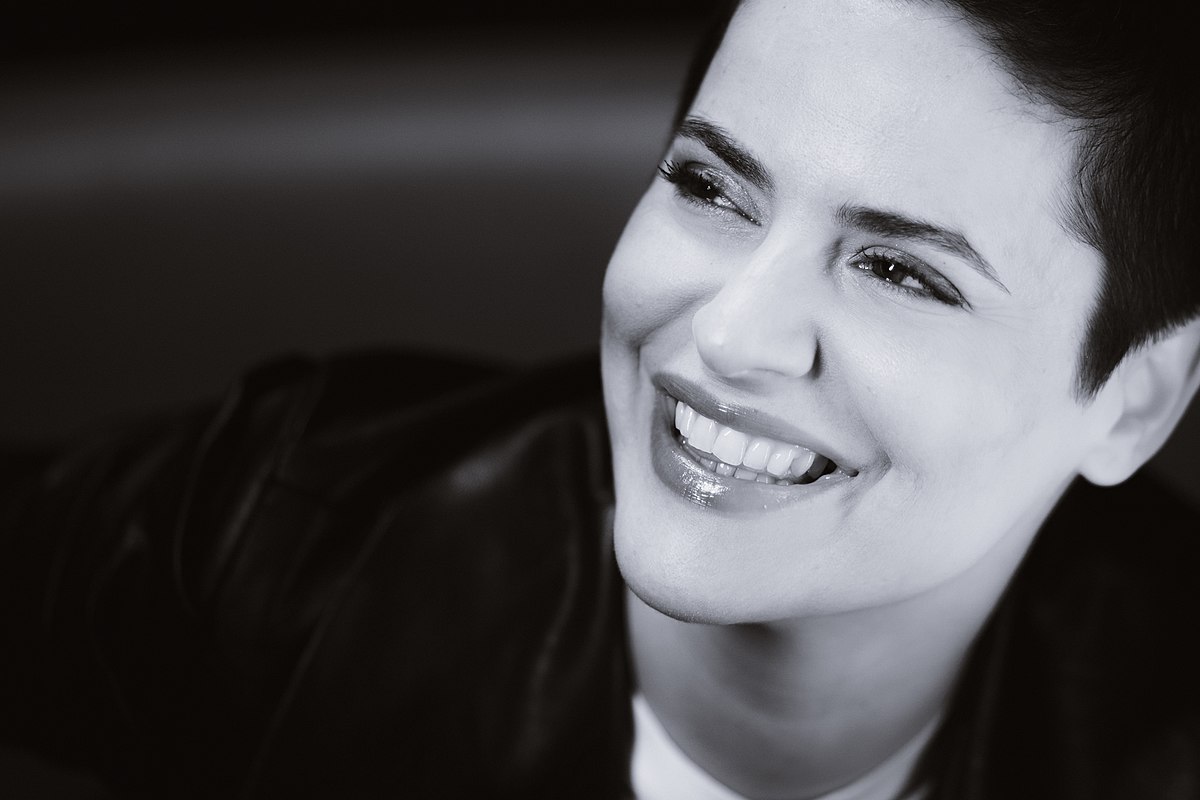
Silvia Salemi is an accomplished Italian singer, songwriter, and television presenter who has made a significant impact on the Italian music and entertainment industry. Born on April 2, 1978, in Siracusa, Sicily, Silvia’s journey from a small-town girl to a national celebrity is a testament to her talent, perseverance, and versatility. This article delves into the life of Silvia Salemi, highlighting her age, rise to fame, and the significant milestones in her career. Through this exploration, we aim to provide a comprehensive understanding of her contributions to the Italian entertainment landscape.
Early Life and the Beginning of Her Musical Career
Silvia Salemi’s early life was marked by both personal tragedy and a deep-seated passion for music. She was born into a loving family, but her childhood was overshadowed by the death of her older sister Laura, who passed away from leukemia when Silvia was just over a year old. This profound loss had a lasting impact on Silvia, shaping her emotional depth and the sensitivity that would later be evident in her music.
From a young age, Silvia showed an immense interest in music. She began singing as a child, and by her teenage years, it was clear that she had a natural talent. Her big break came in 1995 when she won the prestigious Festival di Castrocaro with the song “Con questo sentimento.” This victory was a significant turning point in her career, bringing her into the national spotlight and setting the stage for her future success.
Later that year, Silvia participated in Sanremo Giovani, a competition designed to showcase emerging talents. She performed a rearranged version of the classic Italian song “Nessuno mi può giudicare,” originally sung by Caterina Caselli. Her performance was well-received, and it further established her as a rising star in the Italian music scene.
Breakthrough at the Sanremo Music Festival
The Sanremo Music Festival is one of Italy’s most prestigious and widely watched music events, and it has been the launching pad for many successful careers. Silvia Salemi first appeared on the Sanremo stage in 1996, competing in the Nuove Proposte (New Proposals) category with the song “Quando il cuore.” Although she didn’t win, her performance earned her significant attention and marked her as a promising talent to watch.
In 1997, Silvia returned to Sanremo, this time as part of the Big category, where she presented the song “A casa di Luca.” The song was a critical and commercial success, earning her the Premio Volare for the best lyrics. “A casa di Luca” became one of Silvia’s most iconic songs, resonating with audiences for its poignant lyrics and emotional depth.
Reflecting on this period, Silvia has often stated that “A casa di Luca” was a defining moment in her career. The song’s success solidified her position in the Italian music industry and opened up numerous opportunities for her as a recording artist and performer.
Continued Success and Expansion into Television
Following the success of “A casa di Luca,” Silvia Salemi released her second album, Caotica, which featured the hit single “Stai con me stanotte.” This song became another major success for Silvia, helping her to reach a broader audience. She continued to build on this momentum by participating in major music events, including the 1997 edition of Un disco per l’estate, where she secured second place.
Silvia’s talent and charisma also caught the attention of television producers. In the late 1990s, she began to expand her career into television, a move that allowed her to showcase her versatility as an entertainer. One of her early television roles was co-hosting Il gran ballo delle debuttanti on Canale 5 alongside the legendary Pippo Baudo. This role marked the beginning of Silvia’s dual career as both a singer and television presenter.
In 1999, Silvia took on a more serious role as the host of Viaggi nei luoghi del sacro, a religious program on Raitre that explored sacred places and spiritual journeys. This experience allowed her to connect with audiences on a different level, demonstrating her ability to handle more profound and contemplative content.
The 2000s: A Period of Evolution and Reinvention
The early 2000s were a period of evolution and reinvention for Silvia Salemi. In 2000, she released her fourth album, L’arancia, which was produced in collaboration with Tore Johansson, known for his work with The Cardigans, and Giampiero Artegiani. The album featured several singles, including “La parola amore,” “È già settembre,” and “Ci batteva il sole,” which showcased Silvia’s evolving musical style and maturity as an artist.
In 2003, Silvia made her fourth appearance at the Sanremo Music Festival with the song “Nel cuore delle donne,” which was part of her album Il gioco del Duende. The album, inspired by the works of the Spanish poet Federico García Lorca, demonstrated Silvia’s interest in literature and her desire to infuse her music with deeper artistic and cultural references.
Around this time, Silvia also ventured into reality television. In 2004, she was one of the contestants on Music Farm, a popular reality show on Raidue that featured established singers competing in a series of musical challenges. While the show was a departure from her usual work, it allowed her to connect with a new audience and demonstrate her adaptability as an entertainer.
Later in 2004, Silvia married Gian Marco Innocenti, and the couple welcomed their first child, a daughter named Sofia. Balancing her professional career with her new role as a mother, Silvia continued to stay active in the entertainment industry, albeit with a reduced public profile.
Mid to Late 2000s: Focus on Family and Select Projects
The mid to late 2000s saw Silvia Salemi taking a step back from the public eye to focus on her family. In 2008, she gave birth to her second daughter, Ludovica, and decided to take a temporary hiatus from her music career. However, Silvia did not completely withdraw from the entertainment world. In 2007, she released her sixth album, Il mutevole abitante del mio solito involucro, which included the single “Ormai.” The music video for “Ormai” was directed by actor and filmmaker Giorgio Pasotti, and it earned the Premio Roma Video Clip award.
During this period, Silvia also explored her interests in cooking and lifestyle programming. In 2009, she hosted L’isola del gusto on the cooking channel Alice, which allowed her to connect with audiences in a more informal and intimate setting. This foray into lifestyle television was another example of Silvia’s ability to reinvent herself and stay relevant in a rapidly changing industry.
The 2010s: A Return to the Spotlight
The 2010s marked a significant return to the spotlight for Silvia Salemi. In 2013, she participated in the third edition of Tale e Quale Show, a popular talent show on Raiuno hosted by Carlo Conti. The show, which featured celebrities impersonating famous singers, was a hit with audiences, and Silvia’s performances were particularly well-received. She also competed in Tale e Quale Show – Il Torneo, further solidifying her comeback.
In 2015, Silvia served as the president of the jury for the Festival di Castrocaro, the same festival that had launched her career two decades earlier. Her role as a judge highlighted her status as a respected figure in the Italian music industry and underscored her commitment to nurturing new talent.
Silvia continued to diversify her television career, appearing on La5 in 2016 as part of the talent show Tra sogno e realtà, which focused on discovering young musical talents. In 2017, she hosted Piccole luci on Retequattro and launched a new segment titled A casa di Silvia during La vita in diretta Estate on Raiuno. These roles allowed her to maintain a strong presence on Italian television while also reconnecting with her musical roots.
That same year, Silvia released her seventh studio album, 23, which was preceded by the single “Potrebbe essere.” The album showcased her continued growth as an artist and reaffirmed her commitment to producing quality music.
In addition to her music and television work, Silvia also turned her attention to writing. In 2017, she published her first novel, La voce nel cassetto, an autobiographical work that provided fans with an intimate look at her life and career. The book was well-received and further established Silvia as a multifaceted artist with a wide range of talents.
Recent Work and Continued Influence
Silvia Salemi’s influence on the Italian entertainment industry continues to be felt. In the summer of 2018, she returned to television as the host of Super Music Store, a music-themed game show on La5. She also took on a hosting role on Rai Premium with the program L’altro sabato… Di domenica, a show inspired by Renzo Arbore’s L’altra domenica.
Throughout her career, Silvia has shown a remarkable ability to adapt to the changing demands of the entertainment industry. Whether as a singer, television presenter, or writer, she has consistently demonstrated her versatility and commitment to her craft. Her journey from a young girl in Siracusa to a national celebrity is a testament to her talent, determination, and resilience.
SEO Considerations and Keyword Strategy
For readers and researchers interested in Silvia Salemi, it’s important to consider the search intent behind queries. Keywords such as “Silvia Salemi biography,” “Silvia Salemi age,” “Silvia Salemi music career,” and “Silvia Salemi life highlights” are essential for ensuring that this article reaches its intended audience. Additionally, phrases like “Sanremo Music Festival,” “Italian singer,” and “Silvia Salemi television presenter” are relevant to her career and should be strategically included to enhance the article’s SEO performance.
By focusing on these keywords and providing comprehensive, engaging content, this article aims to offer valuable insights into Silvia Salemi’s life while also ensuring that it is optimized for search engines.
Conclusion
Silvia Salemi’s career is a story of evolution, resilience, and artistic growth. From her early success at the Festival di Castrocaro to her multiple appearances at the Sanremo Music Festival, Silvia has continually reinvented herself, adapting to the changing landscape of the entertainment industry. Her work as a singer, television presenter, and writer has made her a beloved figure in Italian culture, and her influence continues to inspire new generations of artists.
As Silvia Salemi continues to explore new opportunities and challenges, her legacy as a versatile and talented entertainer remains secure. Her ability to connect with audiences across different mediums and her commitment to her craft have ensured that she will be remembered as one of the most significant figures in Italian entertainment.


