
Introduction
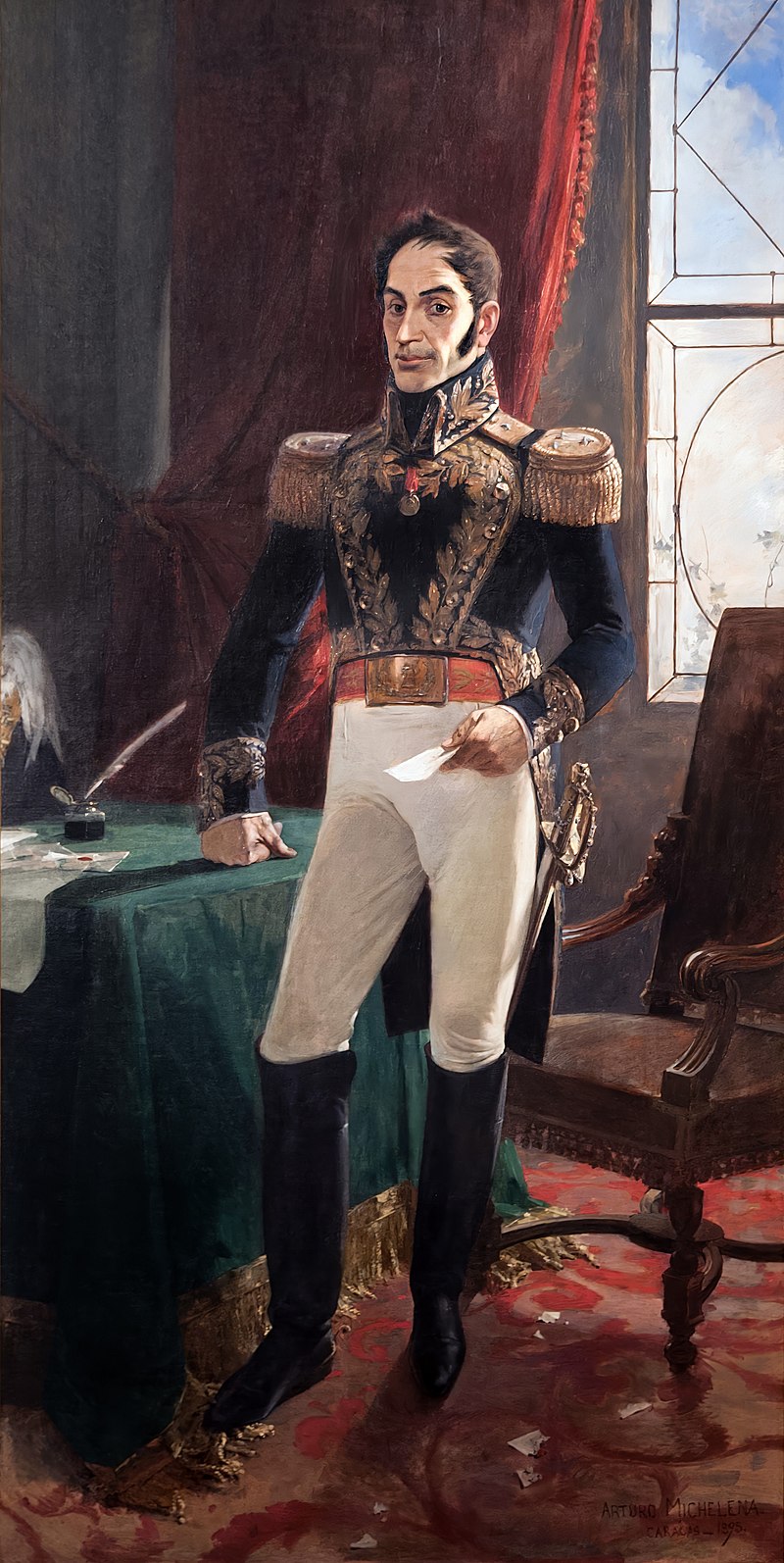
Simón Bolívar, known as El Libertador, is a pivotal figure in Latin American history. Born on July 24, 1783, in Caracas, Venezuela, Bolívar’s life was marked by his revolutionary efforts to liberate several South American countries from Spanish colonial rule. This article delves into the detailed life of Simón Bolívar, exploring his age, the heights of his fame, and the significant moments that defined his legacy.
Early Life and Noble Origins
Simón José Antonio de la Santísima Trinidad Bolívar y Palacios de Aguirre, Ponte-Andrade y Blanco, commonly known as Simón Bolívar, was born into an aristocratic family of Basque origin. His father, Juan Vicente Bolívar y Ponte, was a colonel and a landowner, while his mother, María de la Concepción Palacios y Blanco, came from a distinguished family. Despite this privileged background, Bolívar’s early life was marred by tragedy. He lost his father when he was just two and a half years old, and his mother passed away when he was nine, both succumbing to tuberculosis. After their deaths, Bolívar and his siblings were placed under the care of their maternal uncles.
Education and Formative Years
Bolívar’s education began at the Public School of the Cabildo in Caracas, where he was taught by Simón Rodríguez, a progressive educator who greatly influenced his early intellectual development. Bolívar also studied under Andrés Bello at the Academia de Matemáticas. In January 1797, at the age of thirteen, Bolívar joined the Battalion of Militia of the White Valles de Aragua, a position his father had once held as a colonel. Two years later, he moved to Spain to further his education.
Marriage and Personal Loss
In Spain, Bolívar married María Teresa Rodríguez del Toro y Alaysa in 1802. However, their happiness was short-lived. In 1803, during a visit to Venezuela, María Teresa contracted yellow fever and died. This devastating loss had a profound impact on Bolívar, who vowed never to marry again as a sign of loyalty to his late wife.
Encounter with Napoleon and Revolutionary Reflections
After his wife’s death, Bolívar returned to Europe in 1804, where he led a relatively comfortable life and had the opportunity to meet Napoleon Bonaparte. Initially impressed by Napoleon’s achievements, Bolívar later grew disillusioned, viewing him as a betrayer of the principles of the French Revolution.
Return to Venezuela and Revolutionary Activities
Bolívar returned to Venezuela in 1807, finding the country in turmoil following a failed insurrection by Francisco de Miranda. Over the next few years, the desire for independence from European rule grew among the populace. In 1810, Bolívar was sent on a diplomatic mission to Great Britain with Antonio López Méndez and Andrés Bello to secure British neutrality in Venezuela’s struggle for independence.
Struggle for Independence
Back in South America, Bolívar became a prominent member of the Sociedad Patriótica, which advocated for independence. On August 13, 1811, Bolívar, then a colonel, was sent to announce the victory of General Francisco de Miranda’s forces over the Spanish loyalists in Valencia to the government in Caracas. However, the following months saw numerous setbacks, including the 1812 earthquake that devastated the country.
Betrayal and Exile
In July 1812, Miranda surrendered to Spanish forces and was betrayed by Bolívar, who handed him over to the Spanish authorities in exchange for a safe passage to Curaçao. Bolívar then moved to Cartagena de Indias in Colombia, where he penned the “Cartagena Manifesto,” analyzing the reasons for the fall of the First Republic of Venezuela and outlining his vision for future revolutionary efforts.
The Admirable Campaign and Second Republic
Bolívar joined the forces of the government of Cartagena and, in February 1813, led them to victory against the Spanish in Cúcuta. This success allowed him to launch the Admirable Campaign, crossing the Andes and liberating several Venezuelan cities from Spanish control. In August 1813, Bolívar entered Caracas triumphantly and was proclaimed Captain General, marking the beginning of the Second Republic of Venezuela.
Continued Struggles and Exile
Despite initial successes, the Second Republic faced significant challenges, and by 1814, Bolívar was forced to flee due to the onslaught of royalist forces. Recognized as the leader of Venezuelan exiles by the Neogranadian government, Bolívar led the National Armada of Colombia to capture Santa Fe. In 1815, during his exile in Jamaica, he wrote the “Jamaica Letter,” outlining his vision for a unified and independent Latin America. Bolívar then sought support in Haiti from President Alexandre Pétion.
Abolition of Slavery and the Congress of Angostura
In May 1816, Bolívar proclaimed the abolition of slavery in Venezuela and, with the support of Francisco de Paula Santander, convened the Congress of Angostura in 1819. Here, Bolívar laid the groundwork for a confederal constitution and the creation of Gran Colombia, a federation comprising Venezuela, Colombia, Panama, and Ecuador. Bolívar was elected president of this new federation.
Later Years and Decline
Despite the formation of Gran Colombia, internal divisions grew, and Bolívar’s health deteriorated due to tuberculosis. His vision of a unified Latin America began to crumble, with Venezuela declaring independence in January 1830. Bolívar, disillusioned and ailing, resigned from the presidency and died on December 17, 1830, at the age of 47 in Santa Marta.
Bolívar’s Presidential Tenures
- First President of Gran Colombia (1819-1830): Bolívar was instrumental in the formation of Gran Colombia and served as its first president. His leadership during this period was marked by efforts to unify the various liberated territories.
- President of Venezuela (1813-1814, 1819): Bolívar’s tenure as President of Venezuela saw significant military and political efforts to consolidate independence from Spanish rule.
- President of Bolivia (1825): Bolívar was also the first president of Bolivia, a nation named in his honor, where he established foundational governance structures.
- President of Peru (1824-1827): Bolívar’s influence extended to Peru, where he served as president and worked towards stabilizing the newly independent nation.
Legacy and Historical Significance
Simón Bolívar’s legacy as a liberator and visionary leader is profound. His efforts to liberate Venezuela, Colombia, Ecuador, Peru, and Bolivia from Spanish rule reshaped the political landscape of South America. Bolívar’s vision for a unified Latin America, though ultimately unfulfilled, inspired future generations of leaders and remains a significant historical ideal.
Bolívar’s writings, including the “Cartagena Manifesto” and the “Jamaica Letter,” continue to be studied for their insights into revolutionary strategy and governance. His dedication to independence and republican ideals has made him a symbol of liberation and perseverance.
Conclusion
Simón Bolívar’s life is a testament to his unwavering commitment to the cause of independence and the ideals of liberty and unity. His revolutionary activities, leadership, and vision for a united Latin America have left an indelible mark on history. Bolívar’s story is one of triumph and tragedy, reflecting the complexities and challenges of revolutionary leadership in the pursuit of freedom.


