
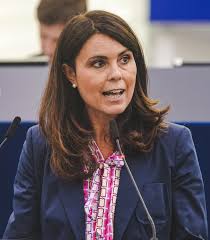
Simona Bonafé, born on July 12, 1973, in Varese, Italy, is a notable Italian politician and journalist. Her journey from a local journalist to a prominent figure in European politics is a story of dedication, strategic political maneuvers, and significant contributions to various legislative efforts. This article delves into her life, career, and the milestones that define her legacy.
Early Life and Education
Simona Bonafé spent her early years in Varese, where she was born and raised. She pursued higher education at the prestigious Università Cattolica del Sacro Cuore in Milan, enrolling in the Faculty of Political Sciences. This academic foundation played a crucial role in shaping her understanding of political systems and governance.
Journalism Career
After completing her education, Bonafé moved to Scandicci, a town in the province of Florence. Here, she embarked on a career in journalism, contributing to several notable publications. She worked with “Europa,” where she curated a dedicated page for Tuscany, and “Il Corriere di Firenze.” Her journalistic endeavors provided her with a platform to voice her insights and connect with a broader audience, laying the groundwork for her future political career.
Entry into Politics
Bonafé’s formal entry into politics came in 2002 when she joined the Margherita party. Her political acumen quickly earned her a position in the party’s executive committee in Florence the following year. She continued to climb the ranks, becoming a member of the provincial directorate and eventually being appointed to the federal assembly.
In June 2004, Simona Bonafé was elected to the Municipal Council of Scandicci, where she served as the Councillor for Environment. Her role was reaffirmed in the 2009 elections, during which she expanded her portfolio to include Equal Opportunities, Urban Furnishings, Urban Redevelopment Interventions, Environmental Policies, Parks and Public Green Spaces, and Tourism Promotion.
Collaboration with Matteo Renzi
In 2012, Bonafé played a significant role in Matteo Renzi’s campaign for the center-left primaries. Alongside Sara Biagiotti and Maria Elena Boschi, she was one of the three coordinators of Renzi’s electoral campaign. This collaboration highlighted her strategic capabilities and further solidified her position within the Democratic Party.
National Political Career
The year 2013 marked Bonafé’s transition to national politics. She ran for the Democratic Party in the general elections and was elected as a Member of Parliament for the Lombardy 2 constituency. On March 5, 2013, she was officially declared a deputy and joined the parliamentary group of the PD on March 19. Subsequently, she was appointed to the VII Commission (Culture, Science, and Education) on May 7.
During her tenure in the Italian Parliament, Bonafé co-authored several significant legislative proposals. She was instrumental in drafting bills to combat homophobia and transphobia, ban gambling advertisements, prevent discrimination against students, and integrate them into mandatory education. Her legislative efforts also extended to abolishing reimbursements for electoral expenses of political movements and parties, introducing tax credits for voluntary financial contributions, and supporting civil unions and assistance for individuals with severe disabilities.
Legislative Initiatives and Challenges
Simona Bonafé’s legislative journey is marked by a series of impactful initiatives. In January 2014, she left the VII Commission and joined the X Commission (Productive Activities, Commerce, and Tourism). She was a proponent of laws aimed at promoting independent research, criminalizing incitement to eating disorders such as bulimia and anorexia, and simplifying teleworking arrangements. She also advocated for the establishment of the professional role of motor-sport educators in primary schools and the regulation and tax relief for social enterprises.
Despite her active involvement in various legislative processes, Bonafé faced criticism for her absences during crucial votes. She was notably absent during key votes on the short divorce, the Poletti Decree (Jobs Act), the decree on drugs and off-label medications, Dario Nardella’s resignation, the Bank of Italy oversight decree, and the 2014 Housing Plan confidence vote.
Nevertheless, she supported significant legislation, including the anti-femicide decree, the Save Public Administration Decree, the Ilva decree, the prison decongestion law, the abolition of direct public funding to political parties, defamation laws, the Save Rome 3 decree, the Provincial Authority Elimination Bill, the 2014 Housing Plan, gender representation in European elections, the modification of Article 416-ter concerning political-mafia electoral exchanges, and the Destination Italy decree.
European Parliament Election 2014
Simona Bonafé’s political career took a significant leap in May 2014 when she was the leading candidate for the Democratic Party in the Central Italy constituency (encompassing Lazio, Marche, Umbria, and Tuscany) for the European Parliament elections. Her campaign was immensely successful, as she garnered 288,238 votes, making her the candidate with the highest number of votes in a single constituency in Italy. This victory marked her transition to the European political stage, where she continued to advocate for her constituents’ interests and contribute to European legislative processes.
Conclusion
Simona Bonafé’s journey from a local journalist to a prominent European politician is a testament to her dedication, strategic acumen, and unwavering commitment to public service. Her legislative efforts, both in the Italian Parliament and the European Parliament, reflect her commitment to social justice, equality, and sustainable development. As she continues to navigate the complex landscape of European politics, Simona Bonafé remains a significant figure, influencing policies and shaping the future of her constituents.
Simona Bonafé’s story is not just about political achievements but also about resilience and the ability to adapt and thrive in various political environments. Her career serves as an inspiration to many aspiring politicians and public servants, illustrating that with dedication and strategic vision, it is possible to make a meaningful impact on society.


