
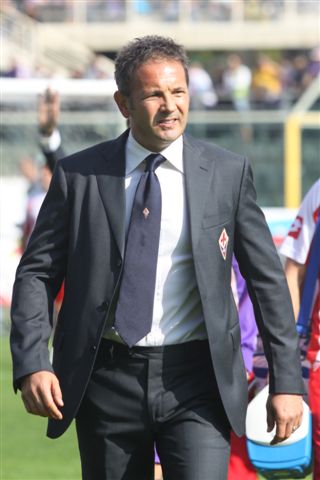
Sinisa Mihajlovic was a name that commanded respect both on and off the football field. Born on February 20, 1969, in Vukovar, Croatia (formerly Yugoslavia), Mihajlovic became renowned as a professional footballer and later as a dedicated football manager. His career spanned decades, leaving an indelible mark on the sport through his incredible skill, leadership, and sometimes controversial presence. This article explores the life, career, and legacy of Sinisa Mihajlovic, a man whose contributions to football continue to be celebrated.
Early Life and Rise to Football Stardom
Sinisa Mihajlovic was born into a time of political tension in the former Yugoslavia. His upbringing in a region marked by ethnic diversity and conflict shaped much of his resilient character. From a young age, Mihajlovic displayed a natural talent for football, and his abilities on the pitch quickly garnered attention. His early football journey began with FK Vojvodina, a prominent Serbian football club where he honed his skills as a left-sided midfielder and defender.
Mihajlovic’s big break came when he joined the legendary Red Star Belgrade in 1990. His time with the club was nothing short of spectacular. He played a crucial role in helping Red Star Belgrade secure the European Cup in 1991, a victory that remains one of the club’s most celebrated achievements. Mihajlovic’s prowess in free-kick taking became legendary during this period, with his powerful and precise left-footed shots becoming a nightmare for goalkeepers. His ability to score from set-pieces earned him the reputation as one of the best free-kick takers in football history.
The Move to Italy and International Fame
Mihajlovic’s success with Red Star Belgrade opened the door to an international career, and in 1992, he made the move to Italy, one of Europe’s top footballing nations. His first stint in Serie A was with AS Roma, where he initially struggled to adapt to the demands of Italian football. Despite these early challenges, Mihajlovic’s determination saw him gradually improve, and he soon became an integral part of the team.
However, it was during his time with Sampdoria, starting in 1994, that Mihajlovic truly found his footing in Italy. Transitioning to a central defender role, he became one of the most respected and feared defenders in Serie A. His leadership on the pitch, combined with his exceptional free-kick ability, made him a fan favorite. Mihajlovic’s defensive skills, coupled with his knack for scoring, helped Sampdoria compete fiercely in the Italian league during the mid-1990s.
In 1998, Mihajlovic moved to Lazio, where he enjoyed the most successful period of his playing career. Under the management of Sven-Göran Eriksson, Lazio became one of the top clubs in Europe. Mihajlovic was a key figure in Lazio’s historic 1999-2000 season, where the club won the Serie A title, the Coppa Italia, and the UEFA Super Cup. His leadership and defensive solidity were crucial in Lazio’s success, and his ability to score from free kicks added an extra dimension to the team’s attack.
Mihajlovic’s time at Lazio also saw him win the admiration of fans and peers alike for his commitment and professionalism. His name became synonymous with the club’s golden era, and his legacy at Lazio remains strong to this day.
Transition to Coaching: Challenges and Triumphs
After retiring from professional football in 2006, Mihajlovic quickly transitioned into coaching, bringing with him the same passion and intensity that characterized his playing days. He began his coaching career as an assistant to Roberto Mancini at Inter Milan, where he gained valuable experience working with one of Italy’s top clubs.
Mihajlovic’s first managerial role came in 2008 when he took charge of Bologna. Despite the challenges of managing a mid-table team in Serie A, Mihajlovic’s impact was immediate. He was known for his ability to motivate players and instill a sense of discipline and tactical awareness. His time at Bologna, however, was short-lived, as he moved on to manage Catania the following season.
One of Mihajlovic’s most notable coaching achievements came during his tenure as the head coach of Fiorentina. Taking over from Cesare Prandelli in 2010, Mihajlovic led Fiorentina through a challenging period, stabilizing the team and guiding them to respectable finishes in Serie A. His tactical acumen and ability to develop young players were particularly praised during his time at the club.
Mihajlovic also had a brief stint as the manager of the Serbian national team, where he faced the challenge of rebuilding a team in transition. His tenure was marked by his strict disciplinary approach and efforts to integrate younger players into the squad. Although his time with the national team was met with mixed results, it further established Mihajlovic’s reputation as a coach unafraid to make tough decisions.
In 2015, Mihajlovic took over as manager of AC Milan, one of Italy’s most storied clubs. This role was perhaps the most challenging of his career, as Milan was struggling to regain its former glory. Mihajlovic implemented a more structured and disciplined approach, focusing on solidifying the defense and promoting young talents. Despite his efforts, he was dismissed before the end of the season, a decision that many Milan fans viewed as premature given the progress the team had made under his leadership.
Return to Bologna and Battle with Illness
In January 2019, Mihajlovic returned to Bologna, a club that held a special place in his heart. His second tenure at Bologna began with a remarkable turnaround in the team’s fortunes. Under his guidance, Bologna went from relegation candidates to a solid mid-table team, playing an attractive and attacking style of football. Mihajlovic’s ability to inspire and lead was on full display, and he quickly became a beloved figure among Bologna fans.
However, in July 2019, Mihajlovic was diagnosed with acute leukemia, a battle that he chose to fight publicly. Despite undergoing intensive treatment, Mihajlovic continued to manage Bologna, often leading the team from the hospital or directly from the sidelines, a testament to his unyielding determination and love for the game. His fight against the disease earned him widespread admiration, not just in the football community but also from the public at large.
Mihajlovic’s battle with leukemia was a symbol of his resilience, and his determination to continue coaching during such a difficult time was nothing short of inspirational. His presence on the sidelines, even in the midst of treatment, provided a powerful message about courage and commitment.
Unfortunately, after a brief period of remission, Mihajlovic’s health deteriorated again in 2022. He was eventually forced to step down as Bologna’s manager in September of that year, with Thiago Motta taking over the role. Mihajlovic passed away on December 16, 2022, at the age of 53, after a courageous battle with the disease. His death marked the end of an era, but his legacy as both a player and a coach lives on.
Legacy and Impact on Football
Sinisa Mihajlovic’s legacy in football is multifaceted. As a player, he is remembered as one of the greatest free-kick specialists in the history of the sport. His ability to score from seemingly impossible distances and angles made him a unique talent and a nightmare for opposing goalkeepers. His defensive prowess, leadership, and passion on the field earned him respect from teammates, opponents, and fans alike.
As a coach, Mihajlovic was known for his tactical intelligence, his ability to develop young players, and his motivational skills. He was a manager who demanded respect and gave it in return, building strong relationships with his players and often inspiring loyalty and dedication.
Off the field, Mihajlovic was a complex figure. He was involved in several controversies throughout his career, including accusations of racism and disciplinary issues, which sometimes overshadowed his achievements. However, his later years, particularly his public battle with leukemia, highlighted his resilience and strength, earning him widespread admiration.
Mihajlovic’s influence on the game, both in Italy and internationally, is undeniable. His contributions to the clubs he played for and managed are still felt today, and his story continues to inspire future generations of footballers and coaches.
Conclusion
Sinisa Mihajlovic was a footballer and coach who lived with intensity and passion. His journey from a talented young player in Yugoslavia to an international football star and respected coach is a testament to his dedication to the sport. Despite facing numerous challenges, both on and off the field, Mihajlovic’s love for football never wavered. His legacy, marked by his incredible free-kick ability, his leadership, and his courageous battle against illness, will continue to be remembered and celebrated by football fans around the world.
Mihajlovic’s life serves as a powerful reminder of the impact one individual can have on a sport, a team, and a community. His story is one of perseverance, resilience, and unwavering commitment, qualities that define not just a great footballer, but a remarkable human being.


