
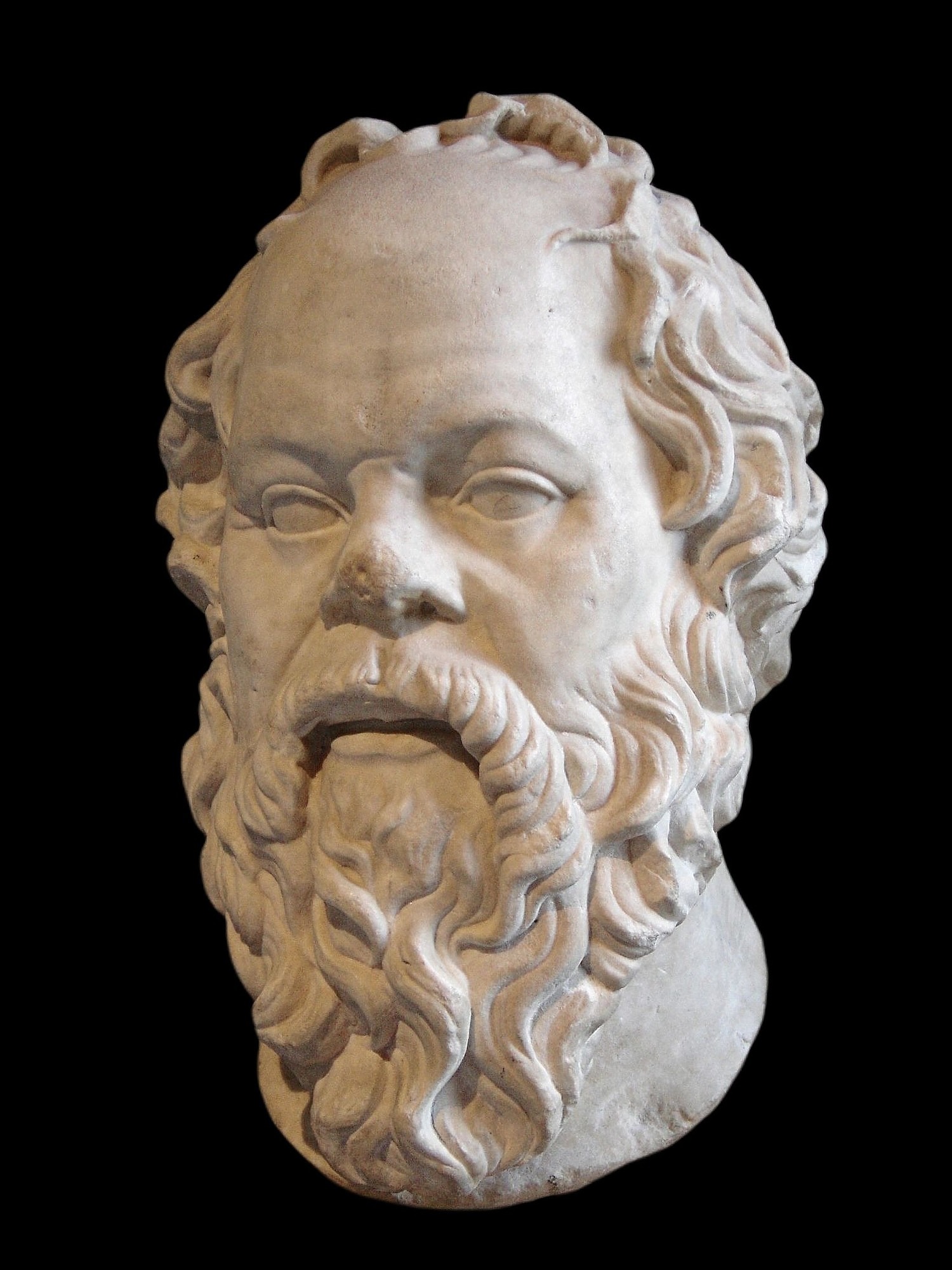
Socrates, one of the most iconic figures in the history of philosophy, remains a towering figure whose ideas and life continue to influence modern thought. His contributions to philosophy, particularly through his methods of inquiry and dialectical reasoning, laid the foundations for Western philosophy. Despite leaving no written works, Socrates’ teachings and life have been immortalized through the works of his disciples, especially Plato. This article delves into the life, achievements, and enduring legacy of Socrates, exploring how he became one of the most celebrated philosophers of all time.
Early Life and Background
Socrates was born between 470 and 469 BCE in Athens, a city-state that was at the height of its cultural and political power. This period, known as the Golden Age of Athens, saw the city become a hub of intellectual and artistic activity. Socrates’ birth into this environment would significantly shape his future as a philosopher.
He was the son of Sophroniscus, a sculptor, and Phaenarete, a midwife. This humble background likely influenced Socrates’ views on wealth and materialism, as he is known to have lived a life of relative poverty despite his profound impact on the intellectual elite of Athens. His mother’s profession, midwifery, would later become a metaphor for his method of teaching—helping others “give birth” to their own ideas.
From an early age, Socrates showed a strong inclination towards intellectual pursuits. He received a basic education typical for an Athenian boy of his status, which would have included reading, writing, music, and physical training. However, Socrates did not follow his father’s trade; instead, he pursued a life dedicated to the pursuit of wisdom, eventually becoming one of the most influential philosophers in history.
Military Service and Public Life
Before fully dedicating himself to philosophy, Socrates served as a hoplite (a heavily armed foot soldier) in the Athenian army. His military service included participation in several significant battles, including the battles of Potidaea, Delium, and Amphipolis. Socrates distinguished himself through his bravery and endurance, traits that were well noted by his contemporaries. It is said that during these campaigns, he saved the life of the young Alcibiades, who would later become a prominent, albeit controversial, figure in Athenian politics.
Socrates’ military service provided him with firsthand experience of the complexities of human behavior and the harsh realities of life, which undoubtedly influenced his philosophical inquiries into ethics and human conduct. His experiences in the army also exemplified his personal virtues of courage and self-discipline, qualities that he would later advocate in his teachings.
Philosophical Career and Method
Socrates is perhaps best known for his unique approach to philosophy, often referred to as the Socratic method. This method involves a form of cooperative argumentative dialogue, in which Socrates would engage his interlocutors in a series of questions and answers to stimulate critical thinking and illuminate ideas. This dialectical method aimed to expose contradictions in the thoughts of others and encourage a deeper understanding of philosophical concepts.
Socrates spent much of his life in the public spaces of Athens, particularly in the Agora, where he would converse with anyone willing to engage with him—be they politicians, craftsmen, or youths. His approach to teaching was informal, often conducted through dialogues that focused on fundamental questions of ethics, virtue, and the nature of knowledge.
One of the key principles Socrates advocated was the idea that true wisdom comes from recognizing one’s own ignorance. His famous declaration, “I know that I know nothing,” reflects his belief that acknowledging one’s limitations is the first step towards gaining true knowledge. This stance made him a powerful and sometimes disruptive figure in Athenian society, as he often challenged the pretensions and complacency of the ruling class and intellectuals.
Socratic Paradoxes and Teachings
Socrates’ teachings were revolutionary in many ways, especially his exploration of moral philosophy. He introduced several paradoxes that have continued to provoke thought and discussion among philosophers. Among the most famous is the idea that “no one does wrong willingly,” which suggests that all immoral actions are the result of ignorance rather than intent. According to Socrates, if a person truly understands what is good, they will act accordingly, and any deviation from virtuous behavior stems from a lack of knowledge.
Another significant aspect of Socratic philosophy is his focus on the care of the soul. Socrates believed that the soul was the true essence of a person and that its well-being should be prioritized over all else, including material wealth and bodily pleasures. This emphasis on the soul’s health and the pursuit of virtue above all else was a radical departure from the more materialistic values that dominated Athenian society at the time.
Socrates also famously argued that virtue is a form of knowledge and that those who possess knowledge of what is good will naturally do good. This intellectualist view of ethics contrasts with other perspectives that emphasize the role of emotions or external circumstances in moral behavior.
Trial and Death
Despite—or perhaps because of—his influence, Socrates made many enemies among the powerful figures in Athens. His habit of questioning and challenging the established norms and those in positions of authority eventually led to his downfall. In 399 BCE, Socrates was put on trial on charges of impiety and corrupting the youth of Athens.
The trial of Socrates is one of the most famous events in Western history. The charges against him were politically motivated, reflecting the tension in Athens following the Peloponnesian War and the subsequent political upheaval. Socrates was accused of denying the gods of the city, introducing new deities, and corrupting the young minds of Athens with his teachings.
During his trial, Socrates delivered a defense that has been immortalized in Plato’s “Apology.” Rather than attempting to plead for his life or appeal to the jury’s emotions, Socrates stood by his principles, arguing that he had done nothing wrong and that his mission to question and seek truth was a service to the city. He famously suggested that instead of being punished, he should be rewarded for his contributions to Athenian society.
Ultimately, Socrates was found guilty by a narrow margin and was sentenced to death by drinking a cup of hemlock. Even in the face of death, Socrates remained resolute. He refused offers from his friends and followers to escape from prison, insisting that he would not violate the laws of Athens, even if those laws had condemned him unjustly. His final moments, as described in Plato’s “Phaedo,” were spent discussing the immortality of the soul with his disciples before calmly accepting his fate.
Legacy and Influence
Socrates’ death marked the end of his life but the beginning of a legacy that would profoundly shape the course of Western philosophy. Although he left no written works, his ideas were preserved and propagated by his students, most notably Plato and Xenophon. Through their writings, Socrates’ thoughts and teachings have been passed down through the centuries, influencing countless generations of thinkers.
Socrates’ emphasis on ethics, the examination of moral values, and the pursuit of knowledge through questioning laid the groundwork for much of Western philosophical tradition. His methods and ideas have been foundational to the development of critical thinking and the scientific method, influencing disciplines far beyond philosophy.
In the centuries following his death, Socrates became a symbol of the philosopher as a seeker of truth, willing to challenge authority and conventional wisdom, even at great personal cost. His life and death have been interpreted in various ways by different philosophical traditions, from the Stoics who admired his rational self-control, to the Christian philosophers who saw parallels between his martyrdom and the story of Jesus Christ.
Socratic Schools of Thought
The impact of Socrates is also evident in the various schools of thought that emerged from his teachings. Platonism, the school founded by his most famous student Plato, carried forward Socratic ideas, particularly the emphasis on the ideal forms and the belief in an objective reality that transcends the physical world.
Cynicism, another philosophical movement that traces its roots to Socratic thought, was founded by Antisthenes, a direct disciple of Socrates. The Cynics took Socrates’ teachings on virtue and self-sufficiency to their extreme, advocating for a life lived in accordance with nature and free from the conventions of society.
Stoicism, a later development influenced by Socratic and Cynical ideas, emphasized the importance of rationality, virtue, and self-control. Stoic philosophers like Epictetus and Marcus Aurelius admired Socrates as a model of the wise man who lives according to reason and remains indifferent to external circumstances.
Conclusion
Socrates remains one of the most significant figures in the history of philosophy. His commitment to the pursuit of truth, his innovative methods of inquiry, and his willingness to challenge the status quo have made him an enduring symbol of intellectual integrity and moral courage. Despite living over two millennia ago, the questions he raised about ethics, knowledge, and the nature of the good life continue to resonate in contemporary philosophical debates.
As we reflect on the life and teachings of Socrates, we are reminded of the power of critical thinking and the importance of questioning our assumptions. His legacy encourages us to seek wisdom, to understand the world more deeply, and to live lives of purpose and virtue. In a world often dominated by superficial values and unexamined beliefs, Socrates’ example remains a guiding light, inspiring us to live thoughtfully and to engage meaningfully with the fundamental questions of human existence.


