
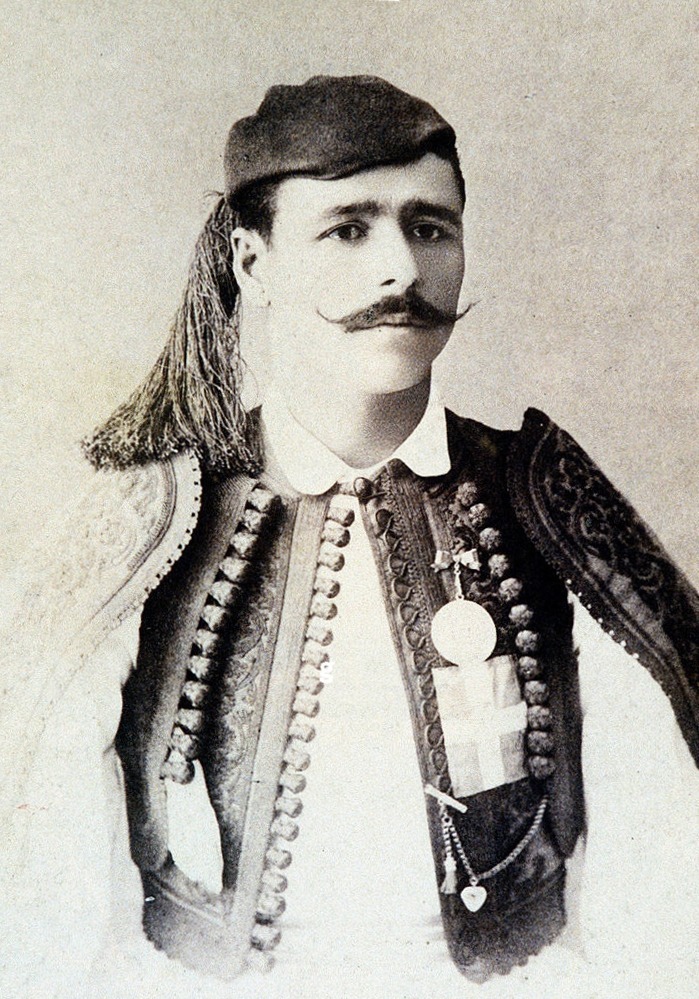
Spiridon Louis, born on January 12, 1872, in the small village of Maroussi near Athens, Greece, is a name that has become synonymous with the origins of modern Olympic history. Louis, a relatively unknown figure before the 1896 Olympics, became an instant national hero after winning the marathon at the first modern Olympic Games held in Athens. His victory not only secured his place in the annals of sports history but also became a symbol of Greek national pride. This article delves into the life of Spiridon Louis, his rise to fame, and the lasting impact of his Olympic triumph.
Early Life: Humble Beginnings in Maroussi
Spiridon Louis was born into a modest family in the rural outskirts of Athens. The youngest of five children, Louis grew up in a household deeply connected to the land, with his family making a living through agriculture. While details of his early life are sparse, it is known that Louis worked as a water carrier, a physically demanding job that required him to transport mineral water from nearby springs to Athens. This daily routine, which involved walking long distances with heavy loads, inadvertently provided Louis with the endurance and stamina that would later become his greatest assets in the marathon.
There are conflicting accounts of Louis’s profession before his Olympic success. Some sources describe him as a shepherd, while others emphasize his role as a water carrier. Regardless of the specifics, it is clear that Louis’s early life was characterized by hard work and physical endurance, qualities that would serve him well in his athletic pursuits.
The 1896 Athens Olympics: A Nation’s Pride
The 1896 Athens Olympics marked the revival of the ancient Olympic Games, and for Greece, the event was of profound national significance. The marathon, inspired by the legendary run of the ancient Greek soldier Pheidippides, who ran from the battlefield of Marathon to Athens to announce the Greek victory over the Persians, was a highlight of the Games. The race, covering approximately 40 kilometers (around 25 miles), was designed to pay homage to this historic event and was eagerly anticipated by the Greek public.
Louis, though not a professional athlete, decided to participate in the marathon. His path to the Olympic Games was not straightforward. In a qualifying race held on March 25, 1896, Louis finished 17th, initially failing to secure a spot in the final marathon event, as only the top 16 finishers were eligible. However, Louis’s reputation as a disciplined and capable soldier, along with the encouragement of the mayor of Athens, who was familiar with Louis’s physical prowess, led the organizers to grant him a place in the final race.
On April 10, 1896, Spiridon Louis lined up at the starting point in the plains of Marathon, alongside 16 other competitors, most of whom were seasoned athletes. Despite being an underdog, Louis ran the race of his life. His strategy was simple: he maintained a steady pace, conserving his energy for the latter stages of the race. As the race progressed, Louis began overtaking his competitors, much to the delight of the Greek spectators who lined the route to cheer on their compatriot.
When Louis entered the Panathenaic Stadium in Athens, the atmosphere was electric. The 80,000-strong crowd erupted in jubilation as Louis crossed the finish line with a time of 2 hours, 58 minutes, and 50 seconds, making him the first Olympic marathon champion of the modern era. His victory was more than just a personal achievement; it was a moment of immense national pride for Greece, which had been striving to establish its identity on the global stage.
Life After the Olympics: A Hero’s Journey
Following his Olympic triumph, Spiridon Louis became an instant celebrity in Greece. The people of his hometown, Maroussi, showered him with gifts and honors. He was offered free meals and drinks for life, and he accepted a horse and carriage, which he used to continue his work as a water carrier. Despite his newfound fame, Louis chose to live a humble life, continuing to work and support his family.
Louis’s victory also brought him recognition from the Greek government. He was granted land and a pension as a reward for his service to the nation. However, his life was not without challenges. After the death of his wife in 1927, Louis faced financial difficulties and a series of personal setbacks. In 1926, he was wrongfully accused of falsifying military documents and was imprisoned for a year. Although he was later exonerated and his reputation restored, the experience left a lasting impact on him.
The 1936 Berlin Olympics: A Final Public Appearance
In 1936, four years before his death, Spiridon Louis made his final public appearance at the Berlin Olympics, which were infamously used by Adolf Hitler to promote Nazi propaganda. Louis was invited as a guest of honor and given the prestigious role of presenting an olive branch from Olympia to Hitler, symbolizing peace and goodwill. Despite the controversial nature of the event, Louis’s presence was a reminder of the enduring Olympic spirit and the unifying power of sport.
This appearance at the Berlin Olympics was a poignant moment in Louis’s life, as it marked the end of his public career. He returned to his quiet life in Maroussi, where he passed away on March 26, 1940, at the age of 68. His death marked the end of an era, but his legacy as the first modern Olympic marathon champion lives on.
Legacy: The Lasting Impact of Spiridon Louis
Spiridon Louis’s victory in the 1896 marathon has had a lasting impact on the world of sports and beyond. His story is one of perseverance, humility, and national pride. The marathon race, now a staple of the Olympic Games, owes much of its modern significance to Louis’s triumph. The distance of the marathon, set at 42.195 kilometers (26.2 miles), was officially standardized in 1921, in part to honor the historical significance of the original marathon course.
In Greece, Louis is revered as a national hero. The Olympic Stadium in Maroussi, which was built for the 2004 Athens Olympics, was named in his honor, serving as a lasting tribute to his contribution to Greek and Olympic history. His victory continues to inspire generations of athletes, particularly marathon runners, who see in Louis’s story a testament to the power of determination and the human spirit.
Louis’s life also reflects the broader historical context of Greece in the late 19th and early 20th centuries. His story is intertwined with the social and political developments of the time, including Greece’s efforts to modernize and assert its place in the international community. Louis’s victory at the Olympics was not just a personal achievement but a symbol of Greece’s resilience and its enduring connection to the ancient Olympic traditions.
In recent years, interest in Spiridon Louis’s life has been rekindled, particularly in the context of the modern Olympic movement. His story has been the subject of numerous articles, documentaries, and books, all of which highlight his unique place in sports history. In 2012, the trophy he won at the 1896 Olympics was auctioned by his grandson, a poignant reminder of the enduring legacy of his victory.
Conclusion: Spiridon Louis, A Symbol of the Olympic Spirit
Spiridon Louis’s life is a testament to the enduring power of the Olympic spirit. From his humble beginnings in a small Greek village to his historic victory in the first modern Olympic marathon, Louis’s story is one of determination, humility, and national pride. His legacy continues to inspire athletes and sports enthusiasts around the world, reminding us of the timeless values that the Olympic Games represent.
As we look back on the life of Spiridon Louis, it is clear that his impact extends far beyond the world of sports. He is a symbol of the resilience of the human spirit, the power of perseverance, and the unifying force of competition. In a world that often seems divided, the story of Spiridon Louis offers a reminder of the things that can bring us together, transcending boundaries and celebrating our shared humanity.


