
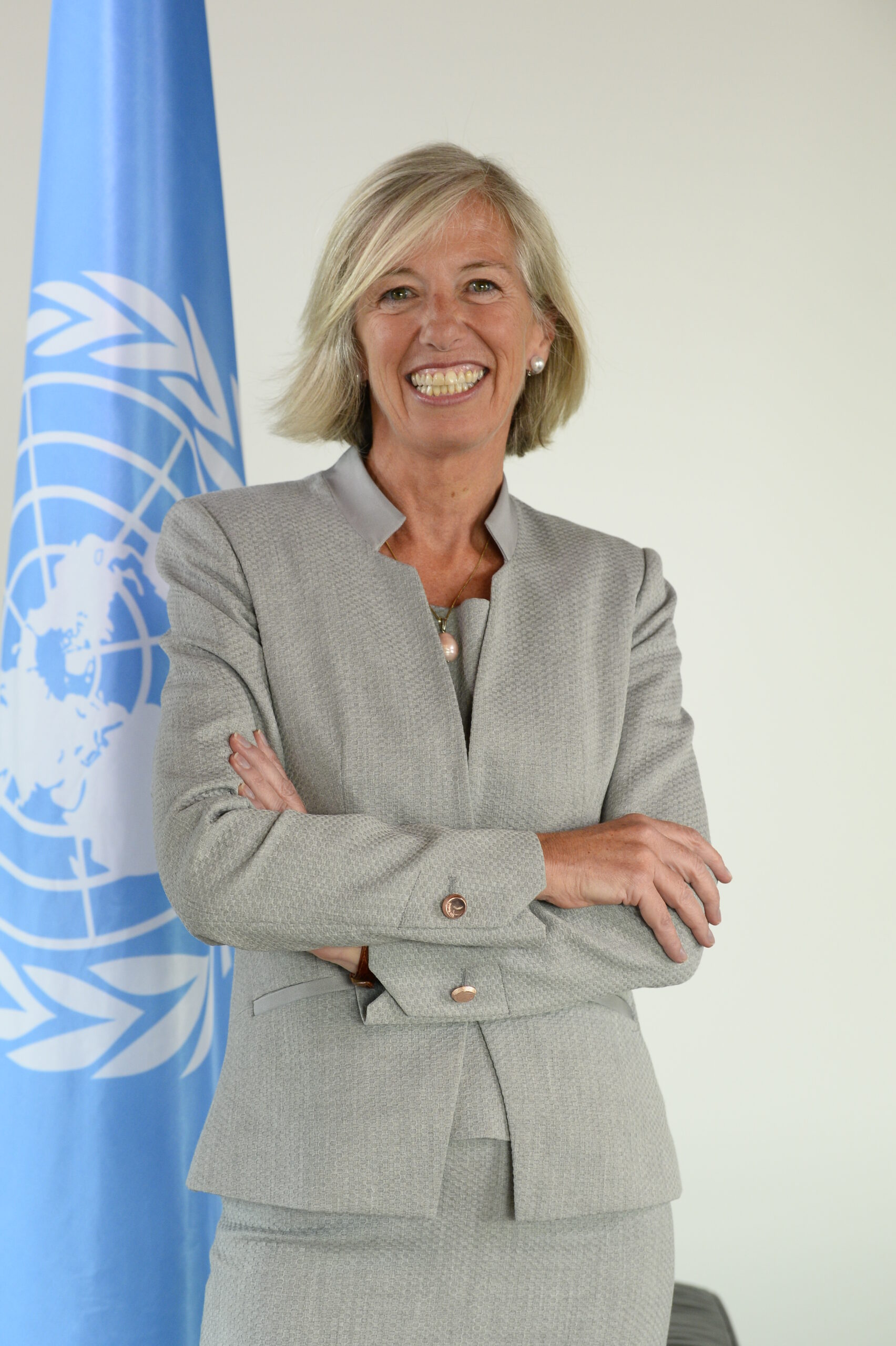
Stefania Giannini is a prominent Italian academic, linguist, and politician who has made significant contributions to both the field of education and Italian public life. Born on November 18, 1960, in Lucca, Italy, Giannini’s career spans several decades and includes notable achievements in academia, politics, and international cooperation. Her journey from a scholar of linguistics to the Italian Minister of Education, University, and Research is a compelling narrative of dedication, intellect, and public service.
Early Life and Academic Pursuits
Stefania Giannini was born and raised in Lucca, a city rich in history and culture. Her academic journey began in Rome, where she pursued higher education and developed a keen interest in linguistics. In 1989, she published her first major work, “Tra grammatica e pragmatica: la geminazione consonantica in latino,” a scholarly exploration of consonantal gemination in Latin. This publication marked the beginning of Giannini’s academic career, establishing her as a serious scholar in the field of linguistics.
In 1991, Giannini became an associate professor of Glottology and Linguistics. Her expertise in these areas led to her appointment as a professor of Phonetics and Phonology at the University for Foreigners of Perugia in 1992. Over the next few years, she continued to build her academic reputation, taking on the role of a professor of Sociolinguistics in 1994 and later becoming a professor of General Linguistics in 1998. During this period, Giannini published several important works, including “Percorsi metalinguistici. Giuliano di Toledo e la teoria della grammatica” and “La pubblicità comparativa. Una via europea.”
Leadership in Academia and Contributions to Linguistics
Stefania Giannini’s academic achievements did not go unnoticed, and in 2000, she was appointed as the director of the Department of Language Sciences at the University of Perugia. Her leadership in this role further solidified her status as a leading figure in the field of linguistics. Under her guidance, the department made significant strides in research and education, contributing to the advancement of linguistic studies in Italy.
In addition to her administrative responsibilities, Giannini continued to publish influential works in linguistics. Her books, “Il cambiamento linguistico. Suoni, forme, costrutti, parole” and “La fonologia dell’interlingua. Principi e metodi di analisi,” are considered essential readings for students and scholars of linguistics. These publications reflect her deep understanding of the complexities of language change and phonological systems, showcasing her ability to translate complex linguistic theories into accessible and insightful analyses.
Giannini’s contributions to academia extended beyond her own research. She was also actively involved in various national and international organizations dedicated to education and linguistic studies. In 2004, she was appointed as the Rector of the University for Foreigners of Perugia, a position that allowed her to influence the direction of the institution and further promote the study of languages and cultures.
International Roles and Recognition
Stefania Giannini’s expertise and leadership in education and linguistics led to her involvement in several international initiatives. She was chosen to represent Italy on the Selection Committee for the Erasmus Mundus program, an initiative of the European Commission aimed at enhancing the quality of higher education through scholarships and academic cooperation between Europe and the rest of the world.
Giannini’s work with the Erasmus Mundus program and other international bodies highlighted her commitment to fostering global cooperation in education. She also served as a member of the Interministerial Committee for Development Cooperation, under the auspices of the Italian Ministry of Foreign Affairs, where she contributed to discussions on how education could be leveraged to support development goals in various countries.
In recognition of her contributions to academia and public service, Giannini was awarded several prestigious honors. In 2011, the President of Italy, Giorgio Napolitano, appointed her as a Grand Officer of the Order of Merit of the Italian Republic, one of the highest honors bestowed by the Italian government.
Political Career and Challenges
Stefania Giannini’s success in academia and international cooperation paved the way for her entry into politics. In 2013, she was elected to the Italian Senate as a member of the “Con Monti per l’Italia” coalition, a political group that supported the technocratic government led by former Prime Minister Mario Monti. Her election marked the beginning of her political career, during which she focused on issues related to education, culture, and research.
As a senator, Giannini quickly rose to prominence within her party, becoming the secretary of the Senate for “Scelta Civica,” the successor to the “Con Monti per l’Italia” coalition. She also served on several important committees, including the Committee for Italian Communities Abroad, the Parliamentary Committee for Childhood and Adolescence, and the 7th Standing Committee on Public Education and Cultural Heritage.
In February 2014, Giannini was appointed as the Minister of Education, University, and Research in the government led by Prime Minister Matteo Renzi. This position placed her at the helm of Italy’s education system, where she was responsible for overseeing reforms in schools, universities, and research institutions.
However, Giannini’s tenure as Minister was not without controversy. Shortly after taking office, she faced scrutiny from the Italian media over allegations related to her previous role at the University of Perugia. A report by the newspaper “Il Tempo” claimed that the university had suffered financial losses due to a real estate deal gone wrong, which occurred while Giannini was rector. Although the case did not lead to any legal action, it created a challenging environment for her early days as Minister.
In addition to the financial controversy, Giannini also faced criticism for her decision to charter a private plane for a trip to Brussels, accompanied by Italian actor Roberto Benigni, at a cost of over €16,000. This expenditure, although not illegal, was perceived by some as an unnecessary extravagance, further fueling media scrutiny.
Despite these challenges, Giannini remained committed to her role as Minister. She worked on several key initiatives aimed at improving the Italian education system, including efforts to modernize curricula, enhance teacher training, and promote scientific research. However, her political career was cut short in 2016 when she was replaced as Minister by Valeria Fedeli, following a cabinet reshuffle by Prime Minister Renzi.
Post-Political Career and Legacy
After leaving her ministerial position, Stefania Giannini continued to be active in public life, particularly in the field of education and international cooperation. Her experience as both an academic leader and a government official gave her a unique perspective on the challenges facing education systems in Italy and beyond.
In 2017, Giannini joined the United Nations Educational, Scientific, and Cultural Organization (UNESCO) as the Assistant Director-General for Education. In this role, she has been responsible for overseeing UNESCO’s global education agenda, with a particular focus on promoting inclusive and equitable quality education for all. Her work at UNESCO has further solidified her reputation as a leading advocate for education as a fundamental human right and a key driver of sustainable development.
Giannini’s legacy is one of dedication to education and public service. Her contributions to linguistics, her leadership in academia, and her role in shaping Italy’s education policy have left a lasting impact. She has been a trailblazer in many respects, not only as a woman in leadership positions but also as a scholar who has successfully bridged the gap between academia and public policy.
Personal Life and Public Image
Stefania Giannini has maintained a relatively private personal life, even as she has held high-profile public roles. However, her public image has occasionally been the subject of media attention. In 2014, she made headlines when a magazine published photos of her sunbathing topless, making her the first Italian government minister to be involved in such a controversy. The incident sparked discussions about privacy and the media’s treatment of female politicians, but it did little to diminish her professional reputation.
Giannini’s intellectual rigor and commitment to public service have earned her respect both in Italy and internationally. She is seen as a figure who has successfully navigated the complex worlds of academia and politics, bringing her expertise and dedication to bear on the issues she cares about most.
As she continues her work with UNESCO, Giannini remains focused on the future, advocating for policies and initiatives that will ensure that education systems worldwide can meet the needs of all learners, regardless of their background or circumstances.


