
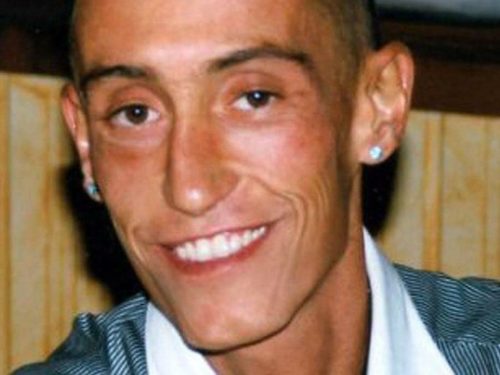
Stefano Cucchi, born on October 1, 1978, in Rome, Italy, became a symbol of the fight against police brutality and judicial injustice in Italy. His tragic death at the age of 31, while in custody, sparked a decade-long battle for truth and justice that has profoundly impacted Italian society and raised awareness about human rights violations. This article explores Cucchi’s life, the circumstances surrounding his death, and the broader implications of his case, which has become a landmark in the struggle for justice in Italy.
Early Life and Background
Stefano Cucchi was born into a working-class family in Rome. He trained as a surveyor and worked alongside his father. Cucchi was described by those who knew him as a quiet and reserved individual, someone who kept to himself but was deeply loved by his family, especially his sister, Ilaria. Despite his seemingly ordinary life, Cucchi struggled with personal issues, including drug use, which would later play a pivotal role in the tragic events leading to his death.
The Arrest and Initial Events
On the night of October 15, 2009, Stefano Cucchi was arrested by the Carabinieri (Italian military police) in Rome for possession of drugs. He was found with 21 grams of hashish, three packets of cocaine, and a pill used for treating epilepsy, a condition from which Cucchi suffered. Following his arrest, Cucchi was taken to the local Carabinieri station, where he was placed in custody.
The following day, Cucchi was subjected to a fast-track trial, a common procedure in Italy for cases involving minor offenses. During the hearing, it was evident that Cucchi was in poor physical condition. He had difficulty walking and speaking, and visible bruises and hematomas were noticed around his eyes. Despite these signs of physical distress, Cucchi remained silent and did not report any mistreatment or assault to the magistrate. The judge ordered that Cucchi be held in custody at the Regina Coeli prison in Rome until his next hearing.
Deterioration of Health and Death
In the days following his arrest, Stefano Cucchi’s health rapidly deteriorated. He was eventually transferred to the Fatebenefratelli Hospital, where medical staff documented severe injuries, including bruises on his legs and face, a fractured jaw, hemorrhages in his bladder and chest, and two fractured vertebrae. Despite the severity of his condition, Cucchi refused hospitalization and was sent back to prison.
Cucchi’s health continued to worsen, and on October 22, 2009, he was found dead in his cell at the Sandro Pertini Hospital in Rome, where he had been transferred earlier. At the time of his death, Cucchi weighed only 37 kilograms (approximately 82 pounds), a shocking and dramatic weight loss that underscored the severity of his physical condition.
The Family’s Fight for Justice
The Cucchi family was not immediately informed of Stefano’s death. They only learned of it when the Carabinieri came to their home to request authorization for an autopsy. This lack of communication and transparency would become one of the many grievances that the Cucchi family would raise in their quest for justice.
From the outset, Stefano’s sister, Ilaria Cucchi, took on the mantle of advocate for her brother. She became a tireless campaigner, demanding answers and justice for Stefano’s death. The family’s determination to uncover the truth led them to release photographs of Stefano’s body taken during the autopsy, which showed clear evidence of severe trauma and physical abuse. These images, widely circulated in the media, shocked the Italian public and fueled widespread outrage.
The Struggle for Truth: Legal Battles and Public Outcry
The initial investigation into Stefano Cucchi’s death was marred by confusion, misdirection, and a lack of accountability. Various theories were proposed to explain his death, including drug overdose, pre-existing medical conditions, and his refusal of medical treatment. However, these explanations were challenged by the visible evidence of physical abuse on Cucchi’s body.
For nearly a decade, the Cucchi family faced numerous obstacles in their pursuit of justice. The Carabinieri and prison staff consistently denied any wrongdoing, maintaining that they had not used excessive force against Stefano. However, the persistence of Ilaria Cucchi and the legal team led to a breakthrough in 2018 when a member of the Carabinieri, Francesco Tedesco, broke his silence.
In a shocking revelation, Tedesco admitted that Stefano Cucchi had been severely beaten by his colleagues on the night of his arrest. This confession, made during a court hearing on October 11, 2018, marked a turning point in the case. Tedesco’s testimony implicated two other Carabinieri officers, Raffaele D’Alessandro and Alessio Di Bernardo, in the assault.
The Film “Sulla mia pelle” and Cultural Impact
Stefano Cucchi’s story was brought to a wider audience through the 2018 film Sulla mia pelle (On My Skin), directed by Alessio Cremonini. The film, which dramatizes the last seven days of Cucchi’s life, highlights the brutal treatment he endured and the systemic failures that led to his death. Alessandro Borghi’s portrayal of Stefano Cucchi received critical acclaim, and the film itself was praised for its unflinching depiction of the events.
Sulla mia pelle premiered at the Venice Film Festival in 2018, where it received a standing ovation and brought international attention to Cucchi’s case. The film was later released on Netflix, making Stefano’s story accessible to a global audience. The impact of the film cannot be overstated; it played a significant role in keeping the public’s attention on the case and contributed to the broader discourse on police brutality and human rights in Italy.
Judicial Proceedings and Verdict
The confession by Francesco Tedesco led to renewed legal proceedings. On November 14, 2019, a court in Rome delivered its verdict on the case, finding the Carabinieri officers Raffaele D’Alessandro and Alessio Di Bernardo guilty of involuntary manslaughter (omicidio preterintenzionale). Both were sentenced to 12 years in prison. Additionally, the court sentenced the commanding officer, Roberto Mandolini, to three years for covering up the assault, and Tedesco received a sentence of two years and six months for his role, albeit mitigated by his cooperation with the authorities.
The verdict was a significant moment in the Cucchi family’s long battle for justice. It confirmed what they had long believed: that Stefano’s death was the result of a violent assault by those entrusted to protect him. The ruling was seen as a victory not only for the Cucchi family but also for those advocating for accountability and transparency within Italy’s law enforcement agencies.
Broader Implications and Legacy
The Stefano Cucchi case has had far-reaching implications in Italy, prompting a national conversation about police brutality, human rights, and the need for reform within the justice system. The case has exposed systemic issues, including the mistreatment of detainees, the lack of oversight and accountability within law enforcement, and the challenges faced by families seeking justice for loved ones who die in custody.
The Cucchi family’s relentless pursuit of truth has inspired other families and advocates fighting against similar injustices. It has also led to calls for greater transparency and accountability in the handling of cases involving police misconduct. The Italian public’s response to the case has shown a growing awareness and intolerance of human rights violations, which could lead to significant changes in how such cases are handled in the future.
Conclusion: The Enduring Legacy of Stefano Cucchi
Stefano Cucchi’s life and death have left an indelible mark on Italian society. While his story is one of tragedy, it is also a testament to the power of resilience and the pursuit of justice. The tireless efforts of his family, particularly his sister Ilaria, have ensured that Stefano’s death was not in vain. Their fight has brought about legal accountability, raised awareness about police brutality, and inspired a broader movement for human rights in Italy.
As we reflect on Stefano Cucchi’s life and the impact of his death, it is crucial to remember the lessons his case has taught us about justice, accountability, and the importance of standing up against injustice. Stefano Cucchi’s legacy will continue to influence the fight for human rights and serve as a reminder that the pursuit of truth is a cause worth fighting for, no matter how long it takes.


