
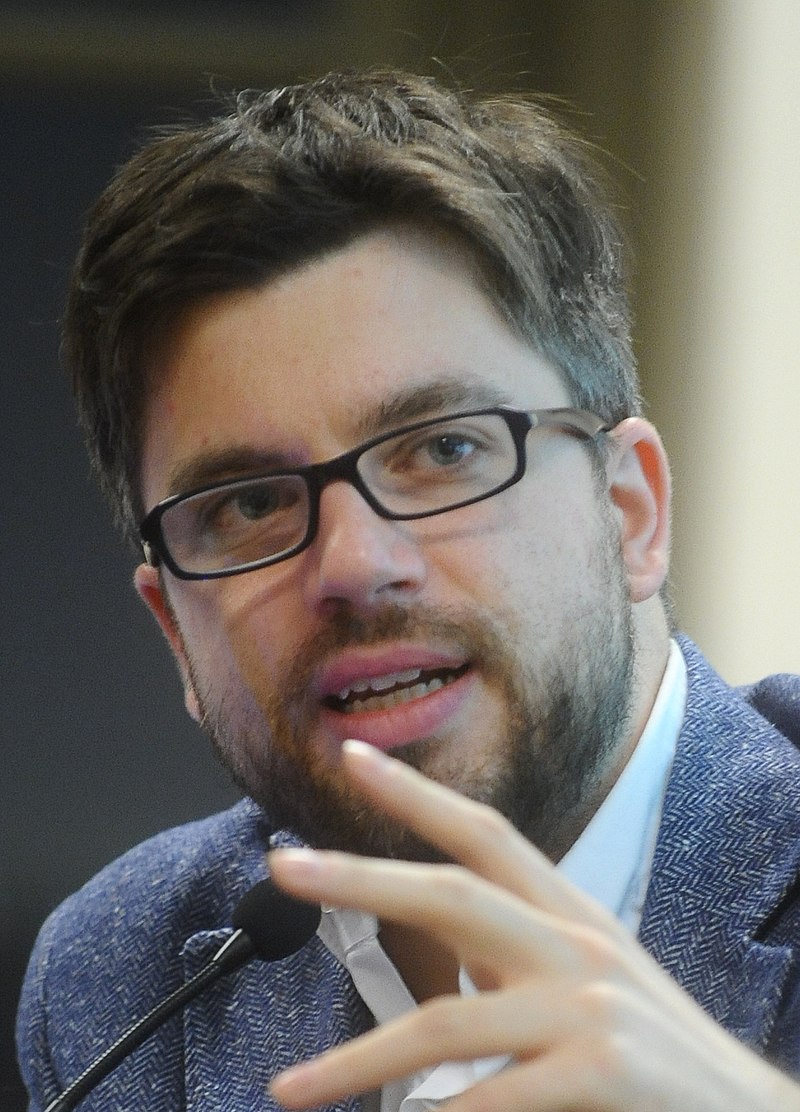
Stefano Feltri, born on September 7, 1984, in Modena, Italy, is a prominent Italian journalist and editor who has made significant strides in the media landscape both in Italy and internationally. Known for his sharp analytical skills, economic insights, and editorial leadership, Feltri has become a key figure in modern journalism. This article delves into Stefano Feltri’s life, his rapid rise to prominence, his career milestones, and his influence on the journalism industry.
Early Life and Education
Stefano Feltri’s journey into journalism began at a young age, driven by an unmistakable ambition and a passion for the written word. Growing up in Modena, Feltri showed early signs of intellectual curiosity and a strong drive to succeed. He pursued higher education at Bocconi University, one of Italy’s most prestigious institutions, where he earned a degree in economics. This background in economics would later become a cornerstone of his journalistic career, allowing him to analyze and report on complex financial and political issues with depth and clarity.
Feltri’s first foray into journalism was with the “Gazzetta di Modena,” a local newspaper where he started as a contributor while still a student. This initial experience provided him with a foundational understanding of the industry and honed his writing skills. His work caught the attention of larger media outlets, leading to internships at Radio 24 and the daily newspaper “Il Foglio.” These early experiences were instrumental in shaping Feltri’s journalistic approach, characterized by rigorous analysis and a keen understanding of the socio-economic landscape.
The Breakthrough at “Il Fatto Quotidiano”
Stefano Feltri’s career took a significant leap forward in 2009 when Marco Travaglio, a well-known Italian journalist and editor, invited him to join the newly founded newspaper “Il Fatto Quotidiano.” At just 25 years old, Feltri was tasked with overseeing the economic section of the paper, a challenging role that he embraced with enthusiasm. His work included curating and supervising the weekly supplement “Il Fatto Economico,” which quickly became a respected source of economic news and analysis.
Feltri’s tenure at “Il Fatto Quotidiano” coincided with a turbulent period in Italian politics and the global economy, providing ample material for his incisive reporting. His ability to dissect complex economic issues and present them in a clear, accessible manner earned him recognition as one of Italy’s leading economic journalists. This period also marked the beginning of Feltri’s rise in the media world, as he became increasingly visible through his writings and public appearances.
Rise to Prominence: The 2010s
The 2010s were a decade of rapid professional growth for Stefano Feltri. His expertise in economics, coupled with his educational background from Bocconi University, positioned him as a go-to commentator on economic and financial matters, especially during the European debt crisis and the subsequent economic reforms in Italy.
In 2011, Feltri published his first books, including “Il candidato. Tutti conoscono Montezemolo. Nessuno sa chi è davvero,” which offered an in-depth look at the life and career of Luca di Montezemolo, a prominent Italian businessman. This book, along with “Il giorno in cui l’euro morì,” showcased Feltri’s ability to tackle complex subjects with nuance and clarity, further establishing his reputation as a serious journalist.
His rising profile led to opportunities in broadcast media. From November 2011, Feltri began hosting the radio program “Prima Pagina” on Radio 3, a platform that allowed him to reach a wider audience. His insightful commentary and engaging style made the show a success, and it wasn’t long before he caught the attention of television producers. In 2012, Lilli Gruber, a respected Italian journalist and TV host, invited Feltri to join her team on the popular talk show “Otto e Mezzo” on La 7. This exposure further cemented Feltri’s status as a leading voice in Italian media.
During this time, Feltri also continued to publish books, including “La lunga notte dell’euro. Chi comanda davvero in Europa” (2014) and “La politica non serve a niente. Perché non sarà il Palazzo a salvarci” (2015). These works reflected his deep understanding of European and global economics, as well as his skepticism towards traditional political institutions.
Vice-Director of “Il Fatto Quotidiano”
In 2015, Stefano Feltri reached a new career milestone when he was appointed vice-director of “Il Fatto Quotidiano,” following Marco Travaglio’s promotion to director. This role gave Feltri significant influence over the editorial direction of the newspaper, allowing him to shape its coverage of economic and political issues.
During his time as vice-director, Feltri oversaw major stories and contributed to the newspaper’s investigative journalism efforts. His leadership was marked by a commitment to journalistic integrity and a focus on holding power to account, principles that resonated with “Il Fatto Quotidiano’s” readership. Feltri’s tenure as vice-director lasted until July 2019, during which time he played a key role in maintaining the newspaper’s reputation for hard-hitting, independent journalism.
International Experience and the Stigler Center
In 2019, Stefano Feltri made a bold career move by accepting a position as the editor of Promarket.org, the digital publication of the Stigler Center at the University of Chicago Booth School of Business. The Stigler Center, led by esteemed economist Luigi Zingales, is renowned for its research on regulatory capture, crony capitalism, and the intersection of economics and politics. Feltri’s appointment to this role was a recognition of his expertise and his potential to contribute to global economic discourse.
Feltri’s work at the Stigler Center involved overseeing content that explored the complex relationships between business, government, and society. His international experience broadened his perspective and deepened his understanding of global economic issues, making him a more versatile and insightful journalist. Despite his new role in the United States, Feltri continued to contribute to “Il Fatto Quotidiano,” offering his unique insights on American politics and economy to Italian readers.
Feltri’s growing prominence on the international stage was further underscored by his invitation to participate in the Bilderberg Group meetings, an exclusive and often controversial gathering of global leaders, business executives, and intellectuals. His involvement in such high-profile events highlighted his standing as a significant figure in both Italian and international journalism.
Return to Italy and Founding of “Domani”
Despite his success in the United States, Stefano Feltri’s ties to Italian journalism remained strong. In 2020, he returned to Italy to take on a new challenge as the director of “Domani,” a newspaper founded by Carlo De Benedetti, a prominent Italian industrialist and media mogul. “Domani” was conceived as a response to the perceived decline in quality and independence at “La Repubblica,” another major Italian newspaper that had been recently acquired by a different media group.
Under Feltri’s leadership, “Domani” positioned itself as a progressive, independent voice in Italian journalism, with a focus on investigative reporting, social issues, and political analysis. Feltri’s vision for the newspaper was to create a platform that could challenge the status quo and provide readers with in-depth, thoughtful journalism that addressed the most pressing issues of the day.
“Domani” quickly gained a reputation for its rigorous journalism and its commitment to covering stories that were often overlooked by other media outlets. Feltri’s editorial direction emphasized the importance of transparency, accountability, and a critical examination of power, values that resonated with a growing audience of readers who were seeking an alternative to mainstream media.
Books and Public Speaking
Throughout his career, Stefano Feltri has been a prolific writer, contributing numerous books on economics, politics, and social issues. In 2019, he published “7 scomode verità che nessuno vuole guardare in faccia sull’economia italiana,” a book that addressed the uncomfortable truths about Italy’s economic situation. The book was well-received for its candid analysis and its willingness to confront difficult topics head-on.
In 2021, Feltri published “Tornare cittadini,” a book that explored the challenges facing modern democracies and the role of citizens in shaping the future. This work was followed by “Il partito degli influencer. Perché il potere dei social network è una sfida alla democrazia” in 2022, a book that examined the impact of social media on political discourse and democratic institutions.
Feltri’s books have been praised for their clarity, depth, and relevance, and they have established him as an important voice in the public debate on economics and politics. In addition to his writing, Feltri is a sought-after speaker and commentator, frequently appearing on television and radio programs to discuss current events and provide expert analysis.
Departure from “Domani” and Future Prospects
In April 2023, Stefano Feltri announced that he was stepping down as director of “Domani.” His departure marked the end of a significant chapter in his career, but it also opened up new possibilities for his future. While Feltri has not yet announced his next move, his track record suggests that he will continue to play a prominent role in journalism, whether in Italy or on the international stage.
Feltri’s career has been characterized by a willingness to take risks, embrace new challenges, and push the boundaries of traditional journalism. His work has had a significant impact on the media landscape, both in Italy and beyond, and his influence is likely to continue to grow in the years to come.
Conclusion
Stefano Feltri is a journalist of remarkable talent and ambition, whose career has spanned continents and covered some of the most critical issues of our time. From his early days at “Il Fatto Quotidiano” to his leadership roles at Promarket.org and “Domani,” Feltri has demonstrated a commitment to journalistic excellence and a deep understanding of the economic and political forces that shape our world.
As he moves forward in his career, Stefano Feltri remains a key figure to watch in the world of journalism. His insights, analysis, and editorial vision have already left a lasting mark on the industry, and his future endeavors are sure to continue influencing the way we understand and engage with the world around us.


