
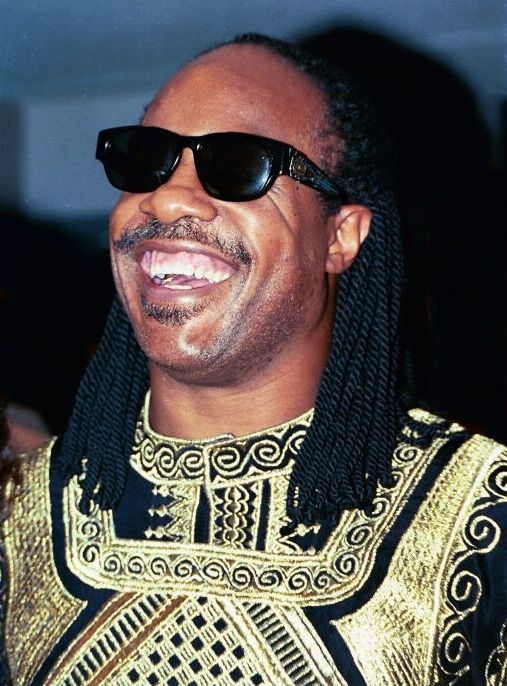
Steveland Hardaway Judkins, better known by his stage name Stevie Wonder, was born on May 13, 1950, in Saginaw, Michigan, USA. An iconic figure in the music world, Wonder is a singer, songwriter, multi-instrumentalist, and record producer who has been a towering presence in the music industry for over six decades. Known for his soulful voice, innovative compositions, and groundbreaking use of electronic instruments, Stevie Wonder has left an indelible mark on genres ranging from soul and R&B to pop and rock.
Early Life and Challenges
Stevie Wonder was born six weeks premature, which led to a condition known as retinopathy of prematurity. This condition, compounded by excessive oxygen in the incubator, caused his blindness shortly after birth. Despite this early life challenge, Wonder’s musical talents blossomed at a very young age. He began playing instruments such as the piano, harmonica, and drums by the age of four, demonstrating an extraordinary aptitude for music.
Wonder’s family moved to Detroit when he was a child, where he became deeply immersed in the vibrant music scene. His mother, Lula Mae Hardaway, recognized her son’s immense talent and nurtured his musical abilities. By the age of 11, Stevie had caught the attention of Motown Records, one of the most influential music labels of the time. His precocious talent led to a recording contract, and he was soon performing under the name “Little Stevie Wonder.”
Early Career and Breakthrough
Stevie Wonder’s early recordings showcased his versatility and energy as a young artist. His first major hit came in 1963 with the live recording of “Fingertips (Part 2),” which was recorded when he was just 13 years old. The song became a number one hit on the Billboard Hot 100, making Wonder the youngest artist to achieve such a feat. This success marked the beginning of a long and illustrious career.
Throughout the 1960s, Wonder continued to release hit after hit, establishing himself as one of Motown’s brightest stars. Songs like “Uptight (Everything’s Alright),” “I Was Made to Love Her,” and “For Once in My Life” became instant classics and solidified his place in the music industry. During this period, Wonder’s music was characterized by its infectious energy, catchy melodies, and his remarkable ability to blend various genres.
The 1970s: Musical Maturity and Innovation
The 1970s were a period of remarkable growth and innovation for Stevie Wonder. As he matured, so did his music, with Wonder taking greater control over his creative output. This period saw the release of some of his most critically acclaimed and commercially successful albums, which not only showcased his musical genius but also his willingness to tackle complex social and political themes.
In 1971, Wonder released the album Where I’m Coming From, which marked the beginning of a new era in his music. The album was notable for its introspective lyrics and its blend of different musical styles. It was followed by Music of My Mind in 1972, which further showcased Wonder’s experimentation with synthesizers and other electronic instruments, setting the stage for the groundbreaking albums that would follow.
The release of Talking Book in 1972 was a major turning point in Wonder’s career. The album featured the hit singles “Superstition” and “You Are the Sunshine of My Life,” both of which became chart-topping successes. “Superstition,” in particular, is considered one of Wonder’s signature songs, with its infectious groove and innovative use of the Hohner Clavinet, an electronic keyboard that became a staple of his sound.
Wonder’s next album, Innervisions (1973), is widely regarded as one of the greatest albums in the history of popular music. It featured songs like “Higher Ground” and “Living for the City,” which addressed themes of spirituality, social justice, and urban life. Innervisions won the Grammy Award for Album of the Year, and its success cemented Wonder’s reputation as one of the most important and innovative artists of his time.
In 1974, Wonder released Fulfillingness’ First Finale, another critically acclaimed album that won multiple Grammy Awards, including Album of the Year. The album’s introspective lyrics and soulful melodies reflected Wonder’s continued growth as an artist and his ability to connect with audiences on a deep emotional level.
The pinnacle of Wonder’s creative output in the 1970s came with the release of Songs in the Key of Life in 1976. This double album is often cited as his magnum opus, featuring a wide array of musical styles and themes. The album included hit songs like “Sir Duke,” “I Wish,” and “Isn’t She Lovely,” and it explored everything from love and family to social issues and spirituality. Songs in the Key of Life was a commercial and critical triumph, earning Wonder multiple Grammy Awards and solidifying his legacy as a musical genius.
The 1980s: Continued Success and New Challenges
The 1980s saw Stevie Wonder continue to enjoy commercial success, though his output during this decade was less prolific compared to the 1970s. In 1980, he released the album Hotter Than July, which included the hit single “Master Blaster (Jammin’).” The album was notable for its reggae influences and its tribute to the late Bob Marley.
In 1982, Wonder released the compilation album Stevie Wonder’s Original Musiquarium I, which featured some of his biggest hits from the previous decade, as well as new tracks like “That Girl” and “Do I Do.” The compilation was a commercial success, further cementing Wonder’s status as one of the most influential artists in the music industry.
One of Wonder’s most memorable achievements of the 1980s was his contribution to the soundtrack of the film The Woman in Red (1984). The soundtrack featured the hit single “I Just Called to Say I Love You,” which became one of Wonder’s most successful songs. The song won an Academy Award for Best Original Song, making Wonder the first African American artist to win an Oscar in that category.
However, the 1980s also presented new challenges for Wonder. The rise of new musical styles and the changing landscape of the music industry meant that Wonder had to adapt to maintain his relevance. While he continued to produce hit songs, some critics noted that his work during this period did not reach the same level of innovation as his earlier albums.
The 1990s and 2000s: Legacy and Continued Influence
As the 1990s approached, Stevie Wonder continued to make music, though at a slower pace. In 1991, he released the album Jungle Fever, the soundtrack for the Spike Lee film of the same name. The album received mixed reviews but showcased Wonder’s continued ability to blend social commentary with musical innovation.
In 1995, Wonder released Conversation Peace, an album that featured songs addressing themes of love, peace, and social justice. While it did not achieve the same commercial success as his earlier work, the album was praised for its thoughtful lyrics and sophisticated production.
Throughout the 2000s, Wonder continued to perform and record, though his output became more sporadic. In 2005, he released the album A Time to Love, which included collaborations with artists like India.Arie and Prince. The album was well-received by critics and marked a return to form for Wonder, who continued to explore themes of love and social consciousness in his music.
Personal Life and Philanthropy
Stevie Wonder’s personal life has been as dynamic as his music career. He has been married three times and has nine children. Despite the challenges he has faced, including his blindness and the pressures of fame, Wonder has remained committed to his family and his music.
Wonder is also known for his philanthropic efforts. He has been involved in various charitable causes, including campaigns to combat hunger, poverty, and homelessness. He has also been an advocate for civil rights, using his platform to speak out against injustice and to promote peace and equality.
One of Wonder’s most significant contributions to social causes is his involvement in the campaign to make Martin Luther King Jr.’s birthday a national holiday in the United States. Wonder’s song “Happy Birthday” became an anthem for the campaign, which eventually succeeded in 1983 when President Ronald Reagan signed the holiday into law.
Legacy and Influence
Stevie Wonder’s influence on the music industry and popular culture is immeasurable. As one of the most successful and innovative artists of all time, Wonder has inspired generations of musicians across a wide range of genres. His ability to blend different musical styles, his mastery of various instruments, and his soulful voice have made him a true icon.
Wonder’s music has transcended cultural and generational boundaries, making him one of the most beloved and respected artists in history. His work has been sampled and covered by countless artists, and his songs continue to be played and celebrated around the world.
Beyond his musical achievements, Stevie Wonder’s impact as a social and cultural figure cannot be overstated. His commitment to social justice, his advocacy for civil rights, and his efforts to use music as a force for positive change have left an indelible mark on the world.
Conclusion
Stevie Wonder’s life and career are a testament to the power of music to inspire, uplift, and bring people together. From his early days as a child prodigy to his status as a global music legend, Wonder has consistently pushed the boundaries of what is possible in music. His work has not only entertained millions but has also served as a powerful tool for social change.
As he continues to perform and create, Stevie Wonder remains a vital and influential figure in the music industry. His legacy as a pioneer, a visionary, and a humanitarian will continue to inspire and resonate with audiences for generations to come.


