
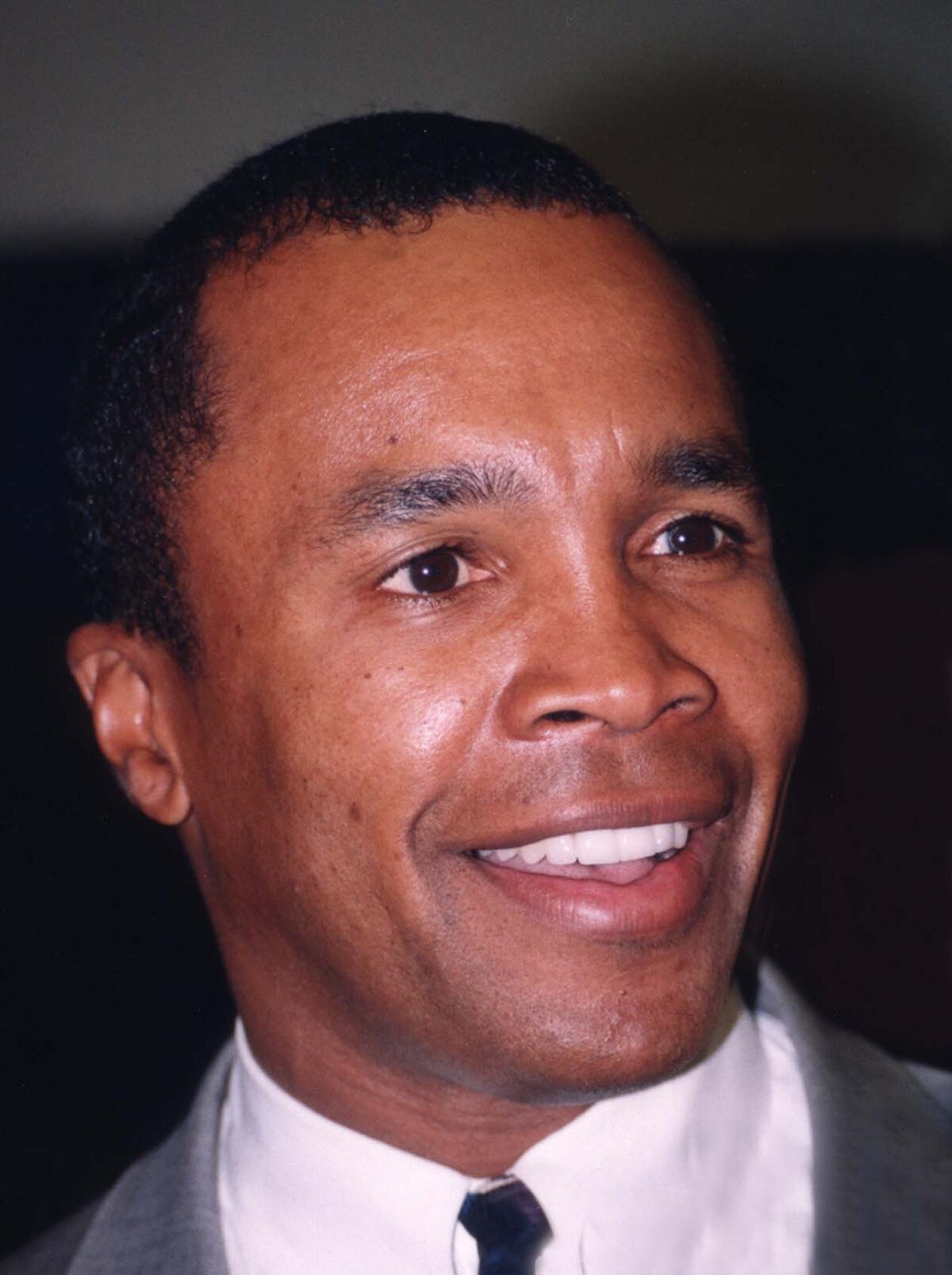
Sugar Ray Leonard, born as Ray Charles Leonard on May 17, 1956, in Wilmington, North Carolina, is one of the most iconic figures in the history of boxing. His journey from a promising young athlete to becoming one of the sport’s most celebrated champions is a story of determination, skill, and an unrelenting passion for excellence. Leonard is renowned for his quick reflexes, strategic brilliance, and charismatic presence, which made him a beloved figure in the world of sports and beyond.
Early Life and Entry into Boxing
Ray Leonard was born into a working-class family, the fifth of seven children. His early life was marked by modest beginnings, but his potential in sports, particularly boxing, became evident at a young age. He was named after the legendary singer Ray Charles, a hint of the greatness that would define his own life. Leonard’s boxing journey began at the Palmer Park Recreation Center in Maryland, where his talent quickly caught the attention of trainers.
By the time he was a teenager, Leonard had already made a name for himself in amateur boxing. His discipline, combined with natural talent, set him on a path to greatness. The turning point in his amateur career came when he won a gold medal in the 1976 Montreal Olympics, a feat that catapulted him into the national spotlight. This victory was not just a personal achievement; it was a moment of pride for the entire nation, marking the arrival of a new star in the boxing world.
Rise to Fame
Leonard turned professional in 1977, and his career quickly gained momentum. His speed, agility, and tactical intelligence in the ring were unparalleled. In 1979, Leonard captured his first world title by defeating Wilfred Benitez to become the WBC welterweight champion. This match was a masterclass in boxing strategy, with Leonard demonstrating his ability to outthink and outmaneuver his opponents.
One of the most defining moments of Leonard’s career came in 1980 when he faced the legendary Roberto Durán. Their first encounter, known as the “Brawl in Montreal,” was a grueling 15-round battle that saw Durán win by decision. However, Leonard’s resilience shone through when, in a rematch later that year, he reclaimed his title in a fight famously known as the “No Más” fight, where Durán quit in the eighth round.
Legendary Status and Boxing Achievements
Sugar Ray Leonard’s career is filled with iconic matches that have gone down in the annals of boxing history. In 1981, he fought Thomas Hearns in what was billed as “The Showdown.” This fight was a unification bout for the welterweight championship and is still considered one of the greatest fights in boxing history. Leonard, trailing on the scorecards, made a dramatic comeback to knock out Hearns in the 14th round, solidifying his status as a boxing legend.
Leonard’s ability to adapt and excel in multiple weight classes set him apart from his contemporaries. Over the course of his career, he won world titles in five different weight divisions: welterweight, light middleweight, middleweight, super middleweight, and light heavyweight. This achievement made him the first boxer to win world titles in five different weight classes, a testament to his versatility and skill.
In 1987, after a brief retirement, Leonard returned to the ring to face Marvin Hagler, the reigning middleweight champion. This fight was one of the most anticipated bouts in boxing history, and Leonard, despite being the underdog, won by a split decision. The victory added to his legacy as one of the greatest boxers of all time.
Later Career and Final Retirement
Despite multiple retirements, Leonard’s love for boxing kept bringing him back to the ring. After his victory over Hagler, he continued to fight sporadically, defending his titles and taking on new challengers. However, as the years went by, the physical toll of the sport began to catch up with him.
In 1991, Leonard faced Terry Norris in a bid to capture the WBC super welterweight title. It was a tough match, and Leonard was knocked down twice, eventually losing by decision. This fight was a clear indication that Leonard’s prime years were behind him, and he announced his retirement shortly afterward.
Yet, the lure of the ring proved too strong, and in 1997, Leonard made one final comeback. He faced Héctor Camacho in a fight that ended in a fifth-round technical knockout, marking the first and only time Leonard was stopped in his career. After this loss, Leonard retired for good, leaving behind a legacy that few have matched.
Legacy and Impact
Sugar Ray Leonard’s impact on boxing and sports, in general, extends beyond his impressive record. He was more than just a boxer; he was a pioneer who brought a new level of sophistication and charisma to the sport. Leonard was one of the first boxers to understand the importance of media and public relations, using his charm and intelligence to become a household name.
Leonard’s fights were more than just sporting events; they were spectacles that drew millions of viewers and generated significant revenue. He was one of the first boxers to earn multimillion-dollar purses, setting the stage for the big-money fights that define the sport today. His ability to negotiate lucrative deals and secure endorsements made him a trailblazer in the business side of boxing.
Off the ring, Leonard has been involved in numerous charitable activities, using his fame and fortune to make a positive impact. He has been an advocate for various causes, including diabetes awareness, a disease he was diagnosed with in 2010. Leonard’s commitment to giving back to the community has further cemented his status as a role model and a legend.
Historical Context and Cultural Significance
To fully appreciate Sugar Ray Leonard’s impact, it’s important to consider the historical and cultural context of his career. Leonard emerged at a time when boxing was transitioning from the era of Muhammad Ali, one of the greatest and most charismatic figures in sports history. After Ali’s retirement, there was a void in the boxing world, and Leonard stepped in to fill that gap.
Leonard’s rise coincided with the golden age of welterweight boxing, a period that saw some of the most talented fighters in history compete in the division. The 1980s were a time of intense competition, with Leonard, Roberto Durán, Thomas Hearns, and Marvin Hagler forming the “Four Kings,” a group of fighters whose rivalries defined the era. Leonard’s battles with these fighters are still talked about today and are considered some of the best in the sport’s history.
Leonard’s style of boxing, which combined speed, power, and tactical brilliance, influenced a generation of fighters. He was a master of psychological warfare, often getting into his opponents’ heads before a fight. His ability to adapt to different styles and his willingness to take on the best in the business earned him the respect of fans and fighters alike.
Conclusion
Sugar Ray Leonard’s story is one of triumph, resilience, and unparalleled success. From his humble beginnings to becoming a five-division world champion, Leonard’s journey is a testament to what can be achieved through hard work, determination, and a relentless pursuit of excellence. His legacy in boxing is secure, but his impact goes beyond the sport, making him one of the most significant figures in the history of sports.
Today, Leonard is remembered not only for his achievements in the ring but also for the way he conducted himself outside of it. He was a fighter who transcended the sport, becoming a global icon and a symbol of excellence. Sugar Ray Leonard’s name will forever be etched in the annals of boxing history, and his life story will continue to inspire generations to come.


