
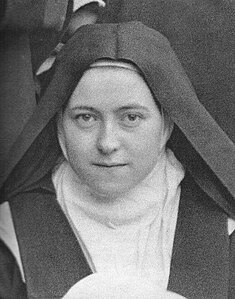
Saint Thérèse of Lisieux, also known as Teresa di Lisieux or simply “The Little Flower,” is a figure whose impact on the Catholic Church and Christian spirituality is both profound and enduring. Born as Thérèse Françoise Marie Martin on January 2, 1873, in Alençon, Lower Normandy, France, she lived a brief yet spiritually rich life, passing away at the young age of 24 on September 30, 1897. Despite her short lifespan, her influence and legacy have grown immensely, making her one of the most beloved and venerated saints in the Catholic tradition.
Early Life and Family Background
Thérèse was born into a deeply religious family. Her parents, Louis Martin and Zélie Guérin, were devout Catholics who initially intended to enter religious life themselves. However, they later married and had nine children, five of whom survived into adulthood. Thérèse was the youngest of these children. Her mother, Zélie, passed away when Thérèse was just four years old, leaving a profound impact on her. The loss of her mother drew Thérèse closer to her older sister Pauline, who became a maternal figure for her.
The Martin family was known for their piety and commitment to the Catholic faith. Pauline entered the Carmelite convent at the age of 16, adopting the name Mother Agnes of Jesus. Thérèse’s other sisters, Marie and Léonie, also became religious sisters. This deeply spiritual environment undoubtedly influenced Thérèse’s own religious inclinations from a very young age.
Spiritual Awakening and Vocation
Thérèse’s spiritual journey took a significant turn during Christmas of 1886, an event she later referred to as her “complete conversion.” On that night, she experienced a profound inner transformation, awakening a deep desire to pursue a life dedicated to God. She described this event as the moment when “the Divine Child healed her of her childhood weaknesses.”
This newfound spiritual fervor led Thérèse to pursue her vocation as a Carmelite nun. At the age of 15, she expressed her desire to join the Carmelite convent in Lisieux, where her sister Pauline had already taken vows. However, she faced significant opposition due to her young age. Determined to follow her calling, Thérèse sought permission from higher authorities, eventually appealing directly to Pope Leo XIII during a pilgrimage to Rome. Although the Pope did not grant her immediate permission, he offered words of encouragement, saying that if God willed it, she would indeed enter the convent.
In 1888, at the age of 15, Thérèse entered the Carmelite convent in Lisieux, taking the name Sister Thérèse of the Child Jesus and the Holy Face. Her life in the convent was marked by simplicity, humility, and a profound sense of love for God. She embraced what she called “The Little Way,” a spiritual path that emphasized doing small things with great love and trust in God. This approach to spirituality would later become one of the hallmarks of her teachings and writings.
The “Little Way” and Spiritual Teachings
Thérèse’s “Little Way” is a doctrine of simplicity and humility, focusing on the love of God and the desire to serve Him in the smallest actions of daily life. She believed that holiness could be achieved not through grandiose deeds but through ordinary actions performed with great love and devotion. Her spiritual insights were deeply rooted in her own experience of the limitations and challenges of human life, which she saw as opportunities to grow closer to God.
In her autobiography, Story of a Soul, Thérèse articulated her spiritual philosophy with clarity and grace. This work, written at the request of her sister Pauline, who was also her superior at the convent, became a spiritual classic, widely read and admired for its profound insights and accessible teachings. In it, Thérèse shared her personal struggles, her deep love for Jesus, and her desire to be “a little flower in the garden of God,” unnoticed but spreading the fragrance of love and devotion.
Illness and Death
Thérèse’s life was marked by physical suffering, which she bore with remarkable patience and serenity. In 1896, she was diagnosed with tuberculosis, a disease that was often fatal in that era. Despite her deteriorating health, Thérèse continued to live her “Little Way,” accepting her suffering as a means of drawing closer to God. She famously expressed her willingness to endure pain and suffering for the salvation of souls, believing that her mission would continue even after her death.
Thérèse passed away on September 30, 1897, at the age of 24. Her final words were a testament to her deep faith and trust in God: “My God, I love You!” Her death was a profound loss to the Carmelite community, but her legacy was just beginning to take shape.
Canonization and Recognition
Following her death, Thérèse’s reputation for holiness and the influence of her writings spread rapidly. Miracles attributed to her intercession were reported, leading to her beatification in 1923 by Pope Pius XI and her canonization in 1925. She became known as “The Little Flower of Jesus” due to her belief that she would spend her heaven doing good on earth, “letting fall a shower of roses.” This image of roses has become one of the most recognizable symbols associated with her.
Thérèse’s spiritual legacy was further recognized when she was declared a Doctor of the Church by Pope John Paul II in 1997, on the centenary of her death. She was only the third woman to receive this title, following St. Teresa of Avila and St. Catherine of Siena. This honor reflects the profound impact of her teachings on the Catholic Church and her influence on Christian spirituality worldwide.
Patronage and Influence
Thérèse of Lisieux is the patron saint of missionaries, a somewhat paradoxical title given that she never left the convent walls. However, her deep desire to spread the love of Christ to all corners of the world, expressed in her prayers and writings, earned her this title. She is also the patron saint of France, alongside St. Joan of Arc, reflecting her significant role in the spiritual life of the nation.
Her influence extends beyond the Catholic Church. Many people, regardless of their religious affiliation, have found inspiration in her teachings on love, humility, and the simplicity of daily life. Her autobiography, Story of a Soul, continues to be widely read and has been translated into numerous languages, touching the hearts of readers around the world.
Legacy in Modern Times
In modern times, Thérèse of Lisieux remains a figure of immense spiritual significance. Her “Little Way” offers a path of spirituality that is accessible to all, regardless of one’s status or position in life. Her teachings emphasize the importance of love and trust in God, even in the midst of suffering and adversity. This message continues to resonate with people today, offering comfort and guidance in a world that often seems overwhelming and complex.
Thérèse’s life and teachings have inspired countless individuals, including figures like Mother Teresa of Calcutta, who took her name in honor of the Little Flower. Her influence can also be seen in the lives of many other saints, writers, and spiritual leaders who have drawn upon her insights in their own work.
Conclusion
Thérèse of Lisieux, though she lived a life that was outwardly unremarkable, has left an indelible mark on the world. Her “Little Way” of love, humility, and trust in God offers a timeless spiritual path that continues to inspire and guide people of all ages and backgrounds. As one of the most beloved saints in the Catholic Church, her life serves as a testament to the power of simplicity and the profound impact that a life lived in love can have on the world.
Her story is not just a tale of personal piety, but a universal call to find holiness in the ordinary moments of life. In a world that often values achievement and success, Thérèse’s message is a reminder that true greatness lies in the small, often unnoticed acts of love and kindness. Through her intercession and her example, she continues to lead countless souls to a deeper relationship with God, making her one of the most significant figures in Christian spirituality.


