
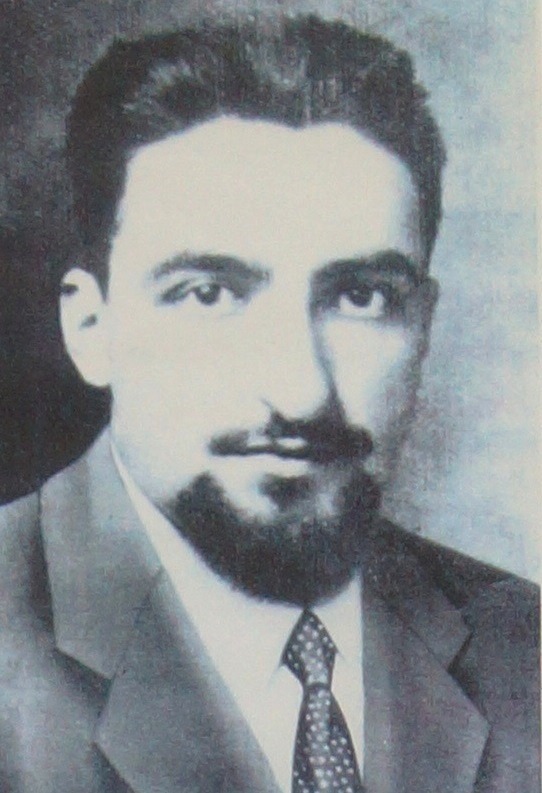
Teresio Olivelli, born on January 7, 1916, in Bellagio, Italy, is a name that resonates deeply within the annals of Italian history, especially within the context of World War II and the Catholic resistance against fascism. Known for his unwavering commitment to his faith and his profound sense of justice, Olivelli’s life is a testament to the power of individual conviction in the face of overwhelming tyranny. His story is one of moral courage, selflessness, and the ultimate sacrifice for the well-being of others.
Early Life and Education
Teresio Olivelli grew up in a time of profound social and political change in Italy. His family moved to Zeme, where he completed his elementary education. He then attended high school in Mortara and later pursued higher education in law at the prestigious University of Pavia, enrolling as a student at the Collegio Ghislieri, a renowned institution known for nurturing some of Italy’s brightest minds.
Olivelli’s academic journey was marked by excellence. He was not only a brilliant student but also someone deeply committed to social and charitable causes. His involvement with Catholic Action and the Society of Saint Vincent de Paul highlighted his dedication to bringing evangelical values into social contexts. These early experiences in social activism laid the foundation for his later life, where his faith and sense of justice would guide his actions during one of the most turbulent periods in modern history.
Engagement with Fascism and the Shift to Resistance
In his early years, like many of his contemporaries, Olivelli engaged with the only political framework available at the time—fascism. However, unlike others, his involvement was driven by a desire to infuse the political sphere with Christian values. He believed that by participating in the system, he could influence its doctrine and practices, aiming to create a better society rooted in the principles of human dignity and equality.
Olivelli’s early acceptance of fascism was not an endorsement of its more extreme ideologies but rather an attempt to work within the system for the greater good. However, as the realities of fascism, particularly its brutal methods during the war, became more apparent, Olivelli’s perspective began to shift dramatically. He grew increasingly critical of the regime’s inhumane policies and the oppressive environment it fostered.
His disillusionment reached a turning point during his time in Russia, where he served as an officer in the Alpine troops during World War II. Witnessing the horrors of war firsthand, particularly the suffering of soldiers and civilians alike, Olivelli’s moral compass led him to renounce fascism entirely. He began to see the regime for what it truly was—a force of oppression and violence that stood in stark contrast to the Christian values he held dear.
The War and His Moral Stand
Olivelli’s time on the Russian front was a period of profound transformation. Despite the chaos and destruction around him, he remained steadfast in his commitment to his fellow soldiers, many of whom he saved through acts of extraordinary bravery. During the disastrous retreat of the Italian forces, while others fled for their lives, Olivelli stayed behind to care for the wounded, risking his own life in the process. This selfless behavior earned him the respect and admiration of those who served with him, and many owed their survival to his courage.
His experiences during the war only deepened his faith and commitment to Christian charity. When he returned to Italy, he decided to leave behind a promising academic and professional career in Rome. Instead, he chose to return to his roots in the provinces, dedicating himself to the education of young minds as the rector of Collegio Ghislieri. At just 26 years old, he became the youngest rector in Italy, a position that allowed him to influence a new generation with his ideals of justice, charity, and faith.
Resistance and Arrest
The signing of the armistice on September 8, 1943, marked a critical juncture in Olivelli’s life. Refusing to collaborate with the occupying German forces, he became an active participant in the Catholic resistance in Brescia. His involvement was not motivated by political ideology or party allegiance but by his unwavering commitment to the principles of faith and Christian charity.
Olivelli’s resistance activities were rooted in a moral and pedagogical mission. He sought to spread Christian values of freedom and reconciliation at a time when hatred and violence were rampant. His most notable contribution to the resistance was the founding of “Il Ribelle,” a clandestine newspaper that became a voice for the Catholic resistance. Through this publication, Olivelli articulated his vision of resistance as a “revolt of the spirit” against tyranny, violence, and hatred. He encouraged those under oppression to reclaim their human dignity and embrace the freedom that comes from within.
The message of “Il Ribelle” was both powerful and dangerous. It was considered a subversive activity by the fascist regime, leading to Olivelli’s arrest in Milan in April 1944. His arrest marked the beginning of a harrowing journey through various Nazi concentration camps, including Fossoli, Bolzano-Gries, Flossenbürg, and Hersbruck.
Life in Concentration Camps and Martyrdom
In the concentration camps, Olivelli’s character and faith were put to the ultimate test. Despite the inhumane conditions and brutal treatment, he continued to live by the principles of Christian charity. He became a beacon of hope for many prisoners, often intervening to protect them from beatings and sharing his meager food rations with the weakest among them. His actions were driven by a deep sense of solidarity and love for his fellow man, even in the face of death.
Olivelli’s unwavering commitment to his faith and his fellow prisoners did not go unnoticed. His acts of kindness and bravery earned him the enmity of the camp authorities, who subjected him to continuous beatings. Yet, he never wavered in his mission to serve others. In January 1945, in a final act of self-sacrifice, Olivelli intervened to protect a young Ukrainian prisoner who was being brutally beaten. He shielded the young man with his own body, suffering a fatal blow to his abdomen. Teresio Olivelli died on January 17, 1945, at the age of 29. His body was incinerated in the crematorium at Hersbruck, his sacrifice a testament to the ultimate expression of Christian love.
Recognition and Legacy
Teresio Olivelli’s life and death have left an indelible mark on history. In recognition of his heroic virtues, the Catholic Church declared him Venerable on December 14, 2015. On June 16, 2017, Pope Francis recognized Olivelli’s martyrdom “in odium fidei” (in hatred of the faith), paving the way for his beatification. On February 3, 2018, Olivelli was officially beatified in a ceremony held at the Palasport of Vigevano, presided over by Cardinal Angelo Amato, Prefect of the Congregation for the Causes of Saints.
Olivelli’s beatification was a profound acknowledgment of his life as a martyr of faith and charity. His legacy continues to inspire generations, particularly those involved in social justice and humanitarian work. His life serves as a powerful reminder of the impact one individual can have in the face of overwhelming adversity. Olivelli’s story is not just one of resistance against fascism but also a narrative of profound faith in action, where religious beliefs are translated into tangible acts of love and sacrifice.
Teresio Olivelli’s Impact on the Modern World
The life of Teresio Olivelli is a powerful example of how faith and conviction can guide one through the darkest of times. His actions during World War II, his resistance against fascism, and his ultimate sacrifice have cemented his place in history as a symbol of moral courage and Christian charity.
In the modern world, Olivelli’s life continues to resonate, especially in discussions about ethics, human rights, and the role of religion in public life. His commitment to the dignity of every human being, regardless of their circumstances, is a message that transcends time and place. For many, Olivelli represents the ideal of living a life of purpose, guided by principles that prioritize the well-being of others over personal gain.
His story is particularly relevant today, as societies around the world grapple with issues of inequality, oppression, and the struggle for human rights. Olivelli’s life challenges us to consider the ways in which we can stand up against injustice in our own lives, whether through acts of kindness, advocacy, or simply by living according to the values we hold dear.
Conclusion
Teresio Olivelli’s life was a short but remarkable journey of faith, courage, and selfless service. From his early days as a brilliant student and social activist to his heroic acts of resistance against fascism and his ultimate sacrifice in a Nazi concentration camp, Olivelli exemplified the highest ideals of Christian charity and moral integrity. His legacy as a martyr and a beacon of hope continues to inspire people across the world, reminding us of the enduring power of faith and the profound impact that one individual can have in the struggle for justice and human dignity.
As we reflect on the life of Teresio Olivelli, we are reminded that true greatness is not measured by wealth or power but by the willingness to sacrifice for the greater good. His life stands as a testament to the strength of the human spirit and the transformative power of love in the face of unimaginable suffering. Teresio Olivelli will forever be remembered as a hero of faith, a defender of the oppressed, and a symbol of the enduring fight for freedom and justice.


