
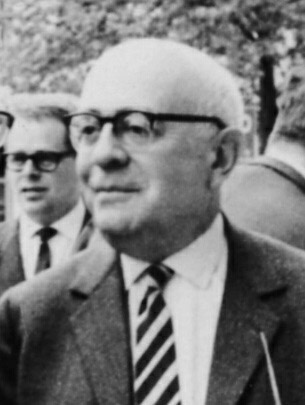
Theodor W. Adorno, a German philosopher, sociologist, musicologist, and critical theorist, remains one of the most influential intellectual figures of the 20th century. Born on September 11, 1903, in Frankfurt am Main, Germany, Adorno’s work profoundly shaped the fields of philosophy, sociology, and cultural criticism. His association with the Frankfurt School and his contributions to critical theory mark him as a towering figure in the landscape of modern thought.
Early Life and Education
Theodor Ludwig Wiesengrund Adorno was born to a culturally enriched family. His father, Oscar Wiesengrund, was a Jewish wine merchant, and his mother, Maria Calvelli-Adorno della Piana, was an accomplished singer of Corsican descent. Adorno’s upbringing in a musically and intellectually stimulating environment significantly influenced his later work.
Adorno was a prodigious student, displaying exceptional talent in music and academics. He attended the Kaiser-Wilhelm-Gymnasium, where he excelled in his studies and developed a keen interest in philosophy and music. Adorno’s early exposure to the works of Immanuel Kant, Georg Wilhelm Friedrich Hegel, and Ludwig van Beethoven laid the foundation for his interdisciplinary approach to philosophy and musicology.
Academic and Intellectual Formation
Adorno pursued higher education at the Johann Wolfgang Goethe University in Frankfurt, where he studied philosophy, sociology, psychology, and musicology. Under the mentorship of Siegfried Kracauer and Max Horkheimer, Adorno began to refine his critical perspective on society and culture.
In 1924, Adorno completed his dissertation on Edmund Husserl’s phenomenology, showcasing his analytical prowess and philosophical depth. His early academic work also included studies in music composition under Alban Berg in Vienna, reflecting his lifelong dedication to integrating philosophical inquiry with musical analysis.
The Frankfurt School and Critical Theory
Adorno’s association with the Frankfurt School of Critical Theory was a defining aspect of his intellectual journey. The Frankfurt School, a group of interdisciplinary scholars, aimed to critique and understand the social, political, and economic conditions of modern capitalism. Alongside figures such as Max Horkheimer, Herbert Marcuse, and Walter Benjamin, Adorno sought to develop a critical theory that addressed the contradictions and crises of contemporary society.
Adorno’s collaboration with Max Horkheimer resulted in the seminal work “Dialectic of Enlightenment” (1944). This text critically examined the Enlightenment’s legacy, arguing that the rationalization and commodification inherent in modern capitalism led to new forms of domination and social control. Adorno and Horkheimer’s critique of the culture industry highlighted how mass media and consumer culture perpetuate ideological manipulation and passive consumption.
Exile and Return to Germany
The rise of the Nazi regime in the early 1930s forced Adorno, along with many of his colleagues, into exile. Adorno initially moved to England and later to the United States, where he joined the Institute for Social Research, reestablished at Columbia University in New York.
During his years in exile, Adorno’s work expanded to include studies on anti-Semitism, authoritarianism, and mass culture. His collaboration with the American sociologist Paul Lazarsfeld on the “Princeton Radio Research Project” yielded influential insights into the effects of mass media on public opinion and behavior.
Adorno returned to Germany in 1949, resuming his academic career at the University of Frankfurt. His return marked a period of prolific output, including significant contributions to philosophy, sociology, and musicology.
Major Works and Contributions
Adorno’s body of work is vast and multifaceted, encompassing a range of subjects from aesthetics and music theory to sociology and philosophy. Some of his most notable works include:
-
“Minima Moralia: Reflections from Damaged Life” (1951): This collection of aphorisms and reflections captures Adorno’s critique of modern society’s ethical and existential dilemmas. Written during his exile in America, “Minima Moralia” offers a deeply personal and philosophical examination of life’s contradictions and the impact of societal norms on individual experience.
-
“Negative Dialectics” (1966): In this foundational text, Adorno critiques traditional approaches to dialectical thinking, proposing a “negative dialectics” that emphasizes the non-identity and contradiction inherent in reality. Adorno’s negative dialectics rejects the synthesis of opposites, arguing for a continual process of critical reflection and negation.
-
“Aesthetic Theory” (1970): Published posthumously, this work explores the relationship between art, society, and politics. Adorno’s aesthetic theory emphasizes the autonomy of art while recognizing its potential to critique and transcend social conditions. His analysis of modernist art and music underscores the transformative power of aesthetic experience.
-
“The Authoritarian Personality” (1950): Co-authored with Else Frenkel-Brunswik, Daniel Levinson, and Nevitt Sanford, this empirical study investigates the psychological and social roots of authoritarianism and prejudice. The research, conducted in the context of post-World War II America, offers critical insights into the dynamics of conformity, obedience, and anti-democratic tendencies.
Personal Life and Legacy
Adorno’s personal life was intertwined with his intellectual pursuits. He married Gretel Karplus in 1937, and their partnership remained a source of support and collaboration throughout his career. Despite his rigorous academic schedule, Adorno maintained a deep engagement with music, both as a theorist and a pianist.
Adorno’s legacy endures through his profound influence on critical theory, cultural studies, and contemporary philosophy. His work continues to inspire scholars and thinkers across disciplines, offering a critical lens through which to examine the complexities of modern society. Adorno’s contributions to the understanding of mass culture, ideology, and the role of art in social critique remain relevant in today’s media-saturated world.
Historical Context and Significance
To fully appreciate Theodor W. Adorno’s impact, it is essential to consider the historical context of his work. Born at the turn of the 20th century, Adorno’s intellectual development was shaped by the turbulent events of his time, including World War I, the rise of fascism, World War II, and the post-war reconstruction of Europe.
Adorno’s critique of modernity and his analysis of the culture industry reflect his deep concern with the dehumanizing effects of capitalist society. His experiences of exile and witnessing the atrocities of the Holocaust further intensified his commitment to understanding and combating the forces of domination and oppression.
The Frankfurt School’s interdisciplinary approach, which combined philosophy, sociology, psychology, and cultural criticism, enabled Adorno to develop a comprehensive critique of contemporary society. His insights into the relationship between culture and power, the commodification of art, and the mechanisms of social control continue to resonate with contemporary debates on media, technology, and ideology.
Continuing Influence and Contemporary Relevance
Adorno’s work remains a touchstone for scholars and activists seeking to understand and challenge the dynamics of power and ideology in the modern world. His critique of the culture industry, in particular, offers valuable insights into the ways in which mass media and consumer culture shape public consciousness and reinforce social hierarchies.
In the digital age, Adorno’s analysis of the commodification of culture and the manipulation of desire is more relevant than ever. The proliferation of digital media, the rise of social networks, and the increasing concentration of media ownership highlight the enduring importance of Adorno’s critique.
Moreover, Adorno’s emphasis on the emancipatory potential of art and critical reflection provides a vital framework for exploring alternative forms of resistance and social transformation. His call for a negative dialectics—a continual process of questioning and negation—encourages a critical engagement with established norms and the pursuit of new possibilities for human flourishing.
Conclusion
Theodor W. Adorno’s life and work represent a profound engagement with the challenges and contradictions of modern society. From his early academic achievements and contributions to the Frankfurt School to his enduring influence on contemporary thought, Adorno’s legacy is one of intellectual rigor, critical insight, and a deep commitment to understanding the complexities of human experience.
As we reflect on Adorno’s contributions, we are reminded of the importance of critical theory in illuminating the structures of power and ideology that shape our world. Adorno’s work invites us to engage in a continual process of reflection and critique, challenging us to envision and strive for a more just and humane society.


