
Introduction
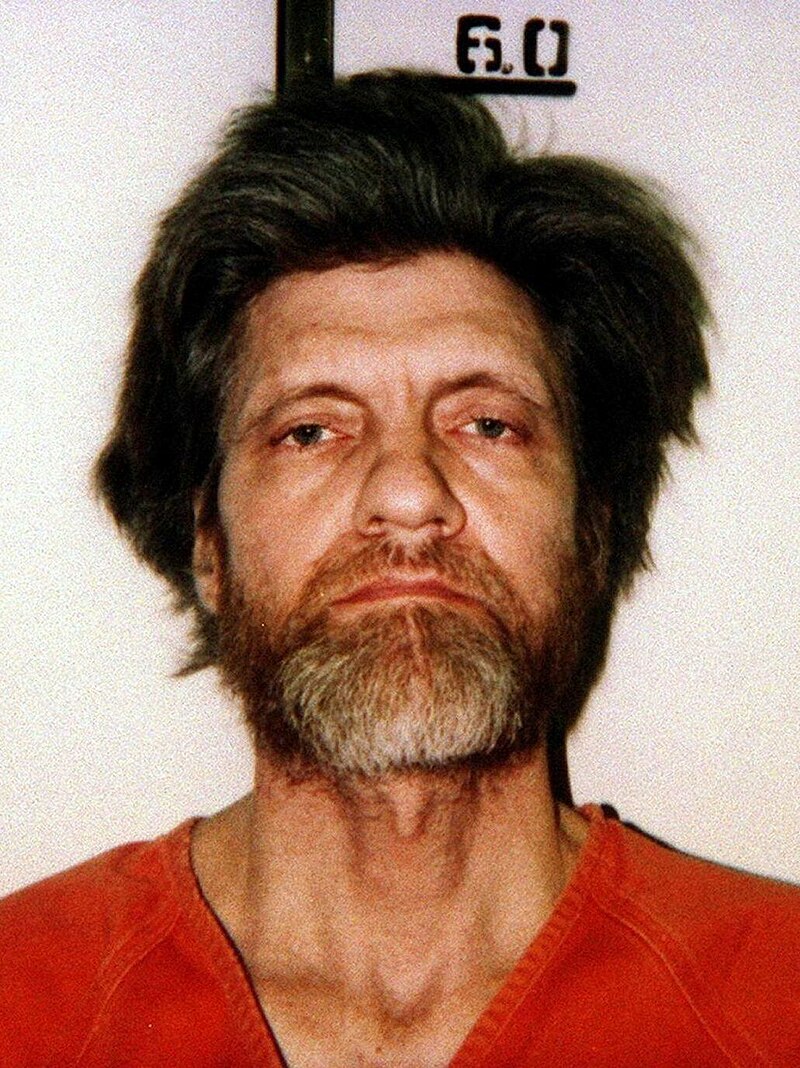
Theodore Kaczynski, often referred to as the “Unabomber,” is a name that resonates with a dark chapter in American history. Known for his intellectual brilliance as much as for his acts of violence, Kaczynski’s life has been a complex tale of genius turned to malevolence. Born on May 22, 1942, in Chicago, Illinois, Kaczynski’s trajectory from a promising mathematician to one of the most infamous domestic terrorists in the United States is both fascinating and chilling. This article delves deep into the life, motivations, and legacy of Theodore Kaczynski, exploring his rise to infamy and the historical context that shaped his actions.
Early Life and Education
Theodore John Kaczynski was born to Polish immigrants, growing up in a modest home in Chicago. From a young age, Kaczynski displayed exceptional intellectual abilities, particularly in mathematics. His parents recognized his potential early on, nurturing his talents, which led him to skip grades and eventually graduate from high school at the age of 16. His academic prowess earned him a place at Harvard University, one of the most prestigious institutions in the world.
At Harvard, Kaczynski continued to excel, majoring in mathematics. However, his time there was not without challenges. Harvard was a highly competitive environment, and Kaczynski, introverted by nature, found it difficult to fit in socially. During this period, he participated in a psychological study led by Professor Henry Murray, a controversial experiment that involved intense psychological stress. Some experts later speculated that this study might have contributed to Kaczynski’s psychological unraveling.
Academic Career
After graduating from Harvard, Kaczynski pursued a Ph.D. in mathematics at the University of Michigan. His doctoral dissertation on complex function theory was so advanced that it impressed several academic professionals. Following his Ph.D., he accepted a teaching position at the University of California, Berkeley, at the age of just 25, becoming one of the youngest assistant professors in the university’s history.
However, Kaczynski’s career in academia was short-lived. In 1969, just two years after joining Berkeley, he abruptly resigned without providing a clear reason. This marked the beginning of a significant shift in his life—a move away from academia and towards a path of isolation and, eventually, terrorism.
The Path to Infamy: The Unabomber
After leaving Berkeley, Kaczynski returned to his family’s home briefly before moving to a remote cabin near Lincoln, Montana, in 1971. There, he lived a solitary life, without electricity or running water, aiming to be self-sufficient. It was during this time that Kaczynski began developing his anti-technology views, which would later become the foundation of his campaign of terror.
Kaczynski’s first attack occurred in 1978 when he sent a homemade bomb to a professor at Northwestern University. Although the professor was not injured, a campus police officer was hurt when the bomb detonated. This was the beginning of a nearly two-decade-long bombing campaign that targeted universities, airlines, and individuals whom Kaczynski saw as symbols of the technological society he despised.
The FBI dubbed him the “Unabomber” because his targets were primarily universities (UNI) and airlines (A). Over 17 years, Kaczynski mailed or hand-delivered 16 bombs, resulting in three deaths and 23 injuries. His bombs were meticulously crafted, using unconventional materials to avoid detection, which added to the difficulty in tracing their origin.
The Manifesto and Capture
In 1995, Kaczynski made a bold move that would ultimately lead to his capture. He sent a 35,000-word manifesto titled “Industrial Society and Its Future” to The New York Times and The Washington Post, threatening to continue his bombing campaign unless it was published. The manifesto was a detailed critique of modern society, arguing that technological advancements were eroding human freedom and autonomy. It called for a return to a simpler, agrarian lifestyle and warned of the dangers of unchecked technological progress.
The publication of the manifesto was a turning point in the investigation. Kaczynski’s brother, David, recognized the writing style and ideas as similar to those expressed by Theodore in personal letters. David contacted the FBI, which ultimately led to Kaczynski’s arrest in April 1996 at his Montana cabin. The evidence found at the scene was overwhelming, including bomb-making materials and an original copy of the manifesto.
Trial and Imprisonment
The trial of Theodore Kaczynski was highly publicized, with intense media coverage and public interest. Despite his initial intention to represent himself, Kaczynski eventually accepted a plea bargain to avoid the death penalty. In January 1998, he pleaded guilty to all federal charges and was sentenced to life imprisonment without the possibility of parole.
Kaczynski was incarcerated at ADX Florence, a supermax prison in Colorado known for housing some of the most dangerous criminals in the United States. Throughout his imprisonment, Kaczynski remained unrepentant, continuing to express his anti-technology views in letters and writings.
Legacy and Impact
Theodore Kaczynski’s legacy is a complex one. While he is undeniably a criminal responsible for heinous acts of violence, his manifesto has been studied and debated by scholars, journalists, and activists alike. Some argue that his critique of technology, though expressed through violence, touches on legitimate concerns about the impact of industrialization and technological advancement on human life and the environment. Others, however, view Kaczynski’s ideas as the ravings of a madman, overshadowed by the bloodshed he caused.
The Unabomber case also had a significant impact on law enforcement, particularly in the areas of criminal profiling and forensic linguistics. The case demonstrated the potential for linguistic analysis in criminal investigations, as Kaczynski’s writing style played a crucial role in his identification and capture.
Conclusion
Theodore Kaczynski remains a figure of intrigue and horror in American history. His life, from a brilliant academic to a reclusive terrorist, reflects the dangers of isolation, radicalization, and the extreme lengths to which some individuals will go to oppose societal change. Kaczynski’s story is a reminder of the potential for brilliance to turn destructive and the importance of addressing the underlying psychological and social issues that can lead to such outcomes.
While Kaczynski’s actions can never be justified, understanding his motivations and the context in which he operated provides valuable insights into the complexities of human behavior and the potential consequences of technological progress. As society continues to grapple with the challenges of the digital age, the questions raised by Kaczynski’s manifesto remain relevant, even as his methods are universally condemned.


