
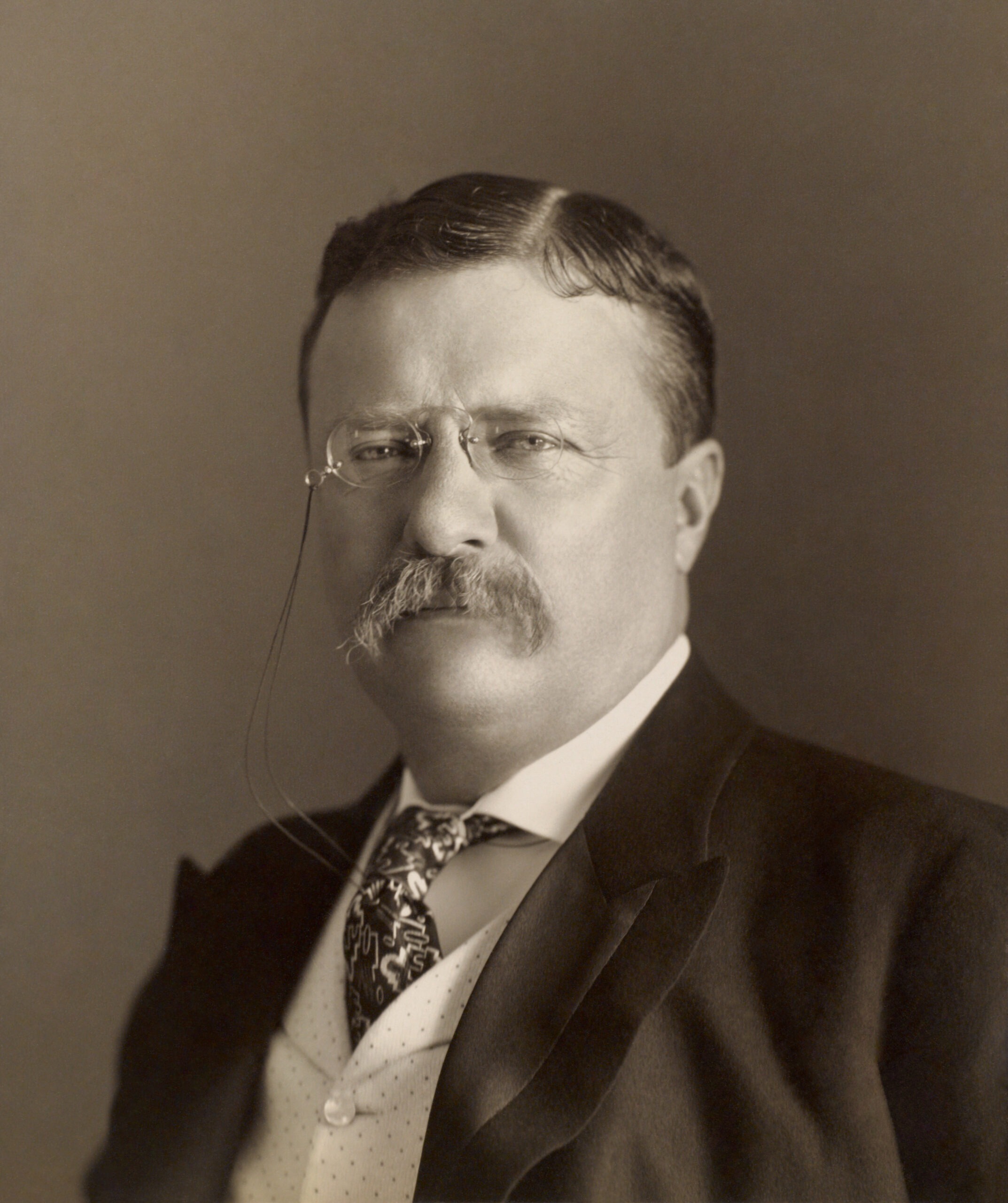
Theodore Roosevelt, born on October 27, 1858, in New York City, is one of the most iconic figures in American history. As the 26th President of the United States, Roosevelt’s legacy is marked by his vigorous personality, bold reforms, and a foreign policy that redefined America’s role on the world stage. His life and career were a testament to his philosophy of “strenuous life,” where he believed in living life to its fullest potential, both physically and intellectually. This article delves into the life, achievements, and lasting impact of Theodore Roosevelt, offering detailed insights into his journey from a sickly child to a towering figure in American politics.
Early Life and Education
Theodore Roosevelt, often affectionately referred to as “Teddy” or simply “TR,” was born into a wealthy family of Dutch heritage. His father, Theodore Roosevelt Sr., was a successful businessman and philanthropist, while his mother, Martha Bulloch Roosevelt, hailed from a Southern plantation family in Georgia. This combination of Northern progressivism and Southern conservatism would profoundly influence Roosevelt’s worldview.
Roosevelt’s childhood was marked by severe asthma, a condition that left him physically weak and often bedridden. Despite his frailty, young Roosevelt developed a keen interest in natural history, spending hours studying birds, insects, and other creatures. His father encouraged him to build his physical strength, leading Roosevelt to embrace a rigorous regimen of exercise, including boxing and hiking, which would later become hallmarks of his robust adult life.
In 1876, Roosevelt entered Harvard University, where he excelled academically while also becoming involved in various extracurricular activities. Despite his ongoing battle with asthma, he participated in boxing and rowing, proving his resilience and determination. Roosevelt’s time at Harvard was also marked by his growing interest in politics and history, subjects that would shape his future career.
After graduating from Harvard in 1880, Roosevelt briefly attended Columbia Law School. However, his passion for politics soon led him to abandon his legal studies in favor of a career in public service. That same year, he married his first wife, Alice Hathaway Lee, marking the beginning of a new chapter in his life.
Early Political Career and Personal Tragedy
Roosevelt’s entry into politics was swift and determined. In 1882, at the age of 23, he was elected to the New York State Assembly, where he quickly gained a reputation as a reformer and an advocate for transparency in government. His early political career was marked by his efforts to combat corruption, and he became known for his fearless stance against powerful political machines.
However, Roosevelt’s promising career was abruptly interrupted by personal tragedy. On February 14, 1884, both his wife, Alice, and his mother, Martha, died on the same day—Alice from complications related to childbirth and Martha from typhoid fever. Devastated by the loss, Roosevelt withdrew from public life, retreating to the Badlands of North Dakota, where he spent several years as a rancher and cowboy. This period of introspection and physical labor helped Roosevelt recover from his grief and shaped his views on self-reliance and rugged individualism.
Return to Politics and National Prominence
Roosevelt’s time in the Badlands was transformative, but his passion for public service eventually drew him back to politics. In 1886, he returned to New York and ran unsuccessfully for mayor of New York City. Despite this setback, he continued to write and engage in political discourse, gradually rebuilding his reputation.
In 1895, Roosevelt was appointed as the President of the New York City Board of Police Commissioners, where he implemented sweeping reforms to combat corruption within the police force. His tenure was marked by his commitment to merit-based promotions and his efforts to improve working conditions for officers. Roosevelt’s success in this role earned him national recognition and set the stage for his next major appointment.
In 1897, President William McKinley appointed Roosevelt as Assistant Secretary of the Navy, a position that allowed him to exert significant influence over U.S. naval policy. Roosevelt was a staunch advocate of naval power, believing that a strong navy was essential to protecting American interests abroad. His tenure was marked by his vigorous preparations for the Spanish-American War, during which he famously organized and led the Rough Riders, a volunteer cavalry regiment that played a key role in the Battle of San Juan Hill in Cuba.
Roosevelt’s heroism during the Spanish-American War made him a national hero, and in 1898, he was elected Governor of New York. As governor, Roosevelt continued his reformist agenda, focusing on labor rights, corporate regulation, and environmental conservation. His progressive policies and charismatic leadership quickly propelled him to the national stage.
The Presidency: A Legacy of Reform and Power
In 1901, following the assassination of President William McKinley, Roosevelt became the youngest President in U.S. history at the age of 42. His presidency marked a significant shift in American politics, as he pursued an ambitious domestic and foreign policy agenda that reflected his belief in a strong, activist government.
Domestic Policy: The Square Deal
Roosevelt’s domestic agenda, known as the “Square Deal,” was centered on three key principles: conservation of natural resources, control of corporations, and consumer protection. He believed that the federal government had a responsibility to ensure fairness and equity in American society, and he worked tirelessly to regulate big businesses, protect workers’ rights, and preserve the nation’s natural resources.
One of Roosevelt’s most significant achievements in domestic policy was his aggressive stance against monopolies. He earned the nickname “trust-buster” for his efforts to break up large corporate conglomerates that he believed stifled competition and harmed consumers. His administration successfully prosecuted several major antitrust cases, including those against Standard Oil and the Northern Securities Company.
Roosevelt was also a pioneering conservationist, recognizing the importance of preserving America’s natural landscapes for future generations. He established the U.S. Forest Service and signed into law the Antiquities Act, which allowed him to designate national monuments. During his presidency, he created five national parks, 18 national monuments, and numerous national forests and wildlife refuges, laying the foundation for the modern conservation movement.
Foreign Policy: Big Stick Diplomacy
Roosevelt’s foreign policy was guided by his famous maxim, “Speak softly and carry a big stick.” He believed in maintaining a strong military while pursuing diplomatic solutions to international conflicts. His most notable achievement in foreign policy was the construction of the Panama Canal, a monumental engineering project that connected the Atlantic and Pacific Oceans and significantly enhanced U.S. global influence.
Roosevelt was also instrumental in negotiating the end of the Russo-Japanese War, for which he was awarded the Nobel Peace Prize in 1906. His mediation efforts demonstrated his belief in the United States as a global peacekeeper and reinforced his commitment to using American power to achieve diplomatic ends.
However, Roosevelt was not averse to using military force when he deemed it necessary. He expanded the U.S. Navy and sent the “Great White Fleet” on a world tour to showcase American naval power. His intervention in the Dominican Republic and his enforcement of the Roosevelt Corollary to the Monroe Doctrine, which asserted the U.S. right to intervene in Latin American affairs, further solidified America’s role as a dominant power in the Western Hemisphere.
Post-Presidency and Continued Influence
True to his word, Roosevelt did not seek re-election in 1908, instead supporting his handpicked successor, William Howard Taft. However, dissatisfied with Taft’s more conservative approach to governance, Roosevelt re-entered the political arena in 1912, challenging Taft for the Republican nomination. When the party chose Taft, Roosevelt formed the Progressive Party, also known as the “Bull Moose Party,” and ran as a third-party candidate. Although he lost the election to Democrat Woodrow Wilson, Roosevelt’s campaign garnered a significant share of the vote, demonstrating his enduring popularity and influence.
Following his failed presidential bid, Roosevelt embarked on a series of expeditions, including a dangerous journey into the Amazon rainforest, which further solidified his reputation as an adventurer and naturalist. His writings from this period, including accounts of his travels and reflections on politics, continued to shape public discourse.
During World War I, Roosevelt was a vocal advocate for American involvement, urging the U.S. to take a more active role in the conflict. Although he was too old to serve in combat, his four sons all enlisted, and his son Quentin was killed in action, a loss that deeply affected him.
Legacy and Impact
Theodore Roosevelt’s legacy is one of transformation and modernization. He expanded the powers of the presidency, established the United States as a global power, and laid the groundwork for the progressive reforms of the 20th century. His vision of government as an agent of social justice and his commitment to preserving the nation’s natural heritage continue to resonate in American politics today.
Roosevelt’s face, carved into the granite of Mount Rushmore alongside George Washington, Thomas Jefferson, and Abraham Lincoln, symbolizes his lasting impact on the nation. His contributions to conservation, trust-busting, and foreign policy have left an indelible mark on the United States, and his life story continues to inspire generations of Americans.
Conclusion: The Strenuous Life of Theodore Roosevelt
Theodore Roosevelt’s life was a testament to the idea that one person, with enough determination and energy, can profoundly influence the course of history. From his early struggles with health to his rise as a national hero and his groundbreaking presidency, Roosevelt exemplified the virtues of courage, resilience, and a relentless pursuit of justice.
His legacy as a reformer, conservationist, and statesman endures, reminding us of the power of leadership and the importance of balancing strength with compassion. As we reflect on Roosevelt’s life and achievements, it becomes clear that his influence extends far beyond his time in office, shaping the trajectory of the United States for generations to come.


