
Introduction
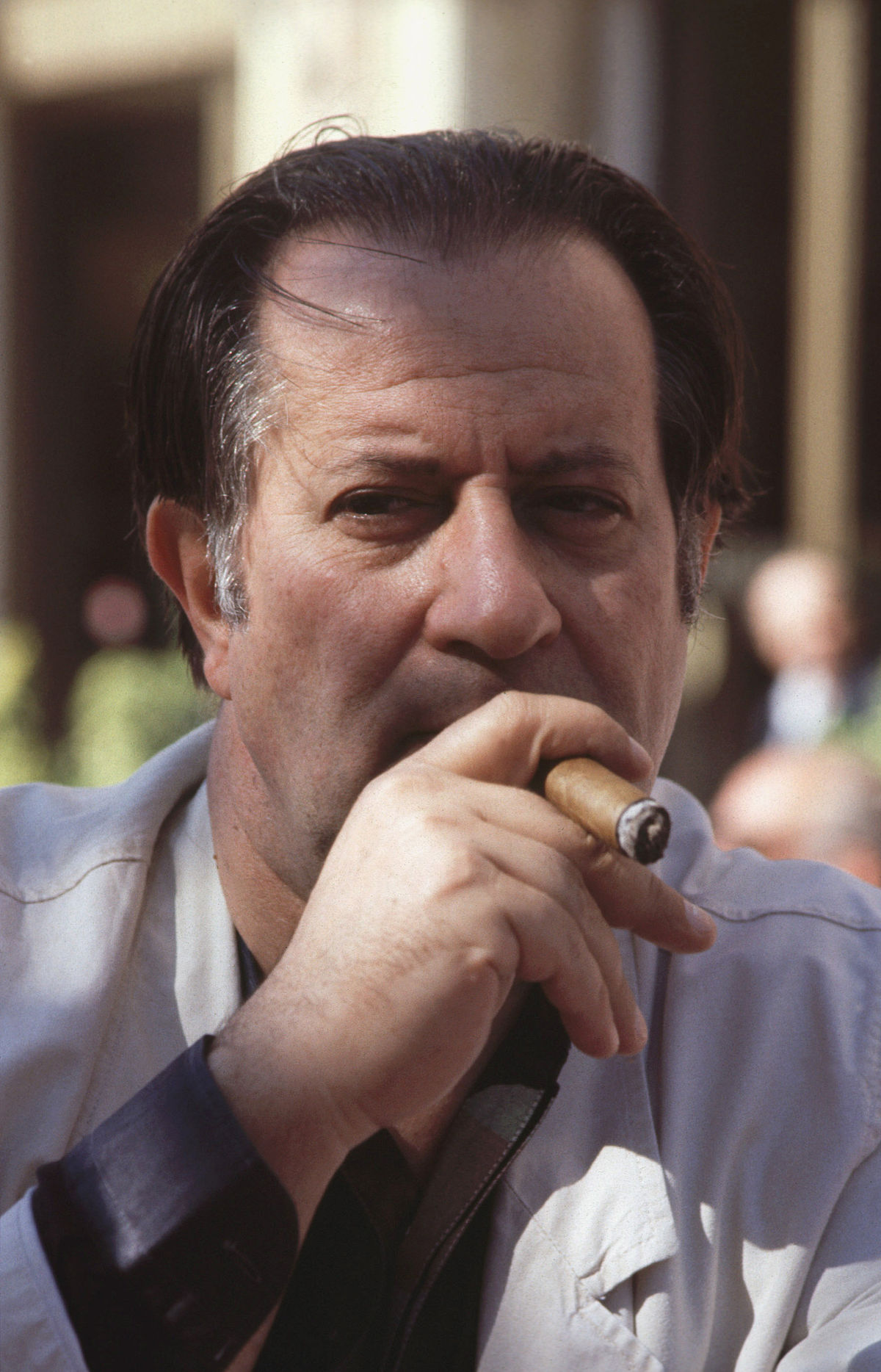
Tinto Brass, born Giovanni Brass on March 26, 1933, in Milan, Italy, is a name that has become synonymous with erotic cinema. Known for his provocative and often controversial films, Brass is a director who has never shied away from pushing the boundaries of conventional filmmaking. His work, particularly from the mid-1970s onward, has been a subject of both critique and fascination, attracting a large audience and stirring public discourse. This article delves into the life of Tinto Brass, exploring the highlights of his career, the controversies that surrounded his work, and the lasting impact he has had on the world of cinema.
Early Life and Influences
Tinto Brass was born into a family with a strong cultural heritage. His grandfather, Italico Brass, was a well-known painter, and his father was a lawyer. Growing up in an environment where art and intellectualism were highly valued, Brass developed an early interest in the arts. He pursued law studies at the University of Padua but found himself increasingly drawn to the world of cinema.
In the 1950s, Brass moved to Paris, where he worked as an archivist at the Cinémathèque Française. This experience exposed him to the works of some of the greatest filmmakers of the time, including Jean-Luc Godard and Federico Fellini, who would later influence his own style. During this period, Brass immersed himself in the European avant-garde film scene, absorbing the experimental techniques and narrative structures that would later define his work.
Early Career: From Assistant Director to Auteur
After returning to Italy, Brass began working as an assistant director to some of the most prominent filmmakers of the time, including Alberto Cavalcanti and Roberto Rossellini. These experiences provided Brass with invaluable insights into the craft of filmmaking, laying the groundwork for his own directorial career.
Brass made his directorial debut in 1963 with “Chi lavora è perduto” (Who Works Is Lost), a film that already displayed his penchant for non-conformity and social commentary. The film was well-received for its innovative approach and marked Brass as a director to watch. Over the next few years, Brass continued to experiment with different genres and styles, directing films like “La mia signora” (1964), a collaboration with Alberto Sordi and Silvana Mangano.
In the late 1960s, Brass directed a series of films that came to be known as his “London films,” including “Col cuore in gola” (1967), “Nero su bianco” (1967), and “Dropout” (1970). These films were characterized by their bold visual style, influenced by the pop art movement, and their focus on themes of alienation and disillusionment. Despite their experimental nature, these films garnered critical acclaim and established Brass as an auteur with a unique voice.
The Turn to Erotic Cinema: “Salon Kitty” and “Caligula”
The 1970s marked a significant shift in Brass’s career as he began to focus more explicitly on erotic themes. This transition was marked by the release of “Salon Kitty” in 1975, a film set in a Nazi brothel during World War II. “Salon Kitty” was both controversial and commercially successful, establishing Brass as a master of erotic cinema. The film’s explicit content and exploration of power dynamics drew both praise and criticism, but it undeniably pushed the boundaries of what was considered acceptable in mainstream cinema.
Brass’s next major project was “Caligula” (1979), a film that would become one of the most infamous productions in the history of cinema. Originally conceived as a serious historical drama about the life of the Roman Emperor Caligula, the film quickly spiraled into controversy due to its explicit sexual content and behind-the-scenes conflicts. Despite these issues, “Caligula” became a commercial success and solidified Brass’s reputation as a provocateur. The film’s legacy is complex, with some viewing it as a bold artistic statement and others as mere exploitation.
“La Chiave” and Mainstream Success
In 1983, Tinto Brass directed “La Chiave” (The Key), a film that would bring him widespread recognition and success. Starring Stefania Sandrelli, “La Chiave” is an erotic drama set in 1940s Venice, exploring themes of desire, voyeurism, and marital infidelity. The film was a major hit in Italy and abroad, and it marked a turning point in Brass’s career, bringing his work into the mainstream.
The success of “La Chiave” was due in part to Brass’s skillful direction, which balanced explicit content with a sophisticated narrative. The film’s commercial success opened the door for more erotic dramas, and Brass continued to explore these themes in subsequent films like “Miranda” (1985) and “Capriccio” (1987). These films, featuring actresses like Serena Grandi and Francesca Dellera, further cemented Brass’s reputation as a leading director in the genre of erotic cinema.
The 1990s: Continued Exploration and New Challenges
The 1990s saw Brass continue his exploration of erotic themes, though with varying degrees of success. Films like “Paprika” (1991), “Così fan tutte” (1992), and “L’Uomo che guarda” (1994) were well-received and maintained Brass’s status as a significant figure in Italian cinema. However, by the mid-1990s, the landscape of cinema was changing, and Brass’s later films, such as “Monella” (1997) and “Tra(sgre)dire” (2000), struggled to achieve the same level of critical and commercial success.
Critics began to argue that Brass’s work had become formulaic, with his later films relying too heavily on the same erotic tropes without offering anything new. Nevertheless, Brass remained a prolific filmmaker, continuing to produce films that catered to his loyal fan base.
Personal Life and Legacy
Tinto Brass’s personal life has been as colorful as his films. He was married to Carla Cipriani, whom he affectionately called “La Tinta,” and who was a key collaborator on many of his films. The couple had two children, Beatrice and Bonifacio. Carla passed away in 2006, leaving a profound impact on Brass. In the years following her death, Brass entered into a relationship with Caterina Varzi, a psychoanalyst and actress who became his muse in later life. The couple married in 2017.
In 2010, Brass suffered a serious health setback when he experienced a cerebral hemorrhage. Despite the severity of the condition, he made a remarkable recovery with the support of Varzi. This period of his life highlighted the resilience and determination that had characterized his entire career.
Brass’s legacy in the world of cinema is complex and multifaceted. He is often remembered as a provocateur, a director who dared to explore the boundaries of sexuality and desire on screen. His work has been both celebrated and condemned, but it has undeniably left a lasting impact on the film industry. Brass’s ability to blend art with eroticism, to create films that are both visually striking and thematically daring, has earned him a place in the pantheon of great filmmakers.
Conclusion: The Enduring Influence of Tinto Brass
Tinto Brass remains one of the most distinctive voices in the history of cinema. His work, characterized by its bold exploration of erotic themes, has challenged societal norms and pushed the boundaries of what is considered acceptable in film. While his career has been marked by controversy, it is also one of innovation and artistic courage.
Brass’s films continue to be studied and appreciated for their unique style and daring content. He has inspired countless filmmakers and has left an indelible mark on the genre of erotic cinema. As we reflect on his life and career, it is clear that Tinto Brass is not just a director of provocative films but a true artist who used cinema to explore the depths of human desire and the complexities of sexual relationships.
In a world where the lines between art and exploitation are often blurred, Tinto Brass stands out as a filmmaker who embraced this ambiguity, creating works that are as thought-provoking as they are controversial. His legacy is one of boldness, creativity, and a relentless pursuit of artistic freedom.


