
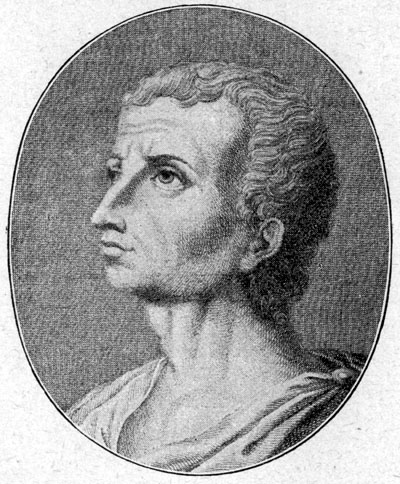
Tito Livio (Latin: Titus Livius Patavinus), commonly known as Livy in English, is one of the most celebrated historians of ancient Rome. Born in 59 BCE in the city of Patavium, now known as Padua, Italy, Livy is best known for his monumental work, “Ab Urbe Condita” (“From the Founding of the City”), which chronicles the history of Rome from its legendary foundation in 753 BCE through the early years of the Roman Empire. His writings, though not entirely preserved, have provided a significant source of historical knowledge about ancient Rome, influencing countless generations of historians, scholars, and political leaders. This article delves into the life of Tito Livio, exploring his early life, his work, and the lasting impact of his historical writings.
Early Life and Education
Tito Livio was born into a prosperous family in Patavium, a city known for its cultural and intellectual vibrancy. Despite being far from Rome, Patavium was a significant center of learning, which allowed Livy to receive an excellent education. His upbringing in this environment nurtured his interest in history, literature, and rhetoric, which later became the pillars of his career as a historian.
Around the age of 20, Livy moved to Rome to further his studies. Rome, during this period, was not only the political heart of the world but also a hub of intellectual and cultural activity. The city was transitioning from a republic to an empire, a time marked by significant social and political upheaval. Livy arrived in Rome during the reign of Augustus, Rome’s first emperor, whose consolidation of power brought relative stability after years of civil war. This era of transformation undoubtedly influenced Livy’s perspectives on Rome’s history and the values that he would later espouse in his writings.
Livy’s Relationship with Augustus
While Livy is often remembered for his republican sympathies, his relationship with Emperor Augustus was complex. Augustus, who had established himself as the ruler of Rome after the fall of the republic, saw value in Livy’s work, despite the historian’s apparent preference for the old republican values. Augustus even entrusted Livy with the education of his nephew, the future Emperor Claudius. This connection with the imperial family suggests that while Livy may have held republican ideals, he was able to navigate the political landscape of the early empire with a degree of pragmatism.
Livy’s historical writings are infused with a sense of nostalgia for the virtues of Rome’s past, which he believed were in decline in his own time. He admired figures like Pompey, Cassius, and Brutus, who were associated with the republican cause, yet he managed to avoid direct conflict with Augustus by focusing his work on the moral lessons that could be drawn from Rome’s history rather than overt political critique. This balance allowed him to maintain his position and continue his work without falling afoul of the imperial authorities.
“Ab Urbe Condita”: Livy’s Magnum Opus
Livy’s most famous work, “Ab Urbe Condita,” is an ambitious historical narrative that originally spanned 142 books, though only 35 have survived to the present day. These books cover Roman history from the city’s legendary founding by Romulus and Remus in 753 BCE up to the death of Drusus in 9 BCE. The surviving books include the first, third, fourth, and part of the fifth decades, offering detailed accounts of early Rome, the conflict with Carthage, and the rise of Roman power in the Mediterranean.
The structure of “Ab Urbe Condita” is annalistic, meaning that Livy organized the history year by year, recounting events as they unfolded annually. This method was typical of Roman historiography and allowed Livy to provide a comprehensive account of Rome’s development over the centuries. However, Livy’s work is not merely a dry chronicle of events; it is richly infused with narrative elements, speeches, and moral commentary, making it both a historical and a literary masterpiece.
One of the key features of Livy’s work is his focus on moral lessons. Livy believed that history should serve as a “magistra vitae” (teacher of life), providing examples of virtuous and corrupt behavior for future generations to learn from. His narratives often highlight the virtues of courage, piety, and discipline that he believed were foundational to Rome’s greatness. At the same time, he did not shy away from criticizing the moral decay that he perceived in his own time, using the past to comment on the present.
Livy’s Historical Methodology
While Livy’s work is invaluable as a historical source, modern historians often critique his methodology. Livy relied heavily on earlier sources, many of which were themselves secondary accounts or even mythological narratives. The sack of Rome by the Gauls in 390 BCE had destroyed many original records, forcing Livy to base much of his early history on the works of other historians, such as Polybius and Fabius Pictor, as well as oral traditions and legends.
This reliance on secondary sources means that Livy’s accounts, especially of Rome’s earliest history, are not always factually accurate. He sometimes presents multiple versions of events, leaving it to the reader to decide which is most credible. Livy’s approach reflects his interest in the moral and educational value of history rather than strict historical accuracy. For him, the lessons that could be drawn from Rome’s past were more important than the precise details of what had actually happened.
Despite these methodological shortcomings, Livy’s work has had a lasting impact on the study of history. His narratives are rich in detail and provide a window into the values and beliefs of the Roman elite during the Augustan age. His depiction of Rome’s legendary past, in particular, has shaped how subsequent generations have understood the city’s early history and the ideals that it embodied.
Livy’s Legacy and Influence
Livy’s influence extends far beyond his own time. His works were widely read and admired in the centuries following his death, influencing not only historians but also statesmen and scholars throughout the Western world. During the Renaissance, Livy’s writings experienced a revival as humanist scholars sought to revive the classical ideals of ancient Rome. His works were used as textbooks in schools and as models for historical writing.
In the political sphere, Livy’s emphasis on the moral lessons of history resonated with leaders who sought to emulate the virtues of Rome’s great men. His work inspired thinkers like Niccolò Machiavelli, who drew on Livy’s accounts of Roman history in his own writings on political theory. Machiavelli’s “Discourses on Livy” is a prime example of how Livy’s work continued to influence political thought long after his death.
Livy’s portrayal of Rome’s history has also had a lasting impact on popular culture. The legends of Rome’s founding, the tales of its great heroes like Horatius and Cincinnatus, and the dramatic events of the Punic Wars have all been shaped by Livy’s narratives. These stories have been retold countless times in literature, art, and film, cementing Livy’s place as one of the most important chroniclers of Rome’s past.
The End of Livy’s Life and Uncertain Dates
The exact details of Livy’s later life, including the precise date of his death, remain uncertain. Most sources suggest that Livy died in 17 CE, but some historians, like Ronald Syme, argue that he may have died as early as 12 CE. The uncertainty surrounding these dates is partly due to the lack of contemporary records and the reliance on later sources, such as the writings of Jerome, who connected Livy’s birth to that of Messalla Corvinus, a prominent Roman statesman.
Regardless of the exact dates, it is clear that Livy spent his later years in relative peace, continuing his writing and teaching until his death. His influence continued to grow after his passing, as his works were preserved and studied by generations of scholars who recognized the value of his contributions to the understanding of Roman history.
The Patavinitas Controversy
A curious aspect of Livy’s legacy is the so-called “Patavinitas” controversy, a term coined by the Roman orator and critic Asinius Pollio. The term refers to a perceived provincialism in Livy’s writing, possibly hinting at a certain linguistic style or a moralizing tone that Pollio attributed to Livy’s origins in Patavium. While some have interpreted this as a criticism, it can also be seen as a reflection of Livy’s unique perspective as someone who, though deeply connected to Rome, remained aware of and influenced by his provincial roots.
This Patavinitas may have contributed to Livy’s emphasis on traditional Roman values and his nostalgic view of Rome’s past. As someone who was not a native of Rome but had risen to prominence through his intellectual achievements, Livy may have felt a particular responsibility to uphold and celebrate the ideals that he believed had made Rome great.
Livy’s Place in History
Tito Livio remains one of the towering figures of Roman historiography. His work, though incomplete, offers an unparalleled narrative of Rome’s rise from a small city-state to a vast empire. Livy’s ability to weave together history, legend, and moral reflection has made his writings timeless, continuing to captivate readers and scholars alike.
Livy’s approach to history, with its blend of factual reporting and moral instruction, reflects the values of his time and the expectations placed on historians in the ancient world. While modern historians may critique his methods, there is no denying the impact of his work on the study of history and the way we understand the ancient world.
In conclusion, Tito Livio’s life and work are a testament to the power of history as both a record of the past and a guide for the future. His writings not only preserve the memory of Rome’s greatest achievements but also serve as a reminder of the values that, in Livy’s view, made those achievements possible. His legacy continues to endure, offering lessons in virtue, governance, and the complexities of human nature that are as relevant today as they were two millennia ago.


