
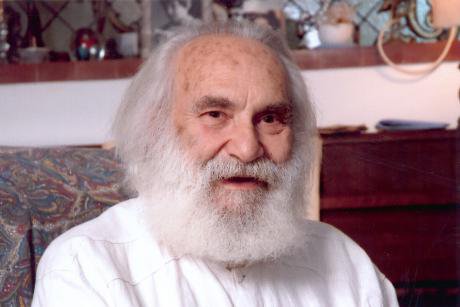
Tiziano Terzani, born on September 14, 1938, in Florence, Italy, was a prominent journalist, writer, and thinker who became one of the most influential voices in international journalism during the late 20th and early 21st centuries. Known for his insightful and often provocative analysis of global events, particularly in Asia, Terzani’s work transcended the boundaries of traditional journalism, blending travel writing, historical analysis, and personal reflection. His legacy is marked by a profound commitment to understanding the deeper currents of human civilization and a relentless pursuit of truth, often in the face of great personal risk.
Early Life and Education
Tiziano Terzani was born into a modest family in Florence. His early life was not marked by privilege but rather by a strong desire to explore the world beyond the confines of his upbringing. He excelled academically, and his intellectual curiosity eventually led him to attend the prestigious Scuola Normale Superiore in Pisa, where he studied law. Terzani graduated with honors in 1962, demonstrating not only his academic prowess but also his capacity for critical thinking and analysis.
His journey into the world of international affairs began shortly after graduation when he was sent to Japan by the Italian company Olivetti to teach corporate courses. This experience ignited his fascination with Asia, a region that would dominate much of his professional and personal life. Terzani’s time in Japan was the first step in a lifelong engagement with the cultures, politics, and people of Asia.
Following his time in Japan, Terzani pursued further studies at Columbia University in New York, where he earned a Master’s degree in International Affairs. Here, he deepened his understanding of global politics and economics, focusing particularly on the historical and contemporary dynamics of Asia. His academic background, combined with his growing experience in the field, positioned him well for a career in journalism that would soon take off.
Career in Journalism
In the early 1970s, Tiziano Terzani began his career as a foreign correspondent, initially working for the German weekly Der Spiegel. His first major assignment was in Vietnam, where he covered the final stages of the Vietnam War. Terzani’s reporting from Vietnam was groundbreaking, not only for its detailed accounts of the conflict but also for his ability to convey the human dimensions of war. His book Pelle di Leopardo (Leopard Skin), published in 1973, is a vivid chronicle of the war and a testament to his journalistic integrity and commitment to uncovering the truth.
Terzani was one of the few Western journalists who stayed in Saigon as it fell to the communist forces in 1975. His experiences during this period were captured in his book Giai Phong! The Liberation of Saigon, which offered a unique perspective on the end of the war and the complex emotions surrounding Vietnam’s reunification. The book was translated into several languages, establishing Terzani as a leading voice in international journalism.
After Vietnam, Terzani continued to work in Asia, moving with his family to Hong Kong and later to Beijing. His time in China was particularly significant, as it coincided with the country’s turbulent Cultural Revolution. Terzani’s deep curiosity and commitment to understanding the cultures he reported on led him to immerse himself fully in Chinese society, even sending his children to local schools. His observations during this period were later compiled in La Porta Proibita (The Forbidden Door), a book that offers a candid look at life in China during a time of intense political and social upheaval.
Terzani’s work was not without risk. In 1984, he was expelled from China on charges of “counter-revolutionary activities,” a testament to the impact his reporting had on the Chinese authorities. Despite this setback, Terzani’s career continued to flourish, and he remained a sought-after correspondent for major international publications.
Writing and Literary Contributions
While Tiziano Terzani was first and foremost a journalist, his contributions to literature are equally significant. His books, which often blend reportage with personal reflection, have been celebrated for their depth, insight, and humanity. Terzani had a unique ability to connect global events with the personal experiences of those involved, making his work resonate with readers across the world.
One of his most famous books, Un Indovino Mi Disse (A Fortune Teller Told Me), published in 1995, is a prime example of this. The book recounts a year in which Terzani, following a fortune teller’s advice, avoided air travel altogether. Instead, he traversed Asia by land and sea, providing readers with a unique perspective on the continent and its people. The book is not just a travelogue; it is a meditation on fate, culture, and the interconnectedness of humanity. Un Indovino Mi Disse became a bestseller and further solidified Terzani’s reputation as a writer who could bridge the gap between journalism and literature.
Another significant work is Buonanotte, Signor Lenin (Goodnight, Mister Lenin), published in 1992, which documents the collapse of the Soviet Union. Terzani’s journey through the former Soviet states during this period provides a compelling narrative of a world in transition, capturing the uncertainty and hope that accompanied the end of an era.
In 2002, Terzani published Lettere contro la Guerra (Letters Against the War), a collection of essays written in response to the U.S. military intervention in Afghanistan following the September 11 attacks. The book, which critiques the violence and futility of war, was controversial and rejected by many English-language publishers. However, it resonated deeply with readers who shared Terzani’s pacifist views and his belief in the power of dialogue and understanding.
Personal Philosophy and Later Years
Tiziano Terzani’s later years were marked by a deepening of his personal philosophy, which increasingly emphasized spirituality, peace, and the search for meaning. This shift was partly driven by his diagnosis of cancer in 2002, a challenge he faced with characteristic introspection and courage. Rather than retreating from public life, Terzani used his illness as an opportunity to explore new ideas and to continue his lifelong journey of self-discovery.
His book Un Altro Giro di Giostra (One More Ride on the Merry-Go-Round), published in 2004, chronicles his experiences with cancer and his search for alternative treatments across the world. The book is a profound exploration of life, death, and the human spirit, reflecting Terzani’s belief in the importance of accepting life’s challenges with grace and dignity. It also serves as a guide for those seeking to navigate their own struggles, offering insights into how to find peace in the face of adversity.
In the final years of his life, Terzani retreated to the village of Orsigna in the Tuscan mountains, where he sought solace and reflection in nature. He continued to write and engage with the world through his correspondence, even as his health declined. Terzani passed away on July 28, 2004, leaving behind a legacy of journalistic excellence, literary brilliance, and a life lived in pursuit of truth and understanding.
His son, Fosco Terzani, published a posthumous interview with his father titled La Fine è il Mio Inizio (The End is My Beginning) in 2006. The book offers a final glimpse into Terzani’s thoughts and beliefs, providing readers with a deeper understanding of the man behind the words. Another posthumous work, Fantasmi – Dispacci dalla Cambogia (Ghosts – Dispatches from Cambodia), was published in 2008, adding to the rich tapestry of Terzani’s literary legacy.
Legacy and Impact
Tiziano Terzani’s legacy is multifaceted. As a journalist, he was fearless in his pursuit of truth, often placing himself in dangerous situations to provide the world with an unvarnished view of global events. His work in Asia, particularly in Vietnam, China, and Cambodia, remains some of the most insightful and impactful journalism of the 20th century.
As a writer, Terzani’s ability to weave together personal narrative with global events has left an indelible mark on literature. His books continue to inspire readers around the world, offering lessons in resilience, empathy, and the importance of seeing the world through others’ eyes.
Terzani’s personal philosophy, which evolved throughout his life, emphasized the importance of understanding, compassion, and peace. He was a vocal critic of war and violence, advocating instead for dialogue and mutual respect. His views, shaped by a lifetime of witnessing the consequences of conflict, resonate today as strongly as they did during his lifetime.
Conclusion
Tiziano Terzani was more than just a journalist or a writer; he was a seeker of truth, a storyteller, and a humanist. His life and work continue to inspire those who value the pursuit of knowledge, the importance of understanding different cultures, and the need for compassion in a world often marked by division and conflict. Through his books and his life’s work, Terzani has left behind a legacy that transcends borders and generations, offering wisdom and insight to all who seek it.


