
Introduction
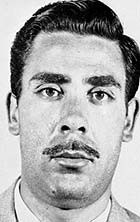
Tommaso Buscetta, often referred to as “Don Masino,” is a name that reverberates through the corridors of organized crime history. Born on July 13, 1928, in Palermo, Sicily, Buscetta rose to notoriety as one of the most significant figures in the Sicilian Mafia, or Cosa Nostra. His life, however, is not just a tale of crime and violence; it is also a story of redemption, betrayal, and the complex interplay between personal choices and larger historical forces. This article delves into the life of Tommaso Buscetta, exploring his age, fame, and key life highlights that have left an indelible mark on both criminal and legal histories.
Early Life and Background
Tommaso Buscetta was born into a modest family in Palermo, a city with a long history intertwined with the Mafia. Growing up in a working-class neighborhood, his early life was marked by the struggle for survival, a common experience for many Sicilians during the interwar years. His father was a glassmaker, and his mother was a housewife, reflecting the traditional and somewhat conservative social structure of the time.
Buscetta’s early marriage at the age of sixteen was not unusual for the period, especially in Sicily, where marrying young was a common practice. However, the responsibility of providing for a family pushed him toward the fringes of legality. The post-war period in Sicily was a time of economic hardship, and Buscetta, like many others, found himself drawn into the black market as a means of survival.
The Path to the Mafia
In the 1940s, Sicily was a land of poverty, and opportunities for legitimate work were scarce. This environment provided fertile ground for the Mafia, which had long held a strong presence in the region. Buscetta’s entry into the Mafia was almost inevitable given the circumstances. He started his criminal career by smuggling ration cards for flour during the tumultuous war years, a small-time operation that marked the beginning of his ascent within the Mafia’s ranks.
By the 1950s, Buscetta had left Sicily for Argentina, seeking better opportunities. He tried his hand at legitimate business by opening a glass factory, but success eluded him. Disillusioned, he returned to Palermo in 1957, where he rejoined the Mafia, which was experiencing a period of resurgence and transformation during Italy’s post-war economic boom.
Rise to Power
Upon his return to Palermo, Buscetta became deeply involved in the Mafia’s activities, which by then had expanded to include drug trafficking, construction rackets, and extortion. He quickly rose through the ranks, aligning himself with powerful Mafia families and establishing himself as a key player in Palermo’s criminal underworld.
During this period, the Mafia was undergoing significant changes. The economic boom in Italy had brought unprecedented wealth to the country, and the Mafia sought to capitalize on this by infiltrating the construction industry and other lucrative sectors. Buscetta saw opportunities in these new ventures and became involved in various illicit activities, including cigarette smuggling and, later, drug trafficking.
His involvement in the Mafia’s operations led to his participation in the first Mafia war in the early 1960s. This internal conflict among Mafia families was marked by violence and betrayal, and it significantly shaped Buscetta’s future. Sensing the danger, Buscetta went into hiding in 1962, beginning a decade-long period of evasion from law enforcement and rival Mafiosi.
The Fugitive Years
Buscetta’s life on the run took him across the globe. He spent time in various countries, including the United States, Mexico, and Brazil, constantly changing identities to avoid capture. During these years, he led a life filled with danger and uncertainty. He married multiple times, fathering children with different wives, and his constant movement meant that he was always on the edge of being discovered.
Despite his fugitive status, Buscetta remained involved in the Mafia’s international drug trafficking operations. His connections and knowledge of the Mafia’s inner workings made him a valuable asset to the organization, even as he evaded law enforcement.
In 1972, his luck ran out when he was arrested in Brazil for drug trafficking. Extradited to Italy, Buscetta was imprisoned, but his time behind bars only deepened his resolve and understanding of the Mafia’s power structures. During his incarceration, the Mafia’s grip on Sicily tightened, and the streets of Palermo became increasingly dangerous, with murders and assassinations becoming a daily occurrence.
The Turning Point: Becoming a Pentito
The year 1980 marked a significant turning point in Buscetta’s life. Fearing for his life after the murder of his ally Stefano Bontade, Buscetta fled once again, returning to Brazil. However, in 1983, he was arrested again, and this time, his circumstances would lead to a decision that would change the course of Mafia history.
In 1984, while in a Brazilian prison, Buscetta made the fateful decision to cooperate with Italian authorities. His decision to become a “pentito” (a Mafia turncoat) was unprecedented. He was the first high-ranking Mafia member to break the code of silence, known as “omertà,” that had protected the organization for centuries.
Buscetta’s cooperation with Italian magistrate Giovanni Falcone was instrumental in dismantling the Mafia’s power structure. His detailed testimonies provided invaluable insights into the workings of Cosa Nostra, leading to the arrest and conviction of numerous Mafia leaders. His revelations during the Maxi Trial of 1986-1987, the largest anti-Mafia trial in history, were a devastating blow to the organization.
Life in Witness Protection
After his collaboration with the authorities, Buscetta was granted a new identity and placed under witness protection in the United States. The Italian government, recognizing the significance of his contributions, provided him with a stipend and security for his remaining years. Despite undergoing several plastic surgeries to alter his appearance, Buscetta lived in constant fear of retribution from the Mafia.
During his time in witness protection, Buscetta continued to provide testimony against Mafia figures, both in Italy and the United States. His cooperation was crucial in numerous cases, including those against prominent politicians accused of having ties to the Mafia.
Legacy and Death
Tommaso Buscetta died on April 4, 2000, in New York, from cancer. He was 72 years old. His death marked the end of a life that had been marked by violence, betrayal, and, ultimately, a quest for redemption. Buscetta’s decision to turn against the Mafia had profound implications for the organization and for Italian society as a whole.
Buscetta’s legacy is complex. To some, he is seen as a traitor who broke the Mafia’s code of silence; to others, he is a hero who helped bring justice to a society plagued by organized crime. His life story has been the subject of numerous books, documentaries, and films, reflecting the enduring fascination with his role in the Mafia’s history.
Historical Context and Impact
Buscetta’s life and actions must be understood within the broader historical context of Sicily and Italy in the 20th century. The Mafia had long been a powerful force in Sicilian society, often operating in the shadows and exerting influence over politics, business, and daily life. The post-war period, in particular, saw the Mafia expand its operations beyond Sicily, establishing international drug trafficking networks and deepening its ties with corrupt politicians and businessmen.
Buscetta’s defection and cooperation with the authorities were significant because they exposed the Mafia’s operations and connections at a time when the organization seemed invincible. His testimonies not only led to the conviction of many Mafia members but also helped to change public perceptions of the Mafia, encouraging more people to speak out against the organization and its activities.
Moreover, Buscetta’s cooperation played a crucial role in the fight against organized crime in Italy. The information he provided helped to strengthen the legal framework for prosecuting Mafia-related crimes, leading to tougher laws and more effective law enforcement strategies. His collaboration with Giovanni Falcone, in particular, is often credited with laying the groundwork for subsequent anti-Mafia efforts in Italy.
Conclusion
Tommaso Buscetta’s life is a testament to the complexities of the human experience. His journey from a young Sicilian trying to survive in a harsh world to a notorious Mafia boss and, finally, a key witness against the very organization he once served, is a story of transformation and redemption. His actions, while controversial, had a lasting impact on the fight against organized crime, both in Italy and internationally.
Today, Buscetta is remembered as a pivotal figure in the history of the Mafia. His decision to break the code of silence was a turning point in the battle against organized crime, and his legacy continues to influence the way we understand and confront the Mafia’s influence in society. As we reflect on his life, it is clear that Tommaso Buscetta’s story is one that will continue to be studied and debated for years to come.


