
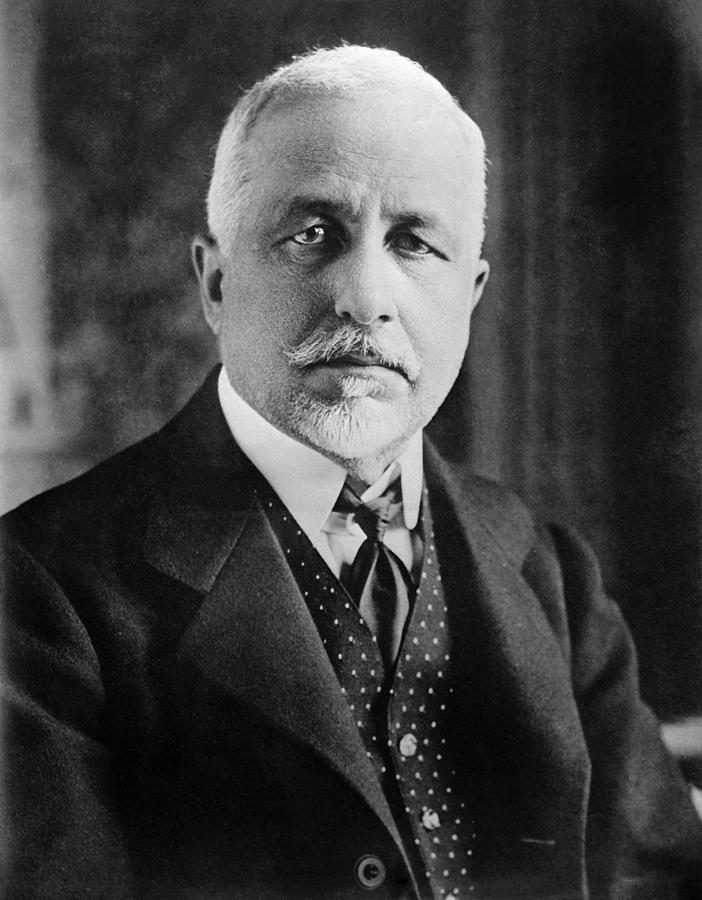
Tommaso Tittoni was a distinguished figure in Italian politics and diplomacy, whose influence spanned several decades during some of Italy’s most transformative years. Born on November 16, 1855, in Rome, Tittoni became a key player in the political landscape of Italy, contributing significantly to both domestic and international affairs. His life is a testament to the intricate dynamics of Italian politics, the shifting tides of European diplomacy, and the emergence of Italy as a significant power on the global stage.
Early Life and Education
Tommaso Tittoni was born into a family deeply entrenched in the political and intellectual movements of the time. His father, Vincenzo Tittoni, was a prominent figure in the Italian Risorgimento, a period marked by the unification of Italy and the struggle against foreign domination and the Papal States. The family moved to Campania in 1860, a period of significant political upheaval in Italy, only returning to Rome ten years later.
Tittoni’s early education was rooted in the liberal traditions of his family, which influenced his moderate political stance throughout his career. He studied law in Rome, where he obtained his degree, setting the stage for a career that would see him navigate the complexities of Italian politics with a measured and pragmatic approach.
Entry into Politics and Early Career
After completing his education, Tittoni spent time in Belgium and England to further his studies. This period of international exposure likely played a role in shaping his diplomatic acumen. Upon his return to Italy, Tittoni joined the liberal-conservative faction of the Italian political spectrum, aligning himself with figures such as Quintino Sella and Marco Minghetti, both influential leaders of the Historical Right (Destra Storica).
Tittoni was first elected to the Italian Chamber of Deputies in 1886, a position he held until 1897. His tenure in the Chamber was marked by his commitment to the principles of moderation and stability, qualities that would define his entire career. On November 25, 1902, King Victor Emmanuel III appointed Tittoni as a Senator, recognizing his contributions to Italian politics.
Personal Tragedy and Shift to Diplomacy
In 1895, Tittoni faced a devastating personal loss with the death of his daughter. This tragedy, coupled with serious heart problems, led him to temporarily step back from active politics. During this period, he shifted his focus to diplomacy, a field in which he would leave a lasting legacy.
Tittoni’s diplomatic career began with his appointment as Prefect of Perugia in 1898, a role he held until 1900, after which he served as Prefect of Naples until 1903. His success in these roles paved the way for his appointment as Italy’s Minister of Foreign Affairs in 1903, a position he held during a particularly turbulent time in European politics.
Political Ascendancy and International Influence
Tittoni’s first tenure as Minister of Foreign Affairs (1903-1905) saw him navigating the complexities of European alliances and the balancing act required to maintain Italy’s position in the rapidly changing political landscape. His diplomatic skill was further recognized when he briefly served as Italy’s Prime Minister from March 12 to March 27, 1905, though his tenure was notably short.
In 1906, Tittoni was appointed as Italy’s Ambassador to the United Kingdom, where he served until May of that year. This role allowed him to further solidify Italy’s international relationships, particularly with Great Britain, which was a crucial ally at the time.
Tittoni returned to the role of Minister of Foreign Affairs under Prime Minister Giovanni Giolitti, one of Italy’s most influential political figures. His second tenure (1906-1910) was marked by efforts to strengthen Italy’s diplomatic ties with other European powers, particularly in the context of the Triple Alliance with Germany and Austria-Hungary. His diplomatic endeavors were crucial in positioning Italy as a key player in the lead-up to World War I.
From 1910 to 1916, Tittoni served as Italy’s Ambassador to France, a role that further expanded his influence in European diplomacy. His work in Paris was particularly significant during the period leading up to and during the early stages of World War I, as Italy sought to navigate its alliances and strategic interests.
Role in the Paris Peace Conference and Later Career
Following the end of World War I, Tittoni played a crucial role in the Paris Peace Conference of 1919, where he served as the head of the Italian delegation. His contributions during the conference were instrumental in shaping the post-war order, particularly in securing Italy’s interests in the face of competing demands from other Allied powers.
In 1919, Tittoni once again took on the role of Minister of Foreign Affairs, this time under Prime Minister Francesco Saverio Nitti. His third tenure in this position was marked by efforts to stabilize Italy’s position in the post-war world and to address the numerous challenges facing the country in the aftermath of the conflict.
From December 1, 1919, to January 21, 1929, Tittoni served as President of the Italian Senate, one of the highest offices in the Italian government. His decade-long tenure in this role underscored his enduring influence in Italian politics and his commitment to the principles of moderation and diplomacy.
Later Years and Fascist Era Involvement
The later years of Tittoni’s life were marked by the rise of Fascism in Italy. Despite his earlier commitment to liberal principles, Tittoni aligned himself with Benito Mussolini following the March on Rome in 1922, which brought the Fascists to power. In 1929, he was appointed as the first President of the “Accademia d’Italia,” the most prestigious cultural institution of the Fascist regime.
Tittoni’s involvement with the Fascist regime, particularly his role in the Grand Council of Fascism from 1928 to 1930, remains a controversial aspect of his legacy. His decision to collaborate with Mussolini, despite his previous liberal inclinations, reflects the complex and often contradictory nature of Italian politics during this period.
On April 8, 1923, Tittoni was appointed Knight of the Order of the Annunciation, the highest honor of the Italian state, by King Victor Emmanuel III. This recognition was a testament to his long and distinguished career in the service of Italy.
Death and Legacy
Tommaso Tittoni passed away in Rome on February 7, 1931, at the age of 75. His death marked the end of an era in Italian politics, one that saw the country transform from a relatively young nation-state into a significant player on the world stage.
Tittoni’s legacy is one of complexity and nuance. While his contributions to Italian diplomacy and politics are widely recognized, his later years and association with the Fascist regime cast a shadow over his earlier achievements. Nevertheless, Tittoni remains a significant figure in the history of Italy, whose life and career offer valuable insights into the challenges and contradictions of Italian politics during a critical period in the nation’s history.
Conclusion
Tommaso Tittoni’s life was a tapestry of political and diplomatic achievements, personal tragedies, and controversial decisions. His journey from a young law graduate in Rome to one of Italy’s most influential statesmen reflects the broader currents of Italian history during the late 19th and early 20th centuries. As a diplomat and politician, Tittoni played a crucial role in shaping Italy’s place in the world, navigating the turbulent waters of European alliances and global conflicts with a steady hand.
His legacy, though complicated by his later association with the Fascist regime, serves as a reminder of the intricate dynamics of power, politics, and diplomacy in a rapidly changing world. Tommaso Tittoni’s story is not just the story of one man, but of an era that shaped the course of modern Italy.


