
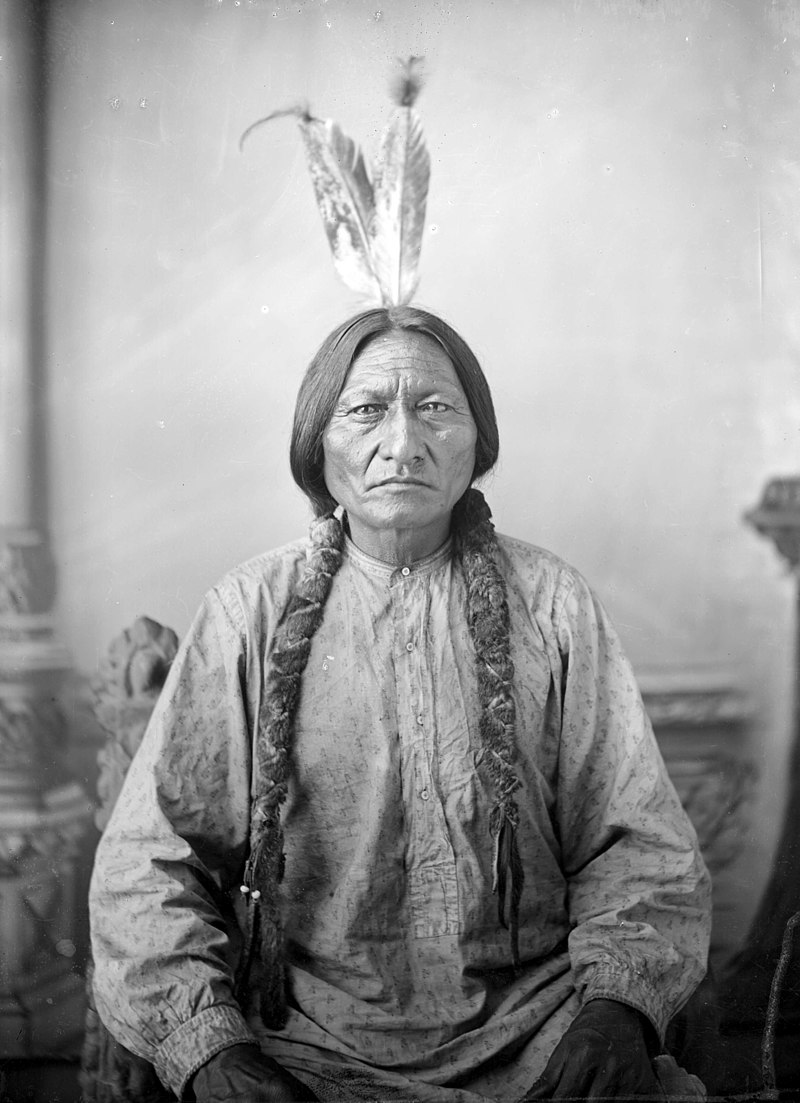
Sitting Bull, known in Italian as Toro Seduto and by his Lakota name Tȟatȟáŋka Íyotake, is one of the most iconic figures in Native American history. Born in 1831 near the Grand River, in what is now South Dakota, Sitting Bull was a leader, warrior, and spiritual guide of the Hunkpapa Lakota Sioux. His life story is deeply intertwined with the struggles of the Sioux people as they resisted the encroachment of white settlers and the U.S. government on their lands. This article delves into the life, legacy, and lasting impact of Sitting Bull, providing a comprehensive overview of his journey from a young warrior to a symbol of Native American resistance.
Early Life and Cultural Background
Sitting Bull was born into a world where the Lakota Sioux were the dominant force on the northern Great Plains. His original name was Jumping Badger, but he would later take the name Sitting Bull from his father after demonstrating his bravery in battle. The Lakota Sioux society was deeply rooted in traditions, spirituality, and a way of life that was closely connected to the land and the buffalo, which were central to their survival and culture.
From a young age, Sitting Bull showed exceptional courage and leadership qualities. At just 14 years old, he participated in his first war party against the Crow, a rival tribe. During this expedition, he earned his first eagle feather, a symbol of bravery, after striking down an enemy warrior. This act of valor marked the beginning of his reputation as a fearless warrior and a leader among his people.
Rise to Leadership
The mid-19th century was a tumultuous time for the Sioux and other Native American tribes, as they faced increasing pressure from the U.S. government and settlers. In 1851, Sitting Bull married Bright Hair (also known as Pretty Plume), who tragically died in childbirth six years later, along with their child. This personal loss did not deter Sitting Bull; instead, he became more involved in the political and spiritual leadership of his people.
By the 1860s, Sitting Bull had emerged as a prominent leader of the Hunkpapa Lakota, known for his wisdom, spiritual insight, and unyielding resistance to U.S. expansion. He was not a medicine man in the traditional sense, but he was considered a “wicasa wakan” or holy man, who had visions that guided his actions and those of his people. Sitting Bull’s leadership was characterized by a deep commitment to preserving the Lakota way of life and protecting their lands from being overrun by settlers and the U.S. military.
Conflict with the United States
The 1860s and 1870s were marked by a series of violent confrontations between the Sioux and the U.S. government. The discovery of gold in the Black Hills, a sacred area to the Lakota, intensified these conflicts, as the U.S. government sought to seize control of the land. Sitting Bull was resolute in his refusal to cede any territory, leading to a series of battles and skirmishes.
In 1863, Sitting Bull participated in several key battles against U.S. forces, including the Battle of Dead Buffalo Lake and the Battle of Whitestone Hill. Despite the Sioux’s fierce resistance, these battles often ended in defeat due to the overwhelming firepower and resources of the U.S. military. However, Sitting Bull’s leadership and spiritual guidance kept the morale of his people high, and he continued to inspire resistance.
One of the most significant confrontations during this period was the Battle of Killdeer Mountain in 1864. Although the Sioux were defeated, Sitting Bull managed to rally his people, leading them in a retreat and continuing their resistance against the encroaching U.S. forces. His strategy often involved guerrilla tactics, attacking supply lines and settlements to disrupt the U.S. military’s operations.
The Battle of Little Bighorn
The most famous episode of Sitting Bull’s resistance came in 1876 with the Battle of Little Bighorn, also known as Custer’s Last Stand. Leading up to the battle, Sitting Bull had a vision during a Sun Dance ceremony, in which he saw a great victory for his people over the U.S. soldiers. This vision was a powerful motivator for the Sioux and their allies, including the Cheyenne and Arapaho tribes, as they prepared for the inevitable clash.
The battle took place on June 25, 1876, when the 7th Cavalry Regiment of the U.S. Army, led by General George A. Custer, attacked a large encampment of Native American warriors along the Little Bighorn River in Montana. Under the tactical command of Crazy Horse, another legendary Sioux leader, the Native American forces overwhelmed Custer’s troops, resulting in one of the most significant defeats for the U.S. military in its campaigns against Native American tribes.
Although Sitting Bull did not participate directly in the combat, his spiritual leadership and the vision he had seen were crucial to the morale and unity of the Sioux forces. The victory at Little Bighorn was a short-lived triumph, however, as it provoked a massive retaliatory campaign by the U.S. government, which eventually forced Sitting Bull and his people to flee.
Exile in Canada and Return to the United States
Following the defeat of Custer, Sitting Bull led his followers into exile in Canada, where they sought refuge among the Lakota’s northern neighbors. They settled near Wood Mountain in present-day Saskatchewan, where they lived for several years, surviving off the land and maintaining their traditional way of life.
During this time, the U.S. government attempted to negotiate Sitting Bull’s return, offering him amnesty in exchange for his surrender. Sitting Bull, however, was reluctant to trust the U.S. authorities, knowing that their promises often came with hidden conditions. It was only after years of hardship, hunger, and the realization that his people’s survival was at stake that Sitting Bull agreed to return to the United States in 1881. On July 19 of that year, Sitting Bull and his followers surrendered to the U.S. military at Fort Buford, North Dakota.
Sitting Bull was arrested upon his return, along with his son Crow Foot. Despite this, he was eventually granted amnesty and allowed to live with his people on the Standing Rock Indian Reservation in what is now South Dakota. The U.S. government, however, remained wary of Sitting Bull’s influence, and he was closely monitored by federal agents.
Life on the Reservation and Final Years
Life on the reservation was a far cry from the freedom and independence Sitting Bull and his people had known. The U.S. government imposed strict regulations on the Sioux, including restrictions on their movements and cultural practices. Despite these challenges, Sitting Bull remained a respected leader and spiritual guide, continuing to advocate for his people’s rights and dignity.
In 1885, in a surprising turn of events, Sitting Bull was invited to join Buffalo Bill’s Wild West Show, a traveling exhibition that showcased the life of the American frontier. Reluctantly, Sitting Bull agreed, seeing it as an opportunity to earn money and raise awareness about the plight of his people. He toured the United States and Europe with the show, earning $50 a week—a considerable sum at the time. However, he often gave away his earnings to the poor and needy, demonstrating his enduring generosity and concern for others.
Sitting Bull’s time with the Wild West Show was brief, lasting only four months. He returned to the Standing Rock Reservation, where he continued to resist U.S. government efforts to assimilate the Sioux into American society. His unwavering defiance made him a target for the authorities, who feared that he might incite further resistance.
The Tragic End
In 1890, the U.S. government grew increasingly concerned about the spread of the Ghost Dance movement among the Sioux, a spiritual revival that promised the return of the buffalo and the disappearance of white settlers. Although Sitting Bull was not directly involved in the movement, his influence and support for traditional Sioux culture made him a symbol of resistance.
On December 15, 1890, fearing that Sitting Bull might lead an uprising, Indian police were sent to arrest him at his home on the Standing Rock Reservation. During the arrest, a confrontation broke out, and Sitting Bull was shot and killed, along with his son Crow Foot. Sitting Bull’s death marked the end of an era for the Sioux and other Native American tribes, as it symbolized the final defeat of their resistance against U.S. expansion.
Legacy and Cultural Impact
Sitting Bull’s life and legacy continue to resonate in both Native American history and American culture as a whole. He is remembered as a symbol of resistance, courage, and the struggle for the rights and dignity of Indigenous peoples. His leadership during one of the most challenging periods for the Sioux people has made him an enduring figure in the collective memory of Native Americans.
In 1953, Sitting Bull’s remains were exhumed from Fort Yates and reburied in Mobridge, South Dakota, near the site of his birth. This act was symbolic, representing the return of a great leader to his homeland. Today, monuments and memorials to Sitting Bull stand as reminders of his profound impact on American history and the ongoing struggle for Native American rights.
Sitting Bull’s story is not just one of resistance but also of resilience and the enduring spirit of the Lakota Sioux. His life serves as a testament to the strength and determination of Indigenous peoples to protect their lands, cultures, and identities in the face of overwhelming odds.
Conclusion
Sitting Bull, or Toro Seduto, remains one of the most significant figures in the history of Native American resistance to U.S. expansion. His life, marked by both triumph and tragedy, reflects the broader struggles of the Sioux and other Indigenous peoples during a time of profound change and conflict. As we remember Sitting Bull, we also honor the courage and resilience of all those who fought to protect their way of life, their lands, and their cultural heritage.


