
Introduction
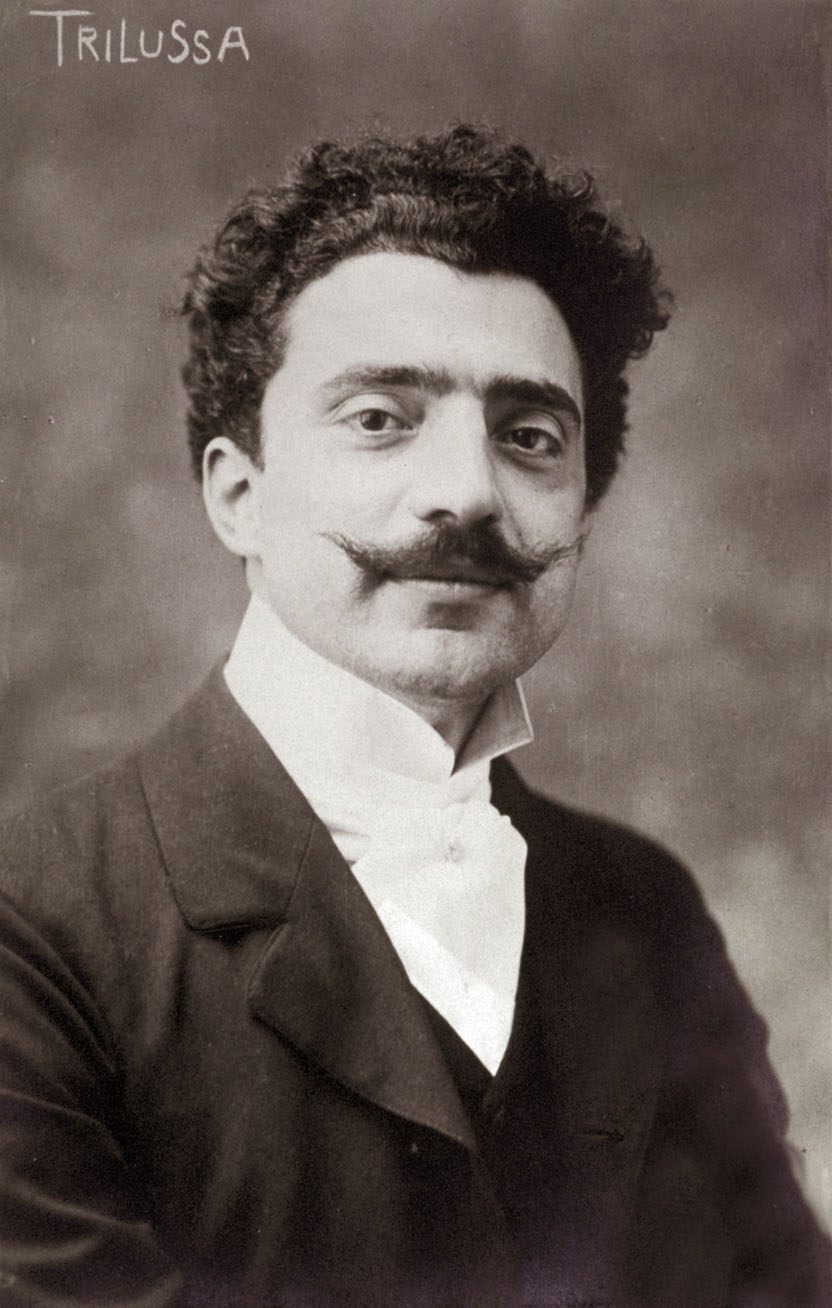
Trilussa, born Carlo Alberto Salustri on October 26, 1871, in Rome, Italy, is one of the most celebrated poets in Italian literature, particularly known for his sharp wit and poignant social commentary. He carved out a unique niche in the literary world with his satirical verses and fables, primarily written in Romanesco, the dialect of Rome. Trilussa’s work, while deeply rooted in the culture and life of Rome, resonates with universal themes, making him a beloved figure not only in Italy but also in literary circles worldwide. This article delves into the life of Trilussa, exploring his age, the milestones of his career, and the highlights that have defined his path to fame.
Early Life and Background
Carlo Alberto Salustri was born into a modest family in Rome. His mother, Carlotta Poldi, originally from Bologna, worked as a seamstress, while his father, Vincenzo Salustri, hailed from Albano Laziale and worked as a waiter. The Salustri family lived in Via del Babbuino, a street in Rome that, despite its prestigious name, did not offer them financial security. Life was challenging for the Salustri family, marked by personal tragedies, including the death of Carlo’s sister, Isabella, in 1872, followed by the death of his father in 1874.
These early hardships shaped Carlo’s worldview, infusing his later work with a deep understanding of life’s struggles and the human condition. However, a glimmer of hope came in the form of the Marchese Ermenegildo De’ Cinque Quintili, a nobleman who had been closely connected to Carlo’s father. The Marchese took the Salustri family under his wing, offering them shelter in his palatial residence in Piazza di Pietra, a gesture that would prove pivotal in Carlo’s development.
Education and Early Poetic Inclinations
Carlo’s formal education began at a Christian Brothers school dedicated to “Angelo Mai,” but his academic journey was cut short when he abandoned his studies at the age of 15. Despite leaving school early, Carlo was an autodidact, immersing himself in literature and poetry. He had a natural talent for crafting verses, particularly in the Roman dialect, and this talent would soon set him on a path to literary fame.
In 1887, at the age of 16, Carlo published his first sonnet in Romanesco titled “L’invenzione della stampa” (The Invention of the Printing Press) in the newspaper “Il Rugantino.” This marked the beginning of a prolific literary career. Recognizing the power of a distinctive identity, Carlo adopted the pen name “Trilussa,” an anagram of his surname, Salustri. This name would soon become synonymous with biting satire and poignant social commentary.
Rise to Fame: The Poet of Rome
Trilussa quickly gained popularity in Rome and beyond, becoming a regular contributor to various publications, including “Don Chisciotte” and “Il Messaggero.” His early works, such as “Stelle de Roma” (1889) and “Quaranta sonetti” (1895), were well-received, establishing him as a leading voice in Roman literature.
Trilussa’s poetry was characterized by its use of Romanesco, the dialect of Rome, which he used to capture the everyday lives of the city’s inhabitants. His verses were often humorous, yet they carried a deeper social critique, reflecting the challenges and absurdities of life in Rome. His works resonated with the common people, and his fame began to spread beyond the confines of the city.
In the early 20th century, Trilussa’s reputation as a poet grew significantly. He published several collections of poetry, including “Favole romanesche” (Roman Fables) in 1900, “Caffè concerto” (Café Concert) in 1901, and “Er serrajo” (The Harem) in 1903. These works not only solidified his status as a poet but also expanded his audience to include readers across Italy.
Literary Evolution and Thematic Exploration
As Trilussa matured as a poet, his work evolved in both style and substance. He began to explore allegorical and parabolic forms, using fables to critique society and human behavior. His 1908 collection “Ommini e bestie” (Men and Beasts) is a prime example of this shift, where he used animals and allegory to comment on human nature and the social order.
Trilussa’s fables often had a moral undertone, using irony and satire to expose the hypocrisies of the time. His works were not just entertainment but also a vehicle for social commentary. He became known for his ability to distill complex societal issues into simple, yet powerful, verses that could be easily understood by all.
In 1927, Trilussa published “La gente” (The People), followed by “Cento apologhi” (One Hundred Apologues) in 1934, and “Acqua e vino” (Water and Wine) in 1944. These later works continued to explore human folly and the absurdities of life, further cementing his reputation as a master of satire.
Personal Life and Relationships
Trilussa’s personal life was as colorful as his poetry. In 1912, he fell in love with Giselda Lombardi, a young woman from Trastevere with aspirations of becoming an actress. Trilussa used his connections to help Giselda enter the burgeoning Italian film industry, where she became known by the stage name “Leda Gys,” an anagram created by Trilussa himself. Their relationship lasted several years, during which time Leda Gys rose to prominence in silent films.
Despite his romantic entanglements, Trilussa never married. His relationship with Leda Gys eventually ended, but it remained one of the most significant personal connections in his life. Trilussa’s bachelor lifestyle and his bohemian spirit were reflected in his poetry, which often touched on themes of love, freedom, and the complexities of human relationships.
Political and Social Commentary
Trilussa’s poetry was not confined to personal or romantic themes; it also delved deeply into political and social issues. He was a keen observer of the societal changes occurring in Italy during his lifetime, and his work often critiqued the powerful and the ruling classes. Trilussa used his verses to speak out against the injustices of his time, whether they were committed by politicians, religious leaders, or the bourgeoisie.
One of his most famous poems, “Ninna Nanna,” is a biting critique of war and the suffering it causes. The poem, written during World War II, condemns the senseless violence and the manipulation of the masses by those in power. In it, Trilussa laments the plight of ordinary people who are caught in the crossfire of the ambitions of the powerful:
“…Ninna nanna, tu nun senti
li sospiri e li lamenti
de la gente che se scanna
per un matto che commanna;
che se scanna e che s’ammazza
a vantaggio de la razza…
o a vantaggio d’una fede
per un Dio che nun se vede,
ma che serve da riparo
ar Sovramo macellaro…“
This poem, like many others by Trilussa, resonated with a wide audience, who saw in his work a voice that articulated their frustrations and fears.
Later Years and Legacy
In the later years of his life, Trilussa’s health began to decline, but his literary output remained prolific. His contributions to Italian literature were formally recognized on December 1, 1950, when the President of the Italian Republic, Luigi Einaudi, appointed him as a senator for life, an honor bestowed on only a few individuals who had made significant contributions to the nation.
Unfortunately, Trilussa’s health deteriorated rapidly after this appointment, and he passed away a few weeks later, on December 21, 1950, at the age of 79. He died in his home in Via Maria Adelaide, Rome, cared for by his faithful housekeeper, Rosa.
Trilussa’s death marked the end of an era, but his legacy lived on. In 1951, the publishing house Mondadori compiled all his works into a single volume titled “Tutte le poesie” (All the Poems), ensuring that future generations would continue to have access to his wit, wisdom, and poignant social commentary.
Impact and Influence
Trilussa’s influence on Italian literature cannot be overstated. He was not only a poet but also a social critic, whose work transcended the boundaries of dialect poetry to speak to universal human experiences. His ability to use the Roman dialect to convey complex ideas in a simple, yet powerful way, made his work accessible to a broad audience.
Moreover, Trilussa’s poetry has continued to inspire generations of writers, poets, and artists, who see in his work a model for using literature as a tool for social change. His biting satire, combined with his deep empathy for the common people, has ensured that his work remains relevant even today.
Conclusion
Trilussa, born Carlo Alberto Salustri, is a towering figure in Italian literature, whose work has left an indelible mark on the cultural landscape of Italy. His ability to capture the essence of Roman life, while also addressing broader social and political issues, makes him a unique and enduring voice in the literary world.
As we reflect on Trilussa’s life and work, it becomes clear that his poetry is more than just a reflection of his time; it is a timeless commentary on the human condition. Whether through his humorous fables or his biting satires, Trilussa’s work continues to resonate with readers, reminding us of the power of poetry to both entertain and provoke thought.


