
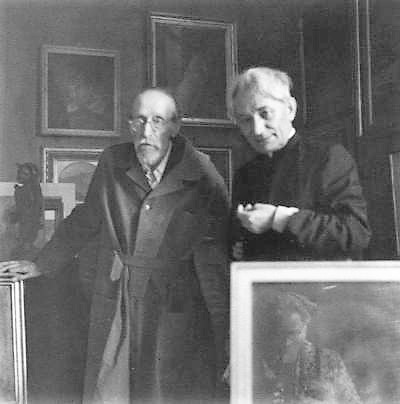
Ugo Bernasconi, born on May 21, 1874, in Buenos Aires, Argentina, is recognized as an influential Italian painter and intellectual. Despite his Argentine birth, Bernasconi’s cultural and artistic contributions are deeply rooted in Italian and European contexts. His career spanned various artistic and literary fields, making him a prominent figure in early 20th-century art and thought.
Early Life and Education
Bernasconi’s early years in Argentina remain largely undocumented. However, his relocation to Europe and subsequently to Italy marked the beginning of his significant contributions to the art world. His initial education in Buenos Aires likely laid the groundwork for his artistic inclinations, but it was in Europe where his talents truly flourished.
Paris and Artistic Formation
In 1899, Bernasconi moved to Paris, a city that was then the epicenter of artistic innovation and the avant-garde. Here, he studied under the influential French painter Eugène Carrière. Carrière, a prominent figure in the Symbolist movement, significantly impacted Bernasconi’s development as an artist. Under Carrière’s mentorship, Bernasconi honed his skills and absorbed the Symbolist ethos, characterized by its introspective and often mystical qualities.
Influence of Eugène Carrière
Carrière’s influence on Bernasconi extended beyond technique. The intimate tones and familial subjects, as well as the muted color palette reminiscent of Leonardo da Vinci, left a lasting impression on Bernasconi’s work. This period in Paris was crucial for Bernasconi, providing him with the artistic foundation that would inform his later works.
Literary Pursuits and Early Writings
Bernasconi was not only a painter but also a prolific writer. His literary works often paralleled his artistic endeavors, reflecting a deep intellectual engagement with the themes of art and society. In 1910, he published “Precetti e pensieri giovanili” (Precepts and Youthful Thoughts), followed by “Uomini e altri animali” (Men and Other Animals) in 1915. These writings showcased his keen observational skills and philosophical musings on human nature and society.
Return to Italy and Post-War Years
After World War I, Bernasconi returned to Italy and settled in Cantù in 1918, a place where he would spend most of his life. The interwar years were a productive period for Bernasconi, both in painting and writing. He developed a distinct Italian style, moving away from the monochromatic influences of his Paris years to embrace brighter colors and more vivid compositions.
Engagement with Italian Art and Intellectual Circles
During the 1920s and 1930s, Bernasconi became a central figure in Italian art circles. He wrote extensively on art theory and criticism, contributing to the intellectual discourse of the time. His works from this period, such as “Le presenti condizioni della pittura in Italia” (The Current Conditions of Painting in Italy, 1923) and “Pensieri ai pittori” (Thoughts to Painters, 1924), were well-received and influential.
Anti-Fascist Stance
In 1925, Bernasconi, along with other prominent intellectuals like Benedetto Croce, signed an anti-fascist manifesto. This political stance highlighted his commitment to intellectual and artistic freedom, setting him apart from many contemporaries who aligned with the rising fascist movement in Italy.
Association with the Novecento Movement
In 1926, Bernasconi joined the “Novecento” group, a collective of artists seeking to return to classical figurative art after the experimental excesses of the avant-garde movements. Founded by painter Anselmo Bucci, the group included notable artists like Mario Sironi, Achille Funi, and Emilio Malerba. Bernasconi found a resonance with the group’s principles, which emphasized order and tradition in art.
Departure from Novecento and Independent Work
By 1929, seeking to further develop his unique artistic voice, Bernasconi left the Novecento group. He embarked on a solo career, drawing on his extensive experiences in France and Italy to create a distinctive body of work. His independence allowed him to explore various themes and styles, enriching his artistic output.
Later Years and Recognition
From 1931 to 1939, Bernasconi participated in the Quadriennale d’Arte in Rome, a prestigious event that showcased his work to a broader audience. His efforts culminated in receiving the grand prize at the Venice Biennale in 1942, a significant recognition of his contributions to the art world.
Final Works and Legacy
In the last years of his life, Bernasconi continued to produce notable works, including contributions to the Verzocchi Collection, now housed in the Pinacoteca di Forlì. Among these, “I Vangatori” (The Diggers, 1949-1950) and a self-portrait stand out as key pieces. These works encapsulate his life’s themes and stylistic evolution.
Death and Posthumous Recognition
Ugo Bernasconi passed away on January 2, 1960, in Cantù. His death marked the end of a prolific career that had spanned over six decades. After his death, the curator Vanni Scheiwiller organized and published an anthology of Bernasconi’s writings, including previously unpublished notes and reflections. This collection has become an essential resource for understanding Bernasconi’s intellectual legacy.
Conclusion
Ugo Bernasconi’s life and work are a testament to the rich interplay between artistic practice and intellectual inquiry. His journey from Buenos Aires to the cultural hubs of Paris and Italy reflects a life dedicated to the pursuit of artistic excellence and philosophical depth. Bernasconi’s contributions to painting, writing, and the broader cultural discourse continue to inspire and inform contemporary artists and thinkers.


