
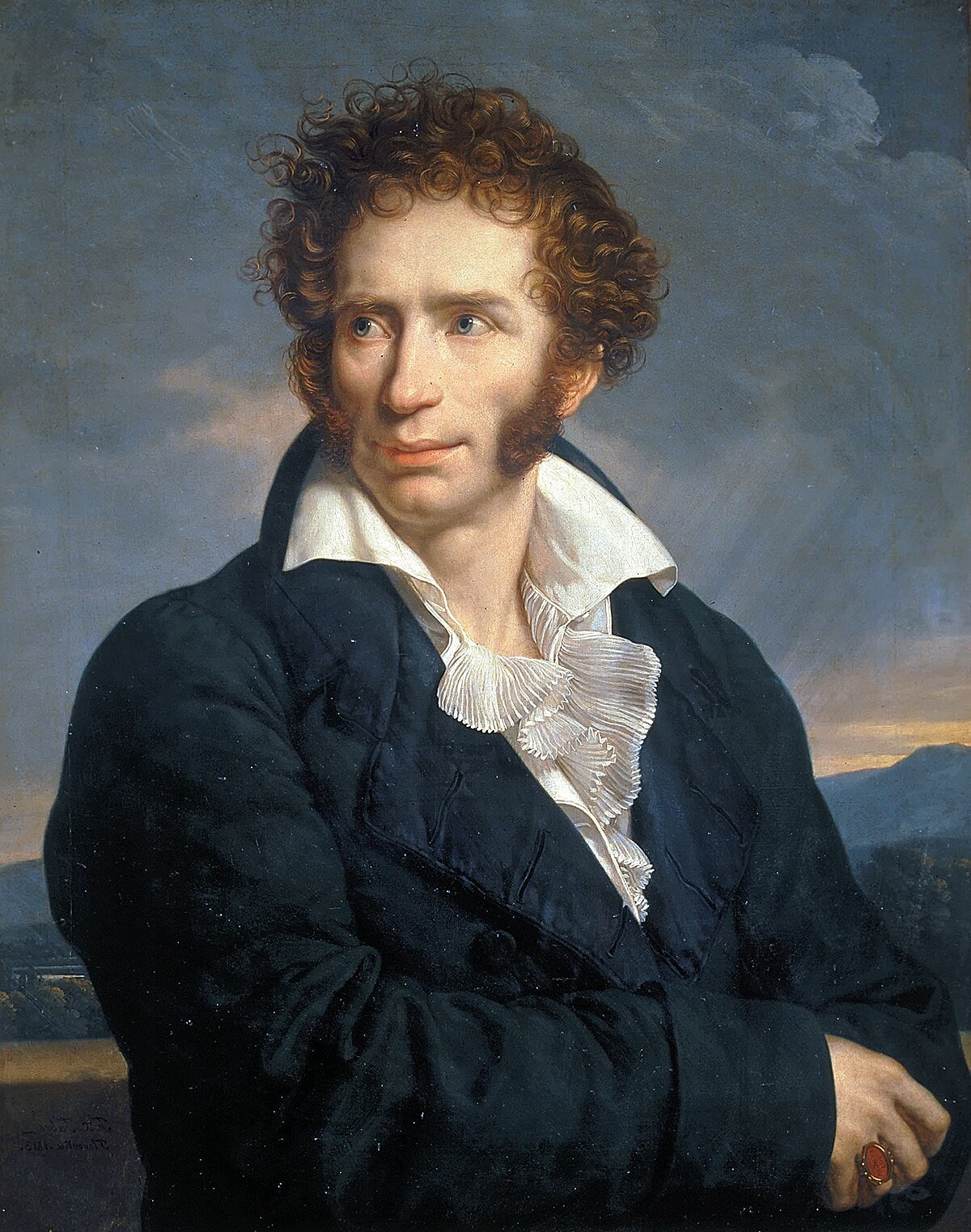
Ugo Foscolo, born on February 6, 1778, on the island of Zante (modern-day Zakynthos, Greece), is widely regarded as one of Italy’s most significant literary figures. A poet, novelist, playwright, and patriot, Foscolo’s works encapsulate the cultural and ideological currents of the late 18th and early 19th centuries. His writings reflect the tensions of the time, characterized by the collision of Enlightenment ideals, Neoclassicism, and the burgeoning Romantic movement. Foscolo’s life was marked by personal and political turmoil, which profoundly influenced his literary output and left a lasting legacy in Italian literature.
Early Life and Influences
Ugo Foscolo was born into a culturally diverse family; his father was Venetian, and his mother was Greek. This bicultural heritage influenced Foscolo’s outlook on life and literature, instilling in him a deep appreciation for classical antiquity and a sense of nostalgia for the lost glories of the past. His birthplace, Zante, an island in the Ionian Sea, would later become a symbol of his idealized vision of homeland and cultural identity, immortalized in his famous sonnet A Zacinto.
Foscolo’s early life was marked by tragedy. His father died when he was young, prompting the family to move to Venice. This relocation exposed Foscolo to the political and intellectual ferment of one of Europe’s most vibrant cultural centers. Venice, with its rich history and complex political landscape, would become a significant backdrop for Foscolo’s intellectual and political development.
Intellectual Development and Political Engagement
In Venice, Foscolo became involved in the political upheavals of the time. The city was caught in the crossfire of the Napoleonic Wars, and Foscolo, like many young intellectuals of his generation, initially saw Napoleon as a harbinger of freedom and progress. However, his initial enthusiasm turned to bitter disillusionment after the Treaty of Campoformio in 1797, where Napoleon ceded Venice to the Austrian Empire. This event was a turning point in Foscolo’s life, marking the beginning of his deep skepticism towards political power and a recurring theme of disillusionment in his works.
Foscolo’s political engagement during this period was not limited to his writings. He took an active role in the short-lived Venetian Republic, where he held public office. However, the collapse of the Republic and the subsequent Austrian occupation forced Foscolo into exile. He moved to Milan, where he became part of the intellectual circle that included prominent figures like Vincenzo Monti and Giuseppe Parini.
Literary Career: The Blending of Neoclassicism and Romanticism
Ugo Foscolo’s literary career is a testament to his ability to navigate and synthesize the dominant cultural trends of his time. His works reflect a unique blend of Neoclassicism, Enlightenment ideals, and Romantic sensibilities. This synthesis is evident in his most famous work, Le Ultime Lettere di Jacopo Ortis (The Last Letters of Jacopo Ortis), published in 1802. This novel, often considered the first modern Italian novel, is a semi-autobiographical epistolary work that explores themes of patriotism, love, and existential despair.
Le Ultime Lettere di Jacopo Ortis is often compared to Goethe’s The Sorrows of Young Werther, but Foscolo’s work is distinct in its political engagement and philosophical depth. The novel reflects Foscolo’s disillusionment with the political situation in Italy, and the protagonist’s tragic end underscores the tension between personal ideals and political realities. The novel also introduces the concept of “illusion,” which would become a central theme in Foscolo’s later works. For Foscolo, illusions—such as love, glory, and fame—are what give life meaning, even if they are ultimately unattainable.
The Theme of “Illusions” in Foscolo’s Work
The theme of “illusions” is central to understanding Foscolo’s literary and philosophical outlook. In a world where rationalism and materialism seemed to offer little solace, Foscolo turned to the concept of illusion as a way to make sense of human existence. These illusions, which include ideals like patriotism, love, and poetic immortality, are the constructs that allow individuals to live with purpose and dignity in an otherwise indifferent universe.
This theme is perhaps most powerfully expressed in Foscolo’s poem Dei Sepolcri (On Tombs), published in 1807. The poem was written in response to a Napoleonic edict that banned burials in churches and urban areas, which Foscolo saw as an attack on the cultural and spiritual heritage of Italy. In Dei Sepolcri, Foscolo argues that the memory of the dead, preserved in tombs and monuments, provides a link between the past and the present, giving continuity and meaning to human life. The poem is a profound meditation on the relationship between memory, history, and identity, and it reflects Foscolo’s belief in the power of poetry to transcend the limitations of time and space.
Foscolo as a Poet and Dramatist
In addition to his prose works, Ugo Foscolo made significant contributions to Italian poetry and drama. His sonnets, such as Alla Sera (To Evening), In Morte del Fratello Giovanni (On the Death of Brother Giovanni), and Alla Musa (To the Muse), are considered masterpieces of Italian literature. These poems explore themes of love, death, and the passage of time, and they are marked by a profound sense of melancholy and introspection.
Foscolo’s dramatic works, while less well-known, also reflect his engagement with the cultural and political issues of his time. His tragedies, including Aiace (Ajax), Tieste (Thyestes), and Ricciarda, were inspired by the works of Vittorio Alfieri and explore themes of passion, power, and the conflict between individual desire and social obligation. These plays, though not as celebrated as his poetry, demonstrate Foscolo’s versatility as a writer and his ability to engage with the classical tradition in a way that resonated with the contemporary concerns of his time.
Exile and Final Years
Foscolo’s life was marked by a series of exiles, reflecting the turbulent political landscape of Europe in the early 19th century. After the fall of Napoleon, Foscolo refused to swear allegiance to the Austrian regime that had taken control of much of Italy. This decision forced him to flee first to Switzerland and then to London in 1816. In London, Foscolo found a measure of fame and financial stability through the publication of his works, but his life was far from peaceful.
In England, Foscolo continued to write and engage with the intellectual circles of the time, but he also struggled with financial difficulties and personal turmoil. His health began to decline, and he became increasingly isolated. Despite these challenges, Foscolo remained committed to his literary pursuits, and he continued to write until his death on September 10, 1827.
Foscolo’s final years were marked by a deepening sense of disillusionment and melancholy, but they were also a time of reflection and intellectual growth. His experiences in exile, combined with his lifelong engagement with the classical tradition, helped to shape his mature philosophical outlook, which is characterized by a deep skepticism towards political power and a belief in the redemptive power of art and poetry.
Legacy and Influence
Ugo Foscolo’s legacy as one of Italy’s greatest literary figures is secure. His works have had a profound influence on Italian literature and culture, and they continue to be studied and celebrated today. Foscolo’s ability to synthesize the intellectual currents of his time, combined with his profound understanding of the human condition, has ensured his place in the pantheon of great European writers.
Foscolo’s influence extends beyond Italy. His works have been translated into numerous languages, and his ideas about the role of art and poetry in society have resonated with writers and thinkers around the world. Foscolo’s concept of “illusions” as a means of giving meaning to life in a world devoid of transcendental certainties has been particularly influential, and it continues to inspire readers and writers alike.
In 1871, more than four decades after his death, Foscolo’s remains were transferred from London to Florence, where they were interred in the Basilica of Santa Croce, alongside other Italian luminaries such as Michelangelo, Galileo, and Machiavelli. This final resting place is a fitting tribute to a man who dedicated his life to the pursuit of literary and philosophical excellence.
Conclusion
Ugo Foscolo was a writer, poet, and thinker who captured the complexities of his time with unparalleled depth and insight. His life was marked by personal and political upheaval, and his works reflect the struggles of an individual caught between the ideals of the Enlightenment and the emerging sensibilities of Romanticism. Through his exploration of themes such as patriotism, love, death, and the power of art, Foscolo has left a lasting legacy that continues to resonate with readers and scholars today.
Foscolo’s writings remind us of the enduring power of literature to engage with the most profound questions of human existence. His belief in the importance of “illusions” as a way to navigate the challenges of life speaks to the universal human need for meaning and purpose. As we reflect on Foscolo’s life and work, we are reminded of the enduring relevance of his ideas and the timeless appeal of his literary achievements.


