
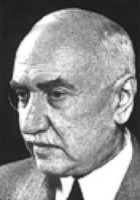
Ugo Ojetti, born on July 15, 1871, in Rome, Italy, was a towering figure in the world of Italian culture during the late 19th and early 20th centuries. Renowned as a distinguished art critic, writer, and journalist, Ojetti’s career was marked by his deep engagement with the Renaissance and Baroque periods of art, as well as his involvement in the political and cultural movements of his time. His influence extended beyond the realm of art criticism to include significant contributions as a publisher, event organizer, and intellectual figure during Italy’s Fascist regime. This article provides an in-depth exploration of Ugo Ojetti’s life, highlighting his age, rise to fame, and the key moments that defined his multifaceted career.
Early Life and Education: The Foundations of a Cultural Icon
Ugo Ojetti was born into a family steeped in artistic and intellectual pursuits. His father, Raffaello Ojetti, was a respected architect and restorer known for his work on several Renaissance-inspired buildings in Rome, including the façade of the famed Palazzo Odescalchi. Growing up in such an environment, Ugo was exposed to the world of art and culture from an early age, which played a pivotal role in shaping his future career.
Ojetti’s education was deeply rooted in classical traditions, having been schooled by the Jesuits, a choice that underscored the strong Catholic values imparted to him. Despite this religious upbringing, Ojetti chose to pursue a more secular path, earning a law degree at the young age of 21 in 1892. His decision to study law was pragmatic, a safeguard against potential uncertainties in his professional future. However, Ojetti’s true passions lay elsewhere, and he soon gravitated towards journalism and art criticism, fields where he would leave an indelible mark.
The Early Career: From Journalism to Literature
Ugo Ojetti’s foray into journalism began shortly after his graduation, with contributions to various publications. His early work displayed a keen interest in contemporary literature and art, fields that were undergoing significant transformation during the late 19th century. One of his earliest literary efforts was the novel “Senza Dio” (Without God), published in 1894, which, while not widely known, marked his entry into the world of fiction.
However, it was his work as a critic and journalist that truly set the stage for his later fame. In 1895, Ojetti published “Alla scoperta dei letterati” (In Search of the Writers), a work that straddled the line between criticism and reportage. This book offered a series of interviews and analyses of prominent literary figures of the time, including Antonio Fogazzaro, Matilde Serao, Giosuè Carducci, and Gabriele D’Annunzio. This early work demonstrated Ojetti’s ability to engage with the cultural currents of his era, positioning him as a rising star in the Italian literary scene.
Establishing Himself as an Art Critic
By the early 20th century, Ugo Ojetti had firmly established himself as a leading voice in Italian art criticism. His association with the publication “L’Illustrazione Italiana” began in 1904, where he contributed a series of high-profile articles that showcased his analytical prowess and deep understanding of art history. His writings during this period were later compiled into two volumes titled “I capricci del conte Ottavio” (The Caprices of Count Ottavio), published in 1908 and 1910. These works solidified his reputation as a critical thinker and an astute observer of the art world.
Ojetti’s passion for Italian art, particularly from the Renaissance and Baroque periods, was evident in his numerous publications. In 1911, he released “Ritratti di artisti italiani” (Portraits of Italian Artists), a comprehensive examination of key figures in Italian art history. This work was followed by a second volume in 1923, further cementing his status as an authority on the subject. His critical writings during this time reflected not only his deep appreciation for the artistic achievements of the past but also his desire to elevate the standards of contemporary art.
The Role of a Cultural Organizer and Gallerist
Beyond his work as a critic and writer, Ugo Ojetti played a significant role as a cultural organizer and gallerist. He was instrumental in organizing several national art events, where he sought to promote Italian art both domestically and internationally. His efforts in this regard were not just about showcasing art but also about fostering a sense of national pride in Italy’s artistic heritage.
Ojetti’s commitment to preserving and promoting Italian culture led him to collaborate with prominent institutions and individuals. One of his notable achievements was the creation of the “I Classici italiani” (The Italian Classics) series for the publishing house Rizzoli. This series aimed to make classic Italian literature more accessible to the general public, reflecting Ojetti’s belief in the importance of cultural education.
The Fascist Era: Intellectual Complicity and Controversy
Ugo Ojetti’s career took a controversial turn during the Fascist regime in Italy. As an intellectual, he became closely associated with the Fascist government, a relationship that would later cast a shadow over his legacy. In 1925, Ojetti was one of the signatories of the “Manifesto degli intellettuali fascisti” (Manifesto of the Fascist Intellectuals), a document that endorsed the Fascist regime and its cultural policies. His alignment with the regime led to his appointment as a member of the Accademia d’Italia in 1930, one of the highest honors for an intellectual at the time.
During this period, Ojetti continued to write and publish extensively, with works such as “La pittura italiana del Seicento e del Settecento” (Italian Painting of the Seventeenth and Eighteenth Centuries) in 1924, and “L’Atlante di storia dell’arte italiana” (Atlas of the History of Italian Art) in 1925 and 1934. These works were significant contributions to the field of art history, but they were also shaped by the cultural and political environment of Fascist Italy.
Ojetti’s involvement with the Fascist regime eventually led to his downfall. After the fall of Fascism in 1943, he was ostracized by the post-war Italian society, and his contributions were largely forgotten or dismissed due to his political affiliations. In 1944, he was expelled from the Italian Journalists’ Guild, marking the end of his public career.
Legacy and Posthumous Recognition
Ugo Ojetti passed away on January 1, 1946, at the age of 74, in his villa at Salviatino, Florence. At the time of his death, his reputation was tarnished, and his contributions were largely overlooked. The “Corriere della Sera,” the newspaper where he had once served as director, mentioned his passing with only a brief obituary, reflecting the degree to which he had been marginalized.
However, Ojetti’s work has not been entirely forgotten. In the years following his death, there has been a gradual reappraisal of his contributions to art criticism and Italian culture. His collected writings from “Corriere della Sera” were published posthumously under the title “Cose viste” (Things Seen), covering articles from 1921 to 1943. This collection serves as a testament to Ojetti’s keen observations and his significant, though complex, role in Italian cultural history.
In 1977, Ojetti’s daughter, Paola Ojetti, who was also a journalist, donated his extensive library to the Gabinetto Vieusseux in Florence. The collection, consisting of approximately 100,000 volumes, is a valuable resource for scholars and serves as a lasting legacy of Ugo Ojetti’s lifelong dedication to art and culture.
Conclusion
Ugo Ojetti’s life and career reflect the complexities of being an intellectual in a politically charged environment. His contributions to art criticism, literature, and journalism were significant, yet his association with the Fascist regime has made his legacy a contentious one. Despite the controversies, Ojetti remains an important figure in Italian cultural history, and his work continues to be studied and appreciated for its intellectual rigor and historical value.
As we look back on Ojetti’s life, it is essential to recognize both his achievements and the context in which they occurred. His story serves as a reminder of the delicate balance that intellectuals must navigate between their cultural contributions and the political realities of their time.


