
Introduction
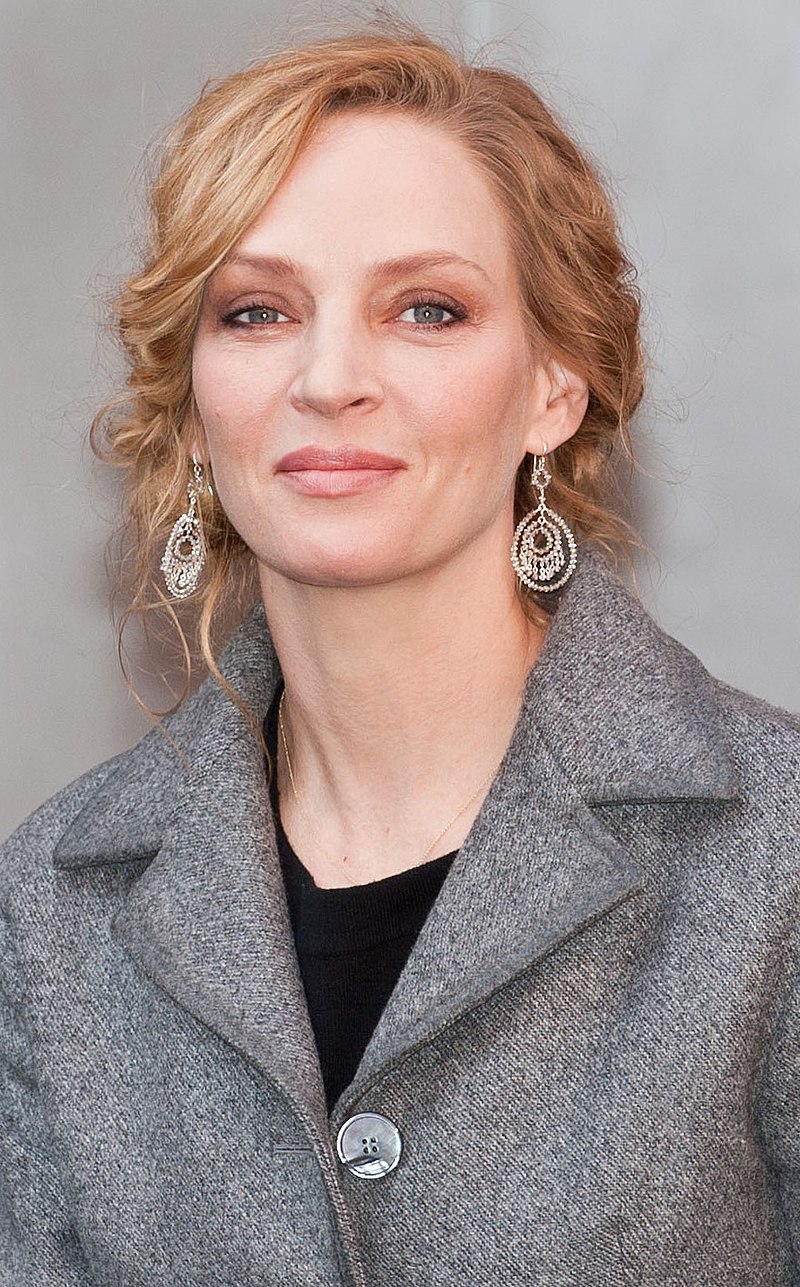
Uma Thurman is an American actress and model whose iconic roles and striking presence have made her a household name in Hollywood and beyond. Born on April 29, 1970, in Boston, Massachusetts, Thurman has carved out a unique space in the entertainment industry, known for her work in both independent films and big-budget blockbusters. Her collaborations with directors like Quentin Tarantino have cemented her status as a cultural icon, while her diverse roles showcase her range as an actress. This article explores her journey, highlighting key moments in her life and career that have defined her as one of the most captivating figures in Hollywood.
Early Life and Background
Uma Karuna Thurman was born into a family deeply rooted in intellectual and spiritual pursuits. Her mother, Nena von Schlebrügge, was a high-fashion model with connections to the world of art and culture, and her father, Robert A.F. Thurman, is a professor of Indo-Tibetan Buddhist Studies at Columbia University. Robert Thurman holds the distinction of being the first Westerner ordained as a Tibetan Buddhist monk by the Dalai Lama. Given this background, Uma Thurman was exposed to a rich cultural and spiritual environment from a young age, which undoubtedly influenced her worldview and artistic sensibilities.
Thurman grew up in a bohemian lifestyle, splitting her childhood between Woodstock, New York, and Amherst, Massachusetts. This unconventional upbringing contributed to her unique outlook on life and her eventual path into the arts. Despite the stability provided by her parents, Thurman was often self-conscious about her appearance and struggled with her sense of identity during her formative years.
Early Career and Breakthrough
At the age of 15, Thurman left her boarding school to pursue a career in modeling. Her tall, willowy frame and striking features quickly caught the attention of the fashion world, leading to contracts with prestigious agencies and appearances in magazines like Vogue. However, modeling was never Thurman’s ultimate goal. She soon transitioned into acting, determined to make a name for herself in Hollywood.
Thurman made her film debut in 1988 with the film Kiss Daddy Goodnight, but it was her role as Cecile de Volanges in Stephen Frears’ Dangerous Liaisons (1988) that garnered her significant attention. The film, based on the classic French novel Les Liaisons Dangereuses, was a critical and commercial success, and Thurman’s portrayal of the naive but seductive Cecile established her as a rising star in Hollywood.
Following Dangerous Liaisons, Thurman continued to choose roles that challenged her and showcased her versatility. In 1990, she starred in Henry & June, a biographical drama about the tumultuous relationship between authors Henry Miller and Anaïs Nin. Her role as June Miller, Henry’s wife, was both physically and emotionally demanding, and Thurman’s performance was widely praised for its depth and intensity.
Collaboration with Quentin Tarantino and Iconic Roles
The most significant turning point in Uma Thurman’s career came in 1994 when she was cast by Quentin Tarantino in his groundbreaking film Pulp Fiction. Her role as Mia Wallace, the wife of a gangster played by John Travolta, became iconic almost overnight. The film’s nonlinear narrative, sharp dialogue, and stylized violence made it a cultural phenomenon, and Thurman’s performance was a central part of its success.
The role earned Thurman an Academy Award nomination for Best Supporting Actress and solidified her status as a major Hollywood star. Her portrayal of Mia Wallace, particularly in the famous dance scene with Travolta, remains one of the most memorable moments in cinema history.
Thurman’s collaboration with Tarantino didn’t end with Pulp Fiction. In 2003 and 2004, she starred in Kill Bill: Vol. 1 and Kill Bill: Vol. 2, playing the role of The Bride, a former assassin seeking revenge against those who wronged her. The character’s journey is a tour de force of action and drama, and Thurman’s commitment to the physically demanding role earned her widespread acclaim. The films were both critical and commercial successes, and The Bride has since become one of the most iconic characters in film history.
Challenges and Personal Life
Despite her professional success, Uma Thurman’s personal life has been marked by challenges and public scrutiny. Her relationships with high-profile figures have often been the subject of media attention. Thurman married British actor Gary Oldman in 1990, but the marriage ended in divorce after two years. She later married actor Ethan Hawke in 1998, with whom she has two children, Maya Ray and Levon Roan. The couple’s marriage, however, ended in divorce in 2005 amid allegations of infidelity.
Thurman’s romantic life continued to be a topic of interest for the tabloids, especially during her relationship with New York hotelier André Balazs. The couple became engaged but ultimately parted ways before making it to the altar. Despite these personal challenges, Thurman has always maintained a strong focus on her career and her children, striving to balance the demands of Hollywood with her responsibilities as a mother.
Diverse Roles and Continued Success
Uma Thurman has never been one to be pigeonholed into a single type of role. Throughout the 2000s, she took on a variety of characters that demonstrated her range as an actress. In Gattaca (1997), a science fiction film set in a dystopian future, Thurman played the role of Irene Cassini, a complex character navigating a world obsessed with genetic perfection. Her performance was subtle yet powerful, contributing to the film’s critical acclaim.
In 1997, Thurman also portrayed Poison Ivy in Batman & Robin, showcasing her ability to bring a sultry and menacing character to life. Although the film received mixed reviews, Thurman’s performance was one of its highlights, further proving her versatility.
During the 2000s, Thurman continued to explore a wide range of genres. She starred in comedies like Be Cool (2005) and The Producers (2005), where she showcased her comedic timing and charm. In My Super Ex-Girlfriend (2006), she played a woman with superpowers who seeks revenge on her ex-boyfriend, blending action with humor in a lighthearted film.
Thurman’s ability to switch between genres and characters has kept her relevant in an industry that often typecasts actors. Her choices have demonstrated not only her talent but also her willingness to take risks and explore new creative avenues.
The 2010s and Beyond
In the 2010s, Uma Thurman continued to add to her impressive filmography with roles that challenged her and pushed her artistic boundaries. She starred in Percy Jackson & the Olympians: The Lightning Thief (2010) as Medusa, bringing a mythical character to life with her unique blend of intensity and allure. The same year, she appeared in Ceremony (2010), a romantic comedy that allowed her to showcase her softer side.
One of Thurman’s most notable collaborations during this period was with Danish director Lars von Trier. She appeared in Nymphomaniac (2013), a provocative and controversial film that delved into the complexities of human sexuality and relationships. Thurman’s role, though brief, was memorable for its raw emotional power and intensity.
Thurman also worked with von Trier on The House That Jack Built (2018), a psychological horror film that explored the mind of a serial killer. Her role in the film was chilling and added another dimension to her already diverse body of work.
In addition to her film work, Thurman has also ventured into television. She appeared in the miniseries The Slap (2015) and Imposters (2017-2018), bringing her talent to the small screen and reaching new audiences.
Legacy and Impact
Uma Thurman’s impact on Hollywood and popular culture is undeniable. Her collaborations with Quentin Tarantino alone have left an indelible mark on cinema, with characters like Mia Wallace and The Bride becoming cultural icons. Beyond her work with Tarantino, Thurman’s willingness to tackle a wide range of roles has set her apart as one of the most versatile and respected actresses of her generation.
Thurman’s influence extends beyond her performances. As a woman in Hollywood, she has navigated the industry’s challenges with grace and resilience, advocating for herself and others in a business that is often unforgiving. Her openness about her experiences, including the challenges of balancing career and family, has made her a role model for many.
Future Prospects
As Uma Thurman moves into the next phase of her career, her legacy as an actress and cultural icon is firmly established. With a career spanning over three decades, she continues to be a force in the entertainment industry. Fans eagerly anticipate her future projects, as Thurman remains as captivating and talented as ever.
In an industry that often favors youth and novelty, Thurman’s continued success is a testament to her talent, adaptability, and enduring appeal. Whether she’s starring in a blockbuster film, taking on a challenging independent role, or exploring new creative avenues, Uma Thurman’s star shows no sign of dimming.
Conclusion
Uma Thurman’s journey from a young model to one of Hollywood’s most respected actresses is a story of talent, perseverance, and an unyielding commitment to her craft. Her collaborations with iconic directors, her ability to tackle a wide range of roles, and her influence on both the industry and popular culture have made her a true legend in the world of cinema.
As Thurman continues to evolve as an artist, her legacy will undoubtedly inspire future generations of actors and filmmakers. With her unique blend of beauty, talent, and intellect, Uma Thurman remains a shining example of what it means to be a true Hollywood icon.


