
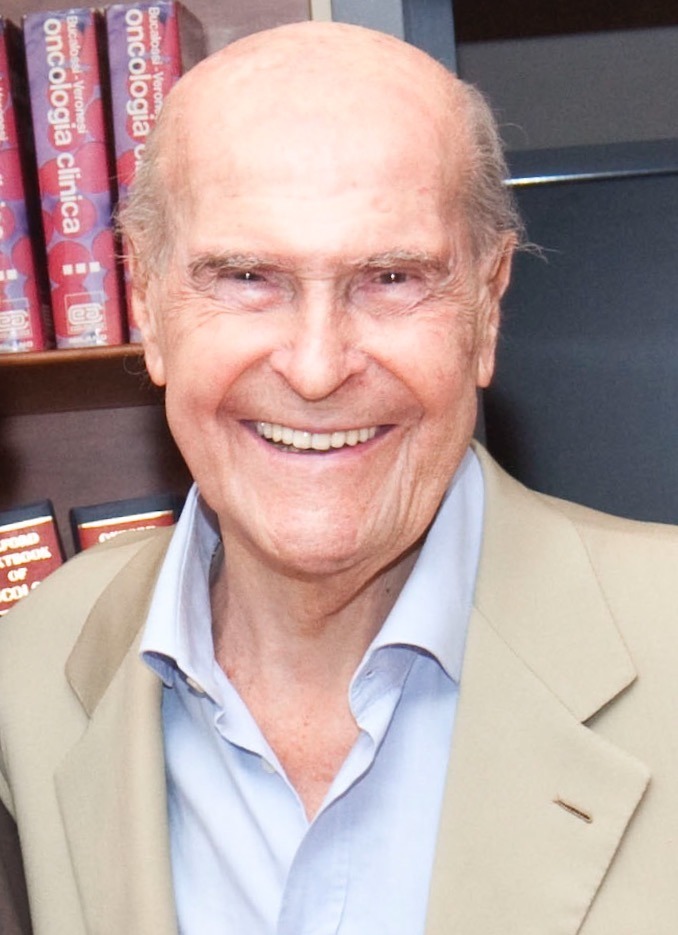
Umberto Veronesi, a name synonymous with innovation in cancer treatment and public health advocacy, was a pioneer who left an indelible mark on the world of oncology. Born on November 28, 1925, in Milan, Italy, Veronesi’s life and career were dedicated to advancing medical science, particularly in the field of cancer treatment. His work not only transformed the landscape of oncology in Italy but also had a significant impact on global approaches to cancer care. This article delves into the life, achievements, and enduring legacy of Umberto Veronesi, highlighting his contributions to medicine, his influence on public health policy, and the personal convictions that guided his life’s work.
Early Life and Education
Umberto Veronesi was born into a modest family with roots in agriculture. Despite his humble beginnings, he was a bright student, showing an early interest in science and medicine. In 1950, Veronesi graduated with a degree in medicine from the University of Milan, setting the stage for what would become a remarkable career in medical research and public health.
His early years in medicine were marked by a deep commitment to understanding and combating cancer. After completing his medical degree, Veronesi joined the National Cancer Institute in Milan, where he would spend the majority of his career. His time at the institute was interrupted only by brief stints in France and England, where he furthered his training in cancer treatment techniques that were then emerging in Europe.
Pioneering Cancer Treatment
Veronesi’s work at the National Cancer Institute was characterized by his relentless pursuit of innovative treatments that could improve patient outcomes. He was particularly focused on breast cancer, a disease that, at the time, was often treated with radical mastectomy, a procedure that involved the complete removal of the breast. This approach, while effective in some cases, was also highly invasive and often left women with significant physical and emotional scars.
In response to this, Veronesi developed a revolutionary technique known as quadrantectomy, a less invasive surgical procedure that involved the removal of only the cancerous part of the breast, leaving the rest of the tissue intact. This procedure, which was far less disfiguring than traditional mastectomy, quickly gained international recognition and is now a standard treatment for early-stage breast cancer.
Veronesi’s advocacy for this procedure was driven by his belief that cancer treatment should not only aim to cure the disease but also to preserve the quality of life for patients. His approach to breast cancer surgery was a significant departure from the more aggressive treatments of the time and reflected a broader shift in the medical community towards more patient-centered care.
International Recognition and Influence
Umberto Veronesi’s contributions to cancer treatment did not go unnoticed. In 1985, he became the first Italian president of the International Union Against Cancer (UICC), a global organization dedicated to promoting cancer research and treatment. His leadership in this role further cemented his reputation as a leading figure in oncology and allowed him to influence cancer treatment protocols on a global scale.
In addition to his work with the UICC, Veronesi was also instrumental in founding the European School of Oncology (ESO), an institution dedicated to improving the education and training of oncologists across Europe. The school played a crucial role in standardizing cancer treatment protocols across the continent and ensuring that patients received the best possible care regardless of where they lived.
Veronesi’s influence extended beyond the world of oncology. He was a vocal advocate for public health policies that promoted cancer prevention, particularly through lifestyle changes. He was a staunch opponent of smoking, which he identified as one of the leading causes of cancer, and he consistently promoted the idea that a healthy diet and lifestyle were key components of cancer prevention.
Public Service and Political Career
Umberto Veronesi’s dedication to public health eventually led him into the realm of politics. In 2000, he was appointed as Italy’s Minister of Health under the government of Prime Minister Giuliano Amato. His appointment was widely praised, given his extensive background in medical research and his commitment to improving public health.
As Minister of Health, Veronesi continued to advocate for policies that promoted cancer prevention and early detection. He played a key role in the development of national cancer screening programs, which aimed to catch the disease in its early stages when it was most treatable. These programs have since become a cornerstone of Italy’s public health strategy and have been credited with saving countless lives.
One of Veronesi’s most controversial positions during his time as Health Minister was his support for the legalization of soft drugs, such as marijuana. He argued that legalization would allow for better regulation and control of these substances and that it could reduce the harm associated with their illicit use. While this stance was met with opposition from some quarters, it was consistent with Veronesi’s broader belief in harm reduction and evidence-based public health policies.
The Di Bella Therapy Controversy
In 1998, Veronesi was appointed to lead a commission of experts tasked with evaluating the Di Bella Therapy, a controversial cancer treatment developed by Italian physician Luigi Di Bella. The therapy, which involved a combination of drugs, vitamins, and hormones, had gained a significant following in Italy, despite a lack of scientific evidence supporting its effectiveness.
Veronesi’s commission ultimately concluded that the therapy was ineffective and that it offered false hope to cancer patients. The report was a decisive blow to the therapy’s credibility and helped to reaffirm the importance of evidence-based medicine in the treatment of cancer. The controversy surrounding the Di Bella Therapy highlighted the challenges that Veronesi faced in his career, as he sought to balance the hopes and expectations of patients with the rigorous demands of scientific research.
Personal Life and Beliefs
Umberto Veronesi was not only a renowned scientist and public health advocate but also a man of deep personal convictions. He was a lifelong vegetarian, a choice he made based on his belief in the health benefits of a plant-based diet and his ethical concerns about animal welfare. His dietary choices were consistent with his broader commitment to a healthy lifestyle, which he believed was essential for cancer prevention.
Veronesi was also an avid rower, a passion he pursued well into his later years. He believed that physical activity was a crucial component of a healthy life and often spoke about the importance of staying active as one aged. His love of rowing was just one of the many interests that defined his life outside of medicine.
In addition to his work in oncology, Veronesi was also a prolific author, writing numerous books on topics ranging from cancer treatment to ethical issues in medicine. His writings reflected his deep commitment to patient care and his belief in the importance of a holistic approach to health. Some of his most notable works include “A Caress to Heal: The New Medicine Between Science and Conscience” (2005), “The Right to Die: The Freedom of the Secular in the Face of Suffering” (2005), and “Science and Peace” (2011).
Awards and Honors
Throughout his career, Umberto Veronesi received numerous awards and honors in recognition of his contributions to medicine and public health. He was awarded thirteen honorary degrees from institutions around the world, a testament to his global influence in the field of oncology. These degrees spanned a wide range of disciplines, including medicine, biotechnology, pedagogy, physics, and agricultural sciences, reflecting the broad impact of his work.
In addition to his honorary degrees, Veronesi was also recognized with numerous awards for his contributions to cancer research and treatment. These included prestigious international awards, such as the Léopold Griffuel Prize, which is awarded to individuals who have made significant contributions to cancer research.
Legacy and Impact
Umberto Veronesi’s legacy is one of innovation, compassion, and a relentless pursuit of knowledge. His work in the field of oncology transformed the way cancer is treated, not only in Italy but around the world. His development of quadrantectomy revolutionized breast cancer surgery and paved the way for less invasive treatments that prioritize the quality of life for patients.
Beyond his contributions to cancer treatment, Veronesi was a tireless advocate for public health policies that emphasized prevention and early detection. His work in this area has had a lasting impact on public health in Italy and has influenced cancer prevention strategies worldwide.
Veronesi’s influence extended beyond the medical community. His advocacy for a healthy lifestyle, including his promotion of a vegetarian diet, has inspired many to adopt healthier habits. His belief in the importance of scientific evidence in guiding medical treatment has helped to shape the way we approach healthcare and has reinforced the importance of rigorous research in developing new treatments.
Umberto Veronesi passed away on November 8, 2016, just weeks before his 91st birthday. His death marked the end of a remarkable career, but his contributions to medicine and public health continue to resonate. He is remembered not only as a brilliant oncologist but also as a compassionate human being who dedicated his life to improving the lives of others.
Conclusion
Umberto Veronesi was a man of many talents and deep convictions. His work in the field of oncology has saved countless lives, and his advocacy for public health has influenced policies that continue to protect the well-being of people around the world. Veronesi’s life is a testament to the power of innovation, the importance of evidence-based medicine, and the enduring impact of a life dedicated to the service of others.
As we look back on his life and legacy, we are reminded of the importance of continuing his work in the fight against cancer and in promoting public health policies that prioritize prevention and early detection. Umberto Veronesi’s contributions to medicine will be felt for generations to come, and his story serves as an inspiration to all who seek to make a difference in the world.


