
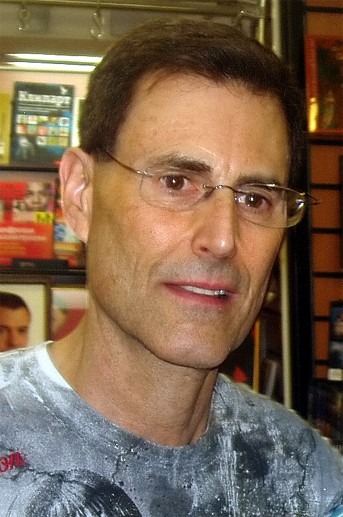
Uri Geller, born on December 20, 1946, in Tel Aviv, is a world-renowned illusionist, magician, and self-proclaimed psychic. Best known for his seemingly supernatural abilities, including bending spoons, reading minds, and other paranormal feats, Geller’s career has been marked by both adoration and controversy. His life is a fascinating blend of fame, skepticism, and the enduring allure of the mysterious. This article delves into the life, rise to fame, and significant career highlights of Uri Geller, offering detailed insights into his contributions to the entertainment world and the controversies that have surrounded him.
Early Life and Discovery of Powers
Uri Geller was born into a middle-class family in Tel Aviv, which was then part of British-controlled Palestine. His early life was relatively ordinary, but from a young age, Geller claimed to have experienced unusual phenomena. At the age of seven, he purportedly discovered his paranormal abilities when, according to his account, the hands of a clock he was holding began to move on their own. He also claimed to have the ability to read his mother’s thoughts. These experiences would shape the trajectory of his life and career.
Geller’s early education took place in Tel Aviv, but he later moved to Cyprus, where he attended a Catholic school. His time in Cyprus exposed him to a diverse range of cultural influences, which may have contributed to his later success in appealing to international audiences. Upon returning to Israel, Geller enlisted in the Israeli Army and served in the paratroopers. However, his military career was cut short after an accident during a training exercise, an event that remains shrouded in some mystery.
After leaving the military, Geller briefly worked as a model due to his striking appearance, but he soon shifted his focus to exploring and developing his alleged paranormal abilities. It was during this period that Geller began to perform publicly, initially in small venues in Israel.
Rise to Fame in the 1970s
Uri Geller’s rise to international fame began in the early 1970s when he started performing in Europe. His act, which included bending spoons, stopping watches, and other seemingly impossible feats, captivated audiences and quickly made him a household name. Geller’s performances were characterized by their simplicity and directness; he often claimed that his abilities were the result of psychic powers, rather than traditional magic or illusion.
One of the most significant boosts to Geller’s career came from his association with Dr. Andrija Puharich, an American scientist and parapsychologist who became one of Geller’s most vocal supporters. Puharich conducted several experiments with Geller and published his findings, which suggested that Geller’s abilities were genuine. This endorsement by a respected scientist helped Geller gain credibility, despite the skepticism of many in the scientific community.
In 1973, Geller’s fame reached new heights when he appeared on the American television show “The Tonight Show Starring Johnny Carson.” Carson, a former magician himself, was skeptical of Geller’s claims and, at the suggestion of fellow magician and skeptic James Randi, set up the conditions of the demonstration to prevent any possible trickery. Geller struggled to perform his usual feats under these controlled conditions, leading to widespread doubt about the authenticity of his abilities. Despite this setback, Geller’s career continued to thrive, as the controversy only added to his mystique.
The Spoon-Bending Phenomenon
Perhaps the most iconic element of Uri Geller’s act is his ability to bend spoons using what he claims are psychic powers. The spoon-bending phenomenon became a cultural sensation, with many people attempting to replicate the feat at home. Geller’s performances typically involved him lightly rubbing the spoon or simply holding it, after which the metal would appear to bend or warp, sometimes breaking entirely.
Skeptics and magicians have long argued that Geller’s spoon-bending is a simple magic trick, easily replicated using sleight of hand or pre-bent utensils. However, Geller has consistently maintained that his abilities are genuine, attributing them to psychic powers rather than illusion. This claim has been the source of much debate, with some believing in Geller’s abilities and others dismissing him as a clever showman.
Despite the skepticism, the spoon-bending act became synonymous with Uri Geller and has been referenced in popular culture numerous times. The phenomenon sparked widespread interest in the paranormal during the 1970s and 1980s, contributing to Geller’s enduring fame.
Controversies and Skepticism
Uri Geller’s career has been marked by significant controversy, particularly regarding the authenticity of his abilities. One of the most prominent critics of Geller is James Randi, a magician and skeptic who dedicated much of his career to debunking paranormal claims. Randi has repeatedly challenged Geller to demonstrate his abilities under controlled conditions, offering substantial sums of money if Geller could prove that his feats were genuine. Geller has generally avoided direct confrontations with Randi, which has only fueled the skepticism.
The scientific community has also been divided on Geller’s claims. While some researchers, like Dr. Puharich, have supported Geller’s abilities, others have dismissed them as tricks. For example, during the 1970s, researchers at Stanford Research Institute (SRI) conducted experiments with Geller and concluded that he had demonstrated abilities that could not be explained by conventional means. However, these experiments have been criticized for lacking rigorous controls, and subsequent attempts to replicate the results have failed.
In response to the skepticism, Geller has maintained that his abilities are real and has suggested that his critics are simply unwilling to accept the possibility of the paranormal. This stance has kept Geller in the public eye, as debates about his authenticity continue to this day.
Diversification and Later Career
Beyond his work as a performer, Uri Geller has diversified his career in various ways. He has written several books, including autobiographies and works on the paranormal. Some of his books, such as “My Story” and “The Geller Effect,” provide detailed accounts of his life and experiences, while others, like “Ella” and “Dead Cold,” are works of fiction that explore themes related to the paranormal.
Geller has also worked as a consultant for businesses, athletes, and even governments. He claims to have used his abilities to help companies with decision-making and has been involved in various high-profile cases, including treasure hunts and missing persons investigations. However, these claims have also been met with skepticism, with critics suggesting that Geller’s involvement is more about publicity than actual results.
In recent years, Geller has remained active in the media, making appearances on television shows and maintaining a strong presence on social media. He continues to perform, though his focus has shifted more towards motivational speaking and promoting positive thinking.
Cultural Impact and Legacy
Uri Geller’s influence extends beyond the realm of magic and the paranormal; he has become a cultural icon, representing the enduring fascination with the unknown. His spoon-bending act and claims of psychic powers have left a lasting impression on popular culture, inspiring countless imitations, parodies, and references in movies, television shows, and literature.
Geller’s ability to captivate audiences, whether as a genuine psychic or a master showman, has ensured his place in the annals of entertainment history. He is a polarizing figure, with a legacy that is both celebrated and critiqued. For some, he is a pioneer who expanded the boundaries of what is possible; for others, he is a symbol of the need for critical thinking and skepticism.
Regardless of one’s stance on the authenticity of his abilities, it is undeniable that Uri Geller has had a significant impact on the world of entertainment and the public’s perception of the paranormal. His career, marked by both adoration and controversy, serves as a reminder of the complex relationship between belief, skepticism, and the power of suggestion.
The Future of Uri Geller
As Uri Geller continues to engage with the public through various media, his legacy as one of the most famous and controversial figures in the world of magic and the paranormal remains secure. Whether viewed as a genuine psychic or a master illusionist, Geller’s influence on popular culture and the paranormal will likely endure for many years to come.
Geller’s ongoing work, particularly his efforts to promote positive thinking and mental wellness, suggests that he will continue to be a prominent figure in both entertainment and public discourse. His ability to reinvent himself and remain relevant in an ever-changing world is a testament to his skills as a performer and a public figure.
As the debates around his abilities continue, Uri Geller’s story serves as a fascinating case study in the intersection of belief, science, and entertainment. His life and career offer valuable insights into the nature of fame, the power of suggestion, and the enduring allure of the unexplained.


