
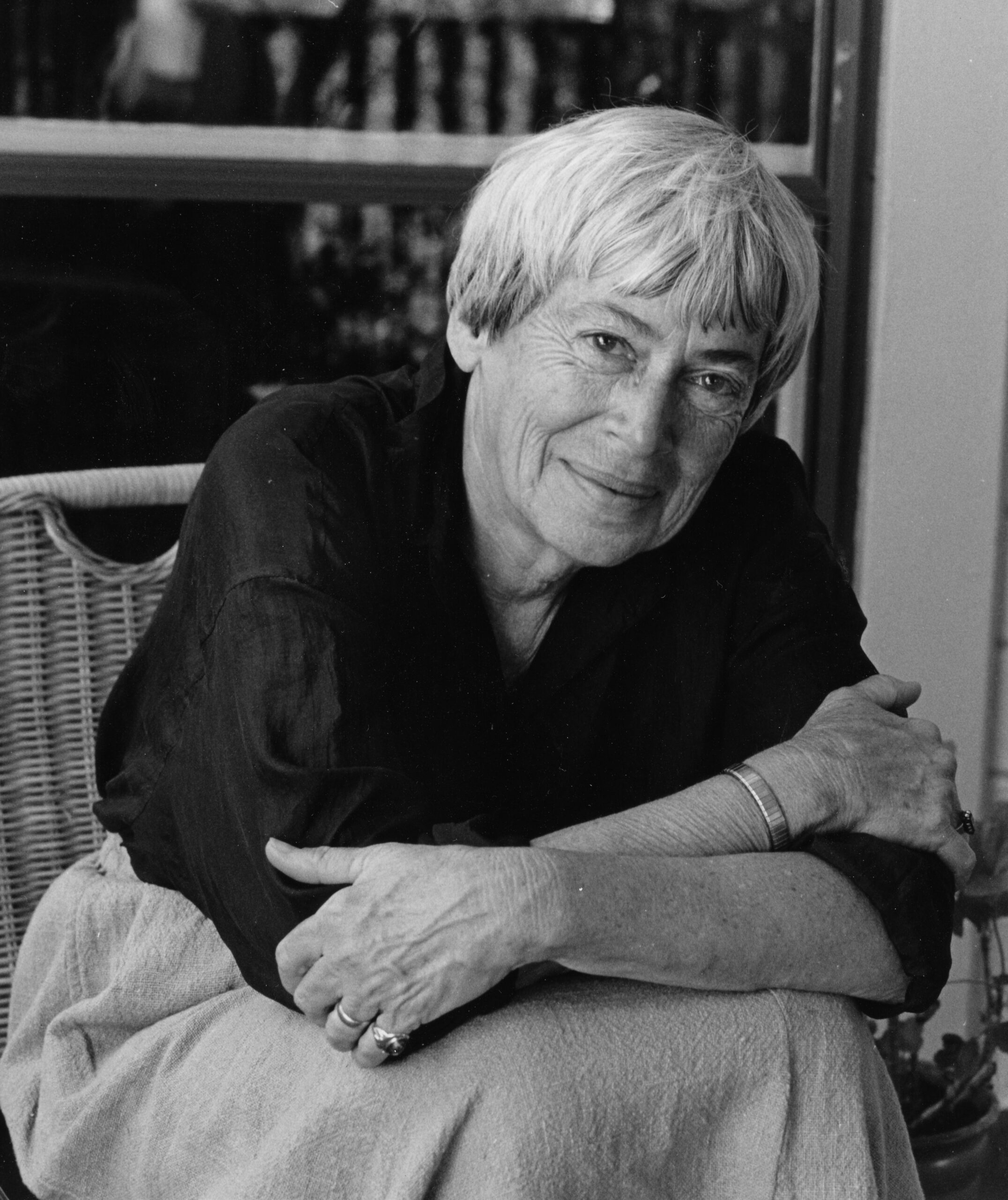
Ursula K. Le Guin is a name that has become synonymous with the redefinition of science fiction and fantasy literature. Born on October 21, 1929, in Berkeley, California, Le Guin’s life and work spanned nearly nine decades, during which she emerged as a towering figure in speculative fiction. Her innovative storytelling, deeply rooted in anthropological, feminist, and anarchist themes, revolutionized the genre, earning her a place among the most revered authors of the 20th and 21st centuries.
Early Life and Education
Childhood and Family Background
Ursula Kroeber was born into an intellectually rich environment. Her father, Alfred Louis Kroeber, was a pioneering anthropologist, while her mother, Theodora Kroeber, was a writer. Growing up in a household steeped in discussions of culture, history, and literature, Ursula was exposed to diverse ideas and worldviews from a young age. This upbringing profoundly influenced her later work, where themes of cultural relativism and the exploration of alternative societies became central.
Education and Early Interests
Le Guin’s formal education began at Radcliffe College, where she studied Renaissance French and Italian literature, earning a Bachelor of Arts degree in 1951. She then went on to earn a Master of Arts from Columbia University in 1952. Her academic background in literature, combined with her deep interest in mythology and anthropology, provided the foundation for her unique approach to speculative fiction.
Despite her early interest in writing, Le Guin faced rejection initially. At the age of 10, she submitted her first science fiction story to Amazing Stories, only to have it rejected. However, these early setbacks did not deter her. Instead, they fueled her determination to craft narratives that would not only entertain but also challenge readers to rethink their assumptions about society, politics, and human nature.
The Rise to Fame: Breaking Ground in Science Fiction and Fantasy
Early Publications and Breakthrough
Le Guin’s professional writing career began in earnest in the early 1960s. Her first published story, “April in Paris,” appeared in Fantastic Stories in 1962. Over the next few years, she continued to write and publish short stories, gradually gaining recognition for her distinctive voice and imaginative worlds.
Her breakthrough came with the publication of “A Wizard of Earthsea” in 1968, the first novel in the Earthsea series. This work, which explored themes of power, identity, and balance within a richly imagined fantasy world, quickly became a classic. The novel’s success established Le Guin as a major voice in fantasy literature, and it remains one of the most influential works in the genre.
The Hainish Cycle: A Visionary Exploration of Society
Le Guin’s most significant contributions to science fiction are arguably found in her Hainish Cycle, a series of loosely connected novels and stories that explore the complexities of interplanetary civilizations. Among these, “The Left Hand of Darkness” (1969) stands out as a seminal work. The novel, which won both the Hugo and Nebula Awards, is set on the planet Gethen, where inhabitants can change sex. This exploration of gender fluidity and its implications for society was groundbreaking, and it challenged traditional notions of gender in science fiction and beyond.
In “The Dispossessed” (1974), another novel in the Hainish Cycle, Le Guin explores the political and social dynamics of an anarchist society. The novel contrasts two worlds—one characterized by capitalism and the other by an anarchist-collectivist system—offering a nuanced critique of both. Through these works, Le Guin not only expanded the possibilities of science fiction as a genre but also brought philosophical and sociopolitical discourse into mainstream speculative fiction.
Thematic Depth and Philosophical Inquiry
Feminism and Gender
Le Guin’s work is often celebrated for its deep engagement with feminist themes. At a time when science fiction was largely dominated by male writers and male-centric narratives, Le Guin’s stories offered a refreshing and critical perspective on gender. In “The Left Hand of Darkness,” she challenges binary notions of gender by creating a society where individuals can change their sex, thus forcing readers to reconsider their assumptions about gender roles and identity.
Le Guin’s feminist perspective is also evident in her later works, such as “The Telling” (2000), where she explores the impact of cultural imperialism on gender and society. Her portrayal of strong, complex female protagonists who navigate and challenge patriarchal structures has inspired generations of readers and writers alike.
Anarchism and Utopian Thought
Anarchism is another recurring theme in Le Guin’s work. She was deeply influenced by anarchist philosophy, particularly the ideas of Kropotkin and the utopian visions of 19th-century thinkers. In “The Dispossessed,” Le Guin presents a society that operates without centralized government, exploring the potentials and pitfalls of such a system. The novel is not a simplistic utopian vision but a complex exploration of how an anarchist society might function, complete with its own internal conflicts and challenges.
Le Guin’s interest in utopian and dystopian themes extended beyond anarchism. In “The Lathe of Heaven” (1971), she examines the ethical implications of using technology to create a perfect world, raising questions about the nature of reality and the unintended consequences of utopian ideals.
Environmentalism and Ecological Awareness
Le Guin was also ahead of her time in addressing environmental issues through her fiction. In works like “The Word for World is Forest” (1972), she explores the impact of colonization on indigenous populations and their environments. The novella, which won the Hugo Award, is a powerful indictment of ecological destruction and the exploitation of natural resources, themes that have only become more relevant in the context of today’s global environmental crises.
Her Earthsea series, too, is imbued with a deep respect for the natural world. The balance of nature is a central theme, with magic being closely tied to the understanding and preservation of the natural order. Le Guin’s portrayal of the interconnectedness of all life forms reflects her broader ecological philosophy, which is rooted in the belief that humans must live in harmony with the earth.
Recognition and Legacy
Awards and Honors
Le Guin’s contributions to literature have been recognized with numerous awards and honors. She received the Hugo, Nebula, Locus, and World Fantasy Awards multiple times throughout her career, cementing her status as one of the most decorated authors in speculative fiction. In 2003, she was named a Grand Master of Science Fiction by the Science Fiction and Fantasy Writers of America, joining the ranks of legends like Arthur C. Clarke, Isaac Asimov, and Ray Bradbury.
Beyond genre-specific accolades, Le Guin’s impact on literature was acknowledged by the broader literary community. In 2014, she was awarded the National Book Foundation Medal for Distinguished Contribution to American Letters, a recognition that highlighted her influence across all genres of literature.
Influence on Literature and Culture
Le Guin’s influence extends far beyond the confines of science fiction and fantasy. Her work has been studied in academic circles for its rich thematic content and its contributions to discussions on gender, politics, and society. She has been cited as an influence by a wide range of writers, from genre authors like Neil Gaiman and Margaret Atwood to literary figures like Zadie Smith and Michael Chabon.
Her approach to world-building, characterized by a meticulous attention to detail and a deep understanding of cultural and anthropological principles, has set a standard in speculative fiction. Le Guin’s ability to create believable, complex societies that reflect and critique our own world has inspired countless writers to explore new possibilities in their storytelling.
Ursula K. Le Guin’s Impact on Science Fiction and Fantasy
Le Guin’s work has been instrumental in elevating the status of science fiction and fantasy in the literary world. By infusing these genres with intellectual rigor, philosophical depth, and a poetic sensibility, she challenged the notion that speculative fiction was merely escapist literature. Her stories invite readers to engage with complex ideas and to consider the social and ethical implications of the worlds she creates.
Moreover, Le Guin’s commitment to exploring issues of power, gender, and cultural difference through the lens of speculative fiction has expanded the boundaries of the genre. She has opened up new avenues for writers to address contemporary social issues in imaginative and thought-provoking ways.
Life After Literature
Later Years and Final Works
In her later years, Le Guin continued to write, though her focus shifted more towards poetry and essays. She remained an active voice in literary and cultural discussions, offering insights on everything from the state of the publishing industry to the role of the writer in society. Her final novel, “Lavinia” (2008), is a historical fiction work that reimagines the life of a minor character from Virgil’s Aeneid. The novel was widely praised for its lyrical prose and its meditation on history and storytelling.
Le Guin also became known for her candid reflections on the writing life, which she shared in essays and public speeches. Her acceptance speech at the 2014 National Book Awards, in which she defended the importance of imaginative literature and criticized the commercialization of publishing, was particularly celebrated.
Death and Posthumous Legacy
Ursula K. Le Guin passed away on January 22, 2018, at the age of 88, in Portland, Oregon. Her death marked the end of an era, but her legacy continues to thrive. Le Guin’s works remain widely read and studied, and new generations of readers continue to discover the power and beauty of her storytelling.
In the years since her passing, Le Guin’s influence has only grown. Her books have been reissued in new editions, and her ideas continue to resonate in discussions about literature, society, and the future. The Library of America has published her collected works, ensuring that her contributions to American letters will be preserved for future generations.
Conclusion: The Enduring Legacy of Ursula K. Le Guin
Ursula K. Le Guin was more than just a writer; she was a visionary who used the power of storytelling to explore the deepest questions of human existence. Through her imaginative worlds, she challenged readers to think differently about gender, society, and the environment. Her work transcends the boundaries of genre, offering insights that are as relevant today as they were when she first penned them.
Le Guin’s legacy is one of intellectual courage, creative innovation, and a deep commitment to social justice. She leaves behind a body of work that continues to inspire, provoke, and enchant readers around the world. As we look to the future, Ursula K. Le Guin’s stories will remain a guiding light, reminding us of the power of imagination to shape our understanding of the world and our place in it.


