
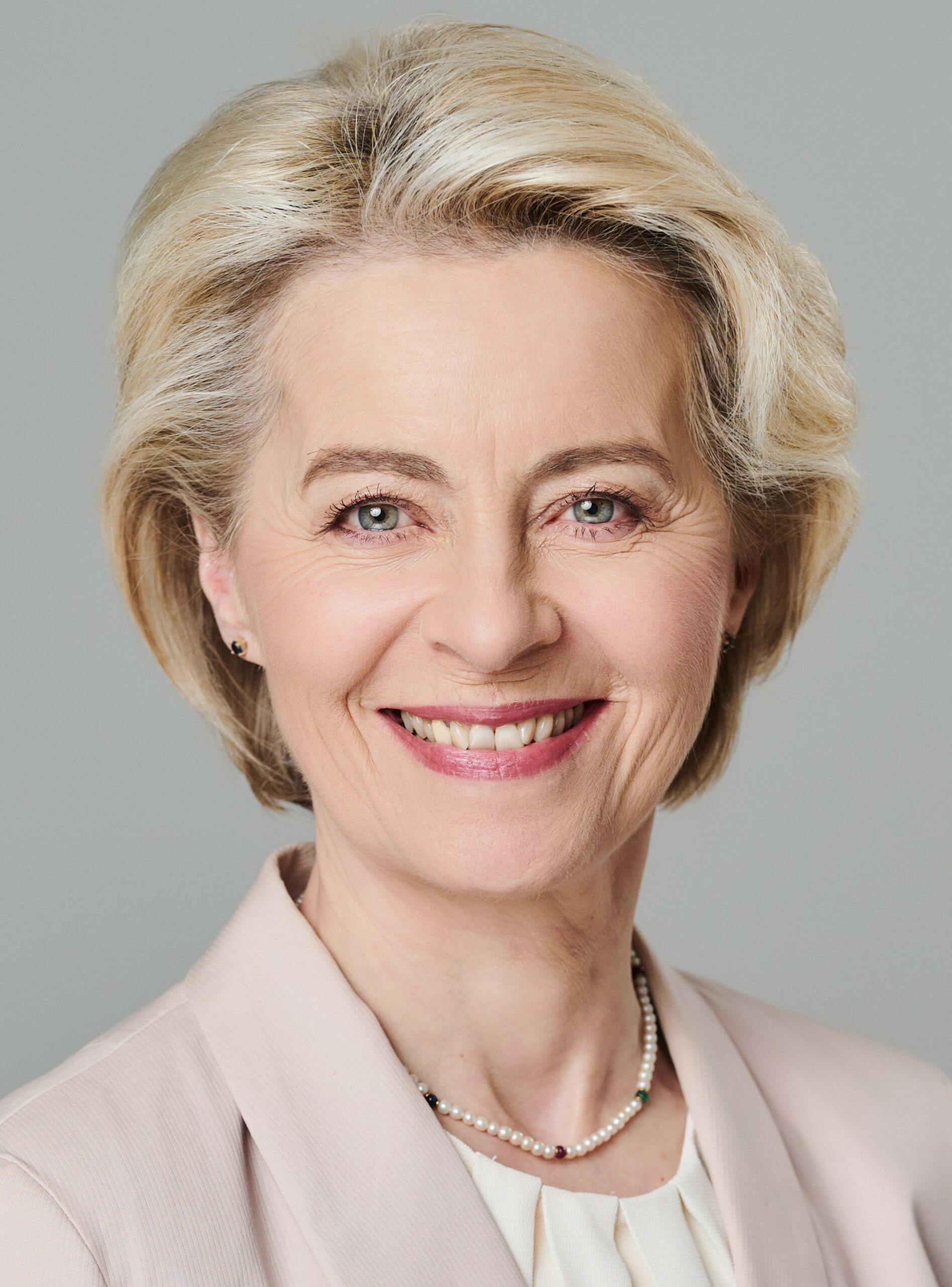
Ursula von der Leyen, born Ursula Albrecht on October 8, 1958, in Ixelles, a municipality in the Brussels-Capital Region of Belgium, has carved out an extraordinary career as a German politician and the first woman to serve as the President of the European Commission. Her rise to prominence is a testament to her resilience, adaptability, and deep commitment to public service, navigating complex political landscapes at both national and international levels. This article explores the life, career, and achievements of Ursula von der Leyen, providing a comprehensive overview of the milestones that have defined her journey to becoming one of the most powerful women in the world.
Early Life and Education: Foundations of a Political Career
Ursula von der Leyen was born into a family deeply entrenched in the European political scene. Her father, Ernst Albrecht, was one of the early civil servants of the European Economic Community, the precursor to the European Union. He held influential positions, including that of Chief of Staff and Director-General for Competition at the European Commission. Growing up in such an environment, Ursula was exposed to the intricacies of European politics from a young age, which undoubtedly shaped her future ambitions.
In 1971, when Ursula was just 13 years old, her family moved back to Germany as her father took on a new role as CEO of Bahlsen, a major food company. The Albrecht family settled in the Hannover region, where Ursula continued her education. She initially enrolled at the University of Göttingen, studying economics. However, her academic journey was interrupted in 1977 when her family faced threats from the far-left terrorist group, the Red Army Faction. As a precaution, Ursula was sent to London under a pseudonym, where she continued her studies at the London School of Economics.
Returning to Germany in 1979, Ursula made a significant change in her academic focus, shifting from economics to medicine. She enrolled at the Hannover Medical School, where she earned her medical degree in 1987. This academic background in medicine would later influence her approach to public health and social welfare during her political career.
Marriage and Early Career: The von der Leyen Name
In 1986, Ursula married Heiko von der Leyen, a fellow physician and a member of a prominent aristocratic family with roots in silk trading. Adopting her husband’s surname, Ursula von der Leyen began to establish herself both professionally and personally. From 1988 to 1992, she worked at the Women’s Clinic of the Hannover Medical School, specializing in public health and epidemiology.
The couple moved to California in the early 1990s, where Heiko took up a position at Stanford University. During this period, Ursula paused her career to focus on raising their children. However, she remained connected to the academic world, later returning to Germany and resuming her work at the Hannover Medical School. In 2001, she completed a Master’s degree in Public Health, further solidifying her expertise in the field.
Entry into Politics: The Road to Influence
Ursula von der Leyen’s entry into politics came in the early 1990s when she joined the Christian Democratic Union (CDU), Germany’s center-right political party. Her involvement in the party grew over the years, particularly in Lower Saxony, where she became an active member. Her political career gained momentum in 2003 when she was elected to the State Parliament of Lower Saxony and appointed Minister for Social Affairs, Women, Family Affairs, and Health.
Her work in Lower Saxony caught the attention of then-CDU leader Angela Merkel, who saw in von der Leyen a capable and forward-thinking politician. When Merkel became Chancellor of Germany in 2005, she appointed von der Leyen as the Federal Minister for Family Affairs, Senior Citizens, Women, and Youth. This position was a significant step in von der Leyen’s political career, allowing her to implement progressive policies aimed at improving family welfare and gender equality.
During her tenure, von der Leyen championed policies that encouraged work-life balance, including the introduction of parental leave for both mothers and fathers, and the expansion of childcare facilities across Germany. Her work in this role earned her a reputation as a modernizer within the CDU, aligning with Merkel’s broader vision for Germany.
Climbing the Political Ladder: Ministerial Roles
Following her success as Family Minister, Ursula von der Leyen’s political star continued to rise. In 2009, she was appointed Federal Minister of Labour and Social Affairs, where she focused on issues such as labor market reforms, social security, and immigration policy. Her time in this role was marked by efforts to modernize Germany’s labor laws, making them more flexible and better suited to the needs of a changing economy.
Von der Leyen’s ability to navigate complex social and economic issues made her a key figure in Merkel’s cabinet. In 2013, she was appointed Federal Minister of Defence, becoming the first woman to hold the position in Germany’s history. Her tenure as Defense Minister was challenging, as she inherited a military plagued by underfunding, equipment shortages, and a series of scandals.
Despite these challenges, von der Leyen implemented significant reforms aimed at modernizing the Bundeswehr (German Armed Forces), improving conditions for soldiers, and increasing Germany’s defense spending. She also advocated for a stronger European defense policy, promoting greater cooperation between EU member states in the area of security and defense.
President of the European Commission: Breaking New Ground
In July 2019, Ursula von der Leyen made history by becoming the first woman elected as President of the European Commission. Her nomination came as a surprise to many, as she was a relatively low-profile candidate compared to other contenders. However, her close ties to Merkel and her experience in various ministerial roles made her a strong candidate for the job.
Von der Leyen officially took office on December 1, 2019, inheriting a European Union facing numerous challenges, including Brexit, rising nationalism, and increasing geopolitical tensions. Her leadership was immediately put to the test with the outbreak of the COVID-19 pandemic, which required swift and decisive action to coordinate the EU’s response.
Under von der Leyen’s leadership, the European Commission launched several initiatives aimed at mitigating the impact of the pandemic. These included the creation of the “Next Generation EU” recovery fund, a €750 billion package designed to support the economic recovery of member states. Von der Leyen also played a crucial role in coordinating the EU’s vaccine strategy, ensuring that all member states had access to vaccines.
Her tenure has also been marked by efforts to strengthen the EU’s global standing. Von der Leyen has been a vocal advocate for environmental sustainability, leading the charge on the European Green Deal, a comprehensive plan to make Europe the first climate-neutral continent by 2050. She has also pushed for greater digital innovation within the EU, emphasizing the need for Europe to remain competitive in the global tech industry.
The early 2020s have been a defining period for Ursula von der Leyen’s leadership. In 2020, she was included in Time magazine’s list of the 100 most influential people, and in 2022, she was named the world’s most powerful woman by Forbes. These accolades reflect her significant influence on both European and global affairs.
Von der Leyen has been at the forefront of several critical issues, including the EU’s response to the war between Russia and Ukraine. She has been a strong advocate for expanding the European Union, supporting the candidacy of Ukraine, Moldova, and Georgia for EU membership. In addition, she has worked to resolve longstanding issues within the Balkans, particularly by mediating between Bulgaria and North Macedonia.
Her leadership during the Ukraine crisis has been particularly noteworthy. Von der Leyen has been a staunch supporter of Ukraine’s sovereignty, advocating for sanctions against Russia and providing military and financial support to the Ukrainian government. Her actions have solidified the EU’s stance on the conflict and demonstrated the bloc’s commitment to defending its values and principles.
In July 2024, von der Leyen was re-elected as President of the European Commission with 401 votes, securing her position until 2029. Her re-election is a testament to her leadership and the trust she has garnered from EU member states during her first term.
Personal Life and Legacy
Ursula von der Leyen’s personal life is as remarkable as her professional career. She and her husband, Heiko von der Leyen, have seven children, balancing their family life with their demanding careers. The von der Leyen family adheres to the Lutheran Evangelical faith, and they have maintained a strong family bond despite the pressures of public life.
Von der Leyen’s personal history is also notable for her connections to prominent historical figures. She is descended from one of the most significant cotton merchants in the southern United States and has ties to several influential families involved in colonial enterprises.
Her legacy, however, will be defined by her contributions to European and global politics. As the first woman to lead the European Commission, Ursula von der Leyen has broken barriers and set new standards for leadership in the EU. Her work in navigating crises, promoting sustainability, and advocating for greater European unity will leave a lasting impact on the continent.
Conclusion: Ursula von der Leyen’s Enduring Influence
Ursula von der Leyen’s journey from a young girl in Brussels to the highest echelons of European power is a story of resilience, determination, and vision. Her leadership has been instrumental in shaping the future of Europe, particularly during some of the most challenging times in recent history. As she continues to lead the European Commission, von der Leyen’s influence will undoubtedly extend beyond her tenure, shaping the direction of the European Union for years to come.
Her ability to navigate complex political landscapes, implement meaningful reforms, and respond to global crises has made her one of the most powerful and respected leaders in the world today. As Ursula von der Leyen continues to write her legacy, she stands as a symbol of what is possible with courage, intellect, and an unwavering commitment to public service.


