
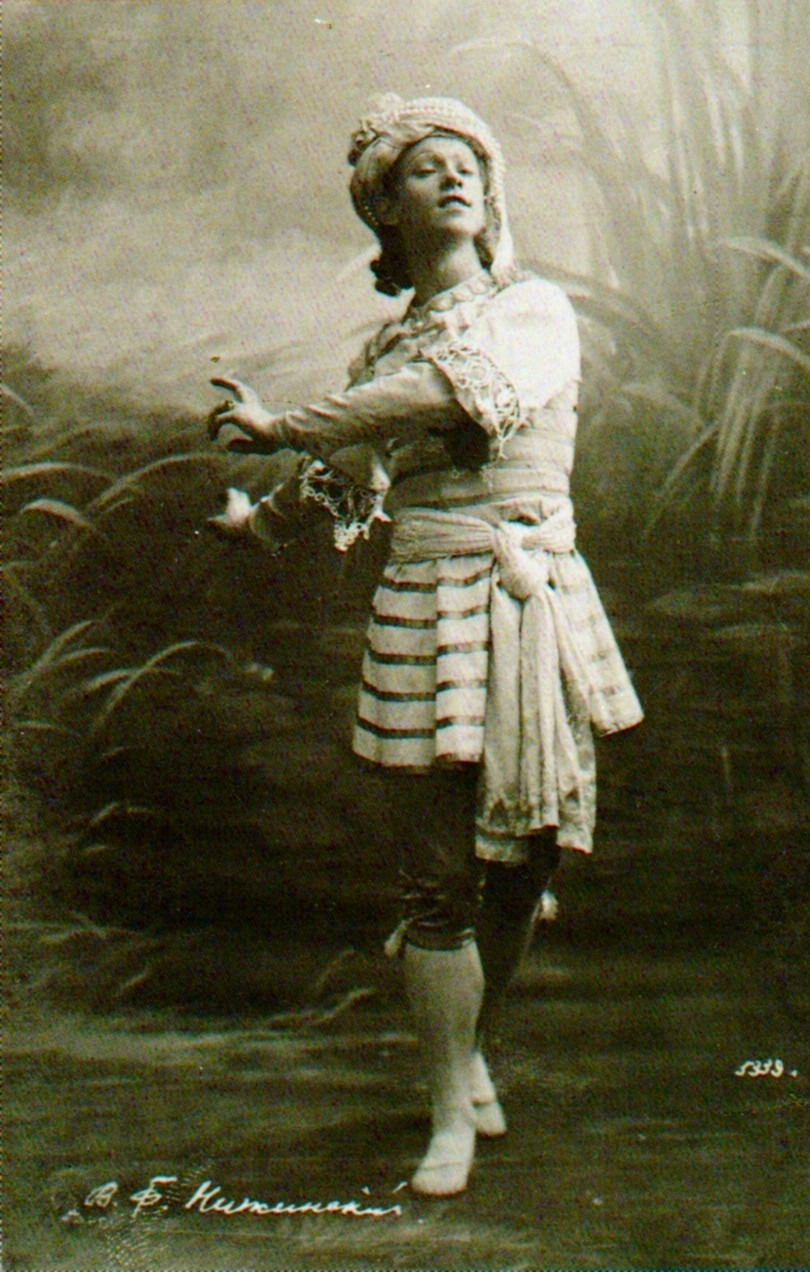
Vaslav Nijinsky, a name synonymous with the golden era of ballet, has been celebrated as one of the most extraordinary dancers of the 20th century. His career was marked by his extraordinary talent, innovative choreography, and the profound impact he had on the world of dance. Born on March 12, 1889, in Kiev, then part of the Russian Empire (now Ukraine), Nijinsky’s life journey was as dramatic and complex as the roles he played on stage. In this article, we delve into the life, fame, and legacy of Vaslav Nijinsky, exploring the nuances of his career and the historical context that shaped his life.
Early Life and Introduction to Dance
Vaslav Fomich Nijinsky was born into a family of dancers, which naturally paved the way for his early exposure to the world of ballet. His parents, Thomas Nijinsky and Eleonora Bereda, were both professional dancers, and it was under their influence that young Vaslav developed his passion for dance. Despite a childhood marked by poverty and hardship, Nijinsky’s talent was undeniable. By the age of nine, he was admitted to the prestigious Imperial Ballet School in St. Petersburg, a pivotal moment that would set the stage for his future success.
The Imperial Ballet School was not just a training ground for Nijinsky; it was where his natural talent blossomed under the tutelage of the finest instructors of the time. His dedication and passion for dance were evident, and he quickly rose through the ranks, impressing both his peers and instructors with his extraordinary abilities. The training at the Imperial Ballet School was rigorous, but it was here that Nijinsky honed his technique, developing the gravity-defying leaps and expressive movements that would later become his trademarks.
The Rise to Fame: Collaboration with Michel Fokine
Nijinsky’s collaboration with the renowned choreographer Michel Fokine was a turning point in his career. Fokine, who was revolutionizing ballet by moving away from traditional forms and introducing more expressive and narrative-driven choreography, recognized Nijinsky’s exceptional talent and potential. The two formed a close professional relationship, and Nijinsky became Fokine’s muse, starring in several of his ballets.
One of Nijinsky’s early notable performances was in Fokine’s “Les Sylphides,” a ballet set to the music of Frédéric Chopin. Nijinsky’s portrayal of the ethereal character in this ballet captivated audiences and critics alike, establishing him as a rising star in the world of ballet. His ability to convey deep emotion through movement, coupled with his extraordinary technical skills, made him a unique figure in the ballet world.
The Ballets Russes and the Global Stage
In 1909, Nijinsky joined Sergei Diaghilev’s Ballets Russes, a company that would play a crucial role in his career and in the history of ballet. Diaghilev, a visionary impresario, had assembled a group of the most talented artists, composers, and choreographers of the time, including Igor Stravinsky, Claude Debussy, and Pablo Picasso. Nijinsky quickly became the star of the Ballets Russes, and his performances in ballets such as “Le Spectre de la Rose,” “Petrushka,” and “Scheherazade” were met with critical acclaim.
The Ballets Russes was known for its innovative productions, which combined traditional ballet with avant-garde art and music. Nijinsky’s performances were a perfect fit for Diaghilev’s vision, as he brought a new level of intensity and expressiveness to his roles. His portrayal of the puppet in “Petrushka,” for example, was both poignant and powerful, capturing the character’s tragic fate with a level of emotional depth that was unprecedented in ballet at the time.
Nijinsky as a Choreographer: Pushing Boundaries
While Nijinsky was celebrated as a dancer, his contributions as a choreographer were equally significant, albeit more controversial. His first major work as a choreographer was “L’Après-midi d’un Faune” (The Afternoon of a Faun) in 1912, set to the music of Claude Debussy. This ballet was groundbreaking in its use of movement and its departure from the traditional ballet vocabulary. Nijinsky’s choreography was characterized by angular movements and a two-dimensional quality that was reminiscent of ancient Greek vase paintings. The ballet caused a sensation, with its overt sensuality and Nijinsky’s portrayal of the faun sparking both admiration and outrage.
However, it was his choreography for “Le Sacre du Printemps” (The Rite of Spring) in 1913 that truly cemented his reputation as an innovator. Set to the music of Igor Stravinsky, the ballet depicted a pagan ritual in which a young girl is sacrificed to the gods of spring. The music was dissonant and rhythmically complex, and Nijinsky’s choreography was equally radical, with its heavy, grounded movements and percussive rhythms. The premiere in Paris famously caused a riot, with the audience divided between those who were shocked and those who were enthralled by this audacious work.
The Downfall: Personal Struggles and Mental Illness
Despite his professional success, Nijinsky’s personal life was marked by turmoil. His intense relationship with Sergei Diaghilev, which was both professional and romantic, ended acrimoniously when Nijinsky married Hungarian aristocrat Romola de Pulszky in 1913. This marriage led to his dismissal from the Ballets Russes, a devastating blow to his career.
Nijinsky’s life took a tragic turn as he began to exhibit signs of mental illness, which was later diagnosed as schizophrenia. His erratic behavior and inability to continue performing eventually led to his confinement in various mental institutions. Despite his illness, Nijinsky continued to write and draw, and his diaries, which were published posthumously, provide a poignant insight into his inner world during this difficult period.
Legacy and Influence on Ballet
Vaslav Nijinsky’s impact on ballet and the performing arts is immeasurable. His work as a dancer and choreographer challenged the conventions of his time and paved the way for future generations of artists. Nijinsky’s approach to movement, characterized by its expressiveness and emotional depth, has influenced countless dancers and choreographers.
Nijinsky’s life and career have been the subject of numerous books, documentaries, and films, and his name remains synonymous with the golden age of ballet. His contributions to the art form continue to be celebrated, and his work is still performed by ballet companies around the world.
Historical Context and the World of Ballet
To fully appreciate Nijinsky’s achievements, it is important to understand the historical context in which he lived and worked. The late 19th and early 20th centuries were a time of great change in the arts, with traditional forms being challenged and new movements such as modernism emerging. Ballet, which had been dominated by the classical traditions of the 19th century, was undergoing a transformation, with artists like Fokine and Diaghilev leading the charge for innovation.
Nijinsky’s work was at the forefront of this transformation, as he pushed the boundaries of what was possible in ballet. His choreography for “The Rite of Spring,” in particular, is often cited as a turning point in the history of dance, as it marked the beginning of a new era in which movement could be abstract and expressionistic, rather than purely representational.
The End of an Era: Nijinsky’s Final Years
Nijinsky spent the last years of his life in relative obscurity, battling mental illness and living in various institutions. He died on April 8, 1950, in London, leaving behind a legacy that continues to resonate in the world of dance.
His story is one of both triumph and tragedy, as he rose to the heights of fame, only to be brought down by personal demons. Yet, despite the challenges he faced, Nijinsky’s contributions to ballet remain undiminished, and his influence can still be seen in the work of contemporary dancers and choreographers.
In conclusion, Vaslav Nijinsky was a true pioneer in the world of ballet, whose life and work continue to inspire and captivate audiences. His story is a testament to the power of art to transcend time and place, and his legacy as one of the greatest dancers of all time is assured.


