
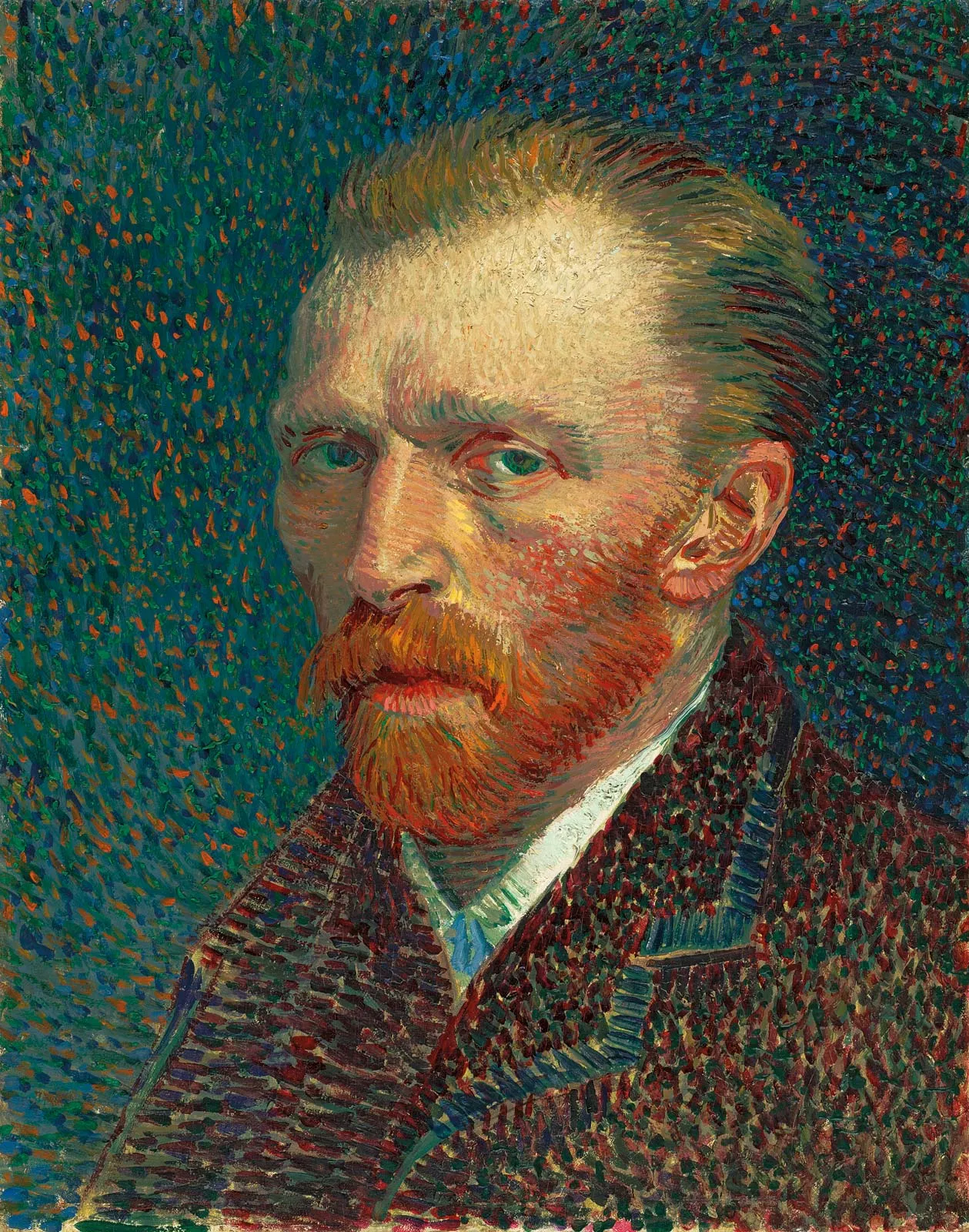
Vincent Willem van Gogh, born on March 30, 1853, in Groot-Zundert, Netherlands, is one of the most iconic and influential figures in the history of art. His life, marked by extraordinary artistic achievements and profound personal struggles, has captured the imagination of millions worldwide. Van Gogh’s story is not only a tale of artistic genius but also one of intense emotional and psychological challenges that shaped his work and legacy.
Early Life and Family Background
Vincent van Gogh was born into a religious and somewhat strict family. His father, Theodorus van Gogh, was a Protestant minister, a profession that influenced Vincent’s early life. Vincent was the eldest of six children, and his early exposure to the religious and cultural life of the Netherlands played a significant role in shaping his worldview.
Van Gogh’s childhood was marked by a deep sense of introspection and a desire to understand the world around him. He began his education in Zundert and later moved to Zevenbergen, where he learned French, English, and German. His early education was conventional, but it was during these formative years that Vincent began to develop an interest in art, particularly in drawing.
Early Career and Artistic Beginnings
After completing his studies, Vincent van Gogh did not immediately pursue a career in art. Instead, he worked as an art dealer for the firm Goupil & Cie, first in The Hague and later in London and Paris. This job allowed him to gain exposure to a wide range of artistic styles and movements, which would later influence his work. However, his time as an art dealer was not without its challenges. Vincent struggled with the commercial aspects of the art world, and his increasing dissatisfaction with his job led to his departure from Goupil & Cie in 1876.
After leaving the art dealership, Vincent turned his attention to religion, following in his father’s footsteps. He traveled to Ramsgate, England, where he worked as a teacher and lay preacher. However, Vincent’s religious fervor soon took on an obsessive quality, and he began to experience significant mental and emotional strain. This period marked the beginning of a series of personal crises that would continue throughout his life.
Transition to Art and Early Works
The turning point in Van Gogh’s life came in 1880, when he decided to abandon his religious aspirations and devote himself entirely to art. This decision was partly influenced by his brother Theo van Gogh, who would become his lifelong supporter and confidant. Theo’s financial and emotional support was crucial in allowing Vincent to pursue his passion for art, despite the many difficulties he faced.
Vincent’s early works were heavily influenced by his desire to capture the harsh realities of life. He focused on depicting the lives of peasants, miners, and weavers, drawing inspiration from the rural environment of the Netherlands. His early paintings, such as “The Potato Eaters” (1885), are characterized by dark tones and a somber atmosphere, reflecting the struggles of the working class.
Paris and the Influence of Impressionism
In 1886, Vincent moved to Paris, where he was introduced to the vibrant and innovative art scene of the city. Paris was a melting pot of artistic movements, and it was here that Vincent encountered Impressionism and Japanese prints, both of which would have a profound impact on his work. The influence of artists like Claude Monet, Edgar Degas, and Henri de Toulouse-Lautrec can be seen in Vincent’s evolving style, which became more colorful and expressive during this period.
Vincent also formed important relationships with other artists during his time in Paris. One of the most significant was his friendship with Paul Gauguin, a relationship that would later take a tumultuous turn. Despite the creative growth Vincent experienced in Paris, the city also took a toll on his mental health, leading to increasing bouts of depression and anxiety.
Arles and the Creation of Iconic Works
In 1888, seeking solace and inspiration, Vincent van Gogh left Paris and moved to Arles, in the south of France. This move marked one of the most productive periods of his life. The bright colors and unique landscapes of Provence inspired Vincent to create some of his most famous works, including “Sunflowers,” “The Yellow House,” and “Starry Night over the Rhône.”
In Arles, Vincent envisioned establishing an artists’ community, a dream that briefly materialized when Paul Gauguin joined him. However, their relationship quickly deteriorated, culminating in a notorious incident where Vincent, in a state of mental distress, cut off part of his ear. This event marked a significant decline in Vincent’s mental health, leading to his voluntary admission to a psychiatric hospital in Saint-Rémy-de-Provence.
Mental Health Struggles and Artistic Triumphs
Vincent van Gogh’s mental health was a constant struggle throughout his life. He experienced severe bouts of depression, anxiety, and psychosis, which were exacerbated by his isolation and intense focus on his work. Despite these challenges, or perhaps because of them, Vincent produced some of his most celebrated paintings during his time at the asylum in Saint-Rémy, including “The Starry Night” (1889), which has become one of the most famous images in Western art.
While Vincent’s mental health continued to deteriorate, his work began to gain recognition in the art world. His paintings were exhibited at the Salon des Indépendants in Paris, and he was invited to participate in exhibitions with the Belgian avant-garde group Les XX. However, this recognition came too late to alleviate his suffering, and Vincent’s mental state continued to decline.
The Final Years and Legacy
In 1890, Vincent van Gogh moved to Auvers-sur-Oise, a small town near Paris, where he was under the care of Dr. Paul Gachet, a physician with an interest in art. Despite the supportive environment, Vincent’s mental health remained fragile. On July 27, 1890, Vincent shot himself in the chest in a wheat field near Auvers. He died two days later, on July 29, 1890, at the age of 37.
Vincent van Gogh was buried in Auvers-sur-Oise, and his brother Theo, who died shortly after Vincent, was later buried beside him. The two brothers, who had shared such a close bond in life, remain together in death.
Vincent van Gogh’s life was a tragic tale of unfulfilled dreams, mental anguish, and unrecognized genius. During his lifetime, he sold only a handful of paintings and lived in poverty, relying on his brother Theo for support. However, after his death, Vincent’s work gained immense recognition, and he is now celebrated as one of the greatest artists of all time.
The Enduring Impact of Vincent van Gogh
Today, Vincent van Gogh is regarded as a pioneer of modern art. His use of bold colors, expressive brushwork, and innovative techniques has influenced countless artists and movements, from Expressionism to Abstract art. His paintings, such as “The Starry Night,” “Irises,” and “The Bedroom,” are considered masterpieces and are among the most recognized and reproduced images in the world.
Vincent’s legacy extends beyond his artistic achievements. His life story, marked by passion, creativity, and struggle, resonates with people across cultures and generations. Vincent van Gogh is not only remembered as a great artist but also as a symbol of the tortured genius, whose work continues to inspire and move people to this day.
Historical Context and Influence
Vincent van Gogh’s work cannot be fully understood without considering the historical context in which he lived. The late 19th century was a period of significant social, political, and cultural change in Europe. The Industrial Revolution had transformed economies and societies, leading to rapid urbanization and the rise of a new middle class. At the same time, traditional artistic conventions were being challenged by new movements such as Impressionism, which sought to capture the fleeting effects of light and color rather than the precise details of the subject.
Vincent van Gogh was deeply influenced by these changes. His early work reflects the social concerns of the time, particularly the plight of the rural poor. As he moved to Paris and encountered new ideas and techniques, his work became more experimental, incorporating the vibrant colors and dynamic compositions that would later become his trademark.
Vincent’s interest in Japanese art, particularly ukiyo-e woodblock prints, also reflects the broader cultural trends of the time. Japan had recently opened its borders to the West, and Japanese art became a major influence on European artists. Vincent was particularly drawn to the simplicity and emotional depth of Japanese prints, which he saw as a model for his own work.
Conclusion
Vincent van Gogh’s life and work embody the tensions and contradictions of his time. He was a man of deep religious faith who struggled with doubt and despair. He sought to capture the beauty and complexity of the world around him, even as he grappled with his inner demons. His art, like his life, is a testament to the power of creativity and the human spirit.
Today, more than a century after his death, Vincent van Gogh remains one of the most beloved and influential artists in history. His paintings continue to captivate audiences with their vivid colors, emotional intensity, and unique vision. Vincent’s life story, with its tragic end and posthumous triumph, serves as a reminder of the enduring power of art and the profound impact it can have on the world.


