
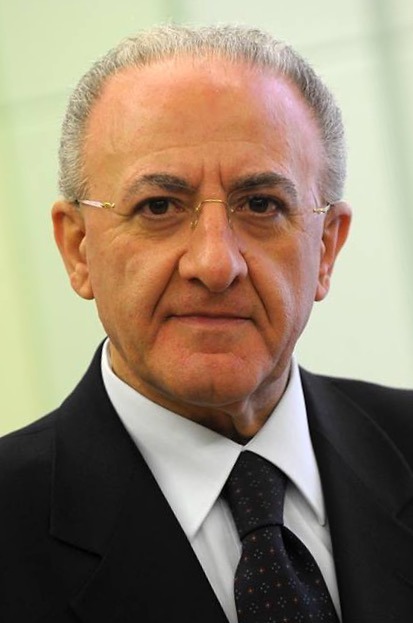
Vincenzo De Luca, born on May 8, 1949, in Ruvo del Monte, a small medieval town in the province of Potenza, Italy, is a prominent Italian politician known for his strong leadership, sharp rhetoric, and significant influence in regional politics. Over the years, De Luca has become a key figure in Italian public life, particularly through his role as the President of the Campania Region. This article delves into the life, career, and notable achievements of Vincenzo De Luca, providing a detailed insight into the man behind the headlines.
Early Life and Education
Vincenzo De Luca was born into a well-off family in Ruvo del Monte, where he spent the early years of his life. His family later moved to Salerno during his adolescence, a move that would significantly influence his future. De Luca’s upbringing in Salerno, a city known for its rich cultural heritage and historical significance, played a crucial role in shaping his political and social consciousness.
De Luca attended the prestigious Liceo Torquato Tasso in Salerno, where he developed a strong interest in the humanities, particularly philosophy. This interest eventually led him to enroll at the University of Naples Federico II, initially in the Faculty of Medicine and Surgery. However, De Luca soon realized that his true calling was in the field of social sciences and politics, leading him to switch to the Faculty of Philosophy at the University of Salerno. He graduated with a degree in philosophy, laying the foundation for his future career in public service.
Early Political Involvement
Vincenzo De Luca’s political journey began in earnest during his university years. In 1969, at the age of 20, he joined the Italian Communist Party (PCI), which was one of the most influential political forces in Italy during the post-war period. De Luca quickly became an active member, demonstrating his leadership abilities and passion for social justice. His early involvement in the PCI marked the beginning of a lifelong commitment to politics.
After completing his education, De Luca began working as a high school philosophy teacher in Salerno. However, his passion for politics soon took precedence, and he decided to leave teaching to focus entirely on his political career. His dedication to public service and his ability to connect with the working class helped him rise through the ranks of the PCI, where he became a well-known figure in regional politics.
Rise in Regional Politics
De Luca’s early political career was marked by his involvement in agrarian issues in the Campania region, where he emerged as a strong advocate for the rights of farmers and laborers. His work in this area earned him a reputation as a determined and effective leader, which paved the way for his subsequent roles in local government.
In the 1990s, De Luca’s political career took a significant leap forward. In 1990, he was appointed as the Assessor of Public Works in Salerno, where he quickly made a name for himself as a hands-on, results-oriented administrator. His efforts in improving the city’s infrastructure and public services gained widespread recognition and set the stage for his future leadership roles.
Mayor of Salerno: A Transformative Leadership
Vincenzo De Luca’s first major breakthrough came in 1993 when he was elected Mayor of Salerno following the resignation of his predecessor, Vincenzo Giordano, amidst the Tangentopoli corruption scandal. De Luca ran as the candidate of the “Progressives for Salerno” and won the election, marking the beginning of a transformative era for the city.
As mayor, De Luca embarked on an ambitious program of urban renewal and modernization that would eventually reshape Salerno’s landscape. His tenure as mayor is widely credited with revitalizing the city, turning it into a model of effective governance and urban planning. Key initiatives included the redevelopment of the waterfront, the creation of new public spaces, and significant improvements in public transportation.
De Luca’s leadership style, characterized by a combination of pragmatism and decisiveness, earned him widespread admiration. His ability to cut through bureaucratic red tape and deliver tangible results made him a popular figure among the citizens of Salerno. He held the office of mayor for 20 years, albeit with some interruptions, until 2015.
One of the most significant achievements during his time as mayor was the transformation of Salerno into a cultural and economic hub in southern Italy. His efforts to attract investment, promote tourism, and enhance the city’s infrastructure were pivotal in boosting Salerno’s profile both nationally and internationally. De Luca’s work as mayor earned him the title of “Italy’s most loved mayor” in a 2013 poll conducted by Il Sole 24 Ore, a leading Italian financial newspaper.
National Politics and Parliamentary Career
In 2001, Vincenzo De Luca expanded his political reach by running for national office. He was elected to the Italian Parliament as a Deputy and served until 2008. During his time in Parliament, De Luca was an active member of several important committees, including the Bicameral Commission for the waste emergency in the Campania region, the Transport and Telecommunications Commission, and the Agriculture Commission.
De Luca’s work in Parliament was particularly focused on addressing the environmental and infrastructural challenges facing the Campania region. His commitment to tackling the waste management crisis in Naples and surrounding areas demonstrated his ability to handle complex and controversial issues with determination and skill.
In 2008, then-Prime Minister Romano Prodi appointed De Luca as a special commissioner for the construction of a waste treatment plant in Salerno, a role that highlighted his expertise in public administration and crisis management. De Luca’s efforts in this role were instrumental in mitigating the waste crisis that had plagued the region for years.
President of the Campania Region
Vincenzo De Luca’s most prominent political role to date has been his tenure as the President of the Campania Region, a position he first assumed in 2015. His election as regional president marked the culmination of a long and distinguished career in public service. De Luca’s leadership in Campania has been characterized by his focus on economic development, healthcare reform, and infrastructural improvements.
One of the central pillars of De Luca’s administration has been his commitment to improving the healthcare system in Campania. His efforts to modernize hospitals, increase the availability of medical services, and ensure the efficient delivery of healthcare have been widely recognized. De Luca has also been a vocal advocate for environmental sustainability, working to address issues such as waste management and pollution in the region.
During the COVID-19 pandemic, De Luca became a national figure in Italy due to his outspoken and often unconventional approach to managing the crisis. His strict enforcement of lockdown measures and his memorable public addresses, which included colorful and sometimes controversial statements, garnered significant media attention. De Luca’s handling of the pandemic, particularly his emphasis on public safety and health, was seen as a strong and decisive response, contributing to his re-election in 2020 with a significant margin.
Personal Life and Character
Vincenzo De Luca’s personal life has been marked by his strong family ties and his deep connection to the city of Salerno. He married Rosa Zampetti, a sociologist, at the age of 30, and the couple has two sons, Piero and Roberto. Both of De Luca’s sons have followed in his footsteps to some extent, with Piero becoming a lawyer and Roberto pursuing a career in economics. Both are also involved in the political life of Salerno, continuing the family’s legacy of public service.
De Luca’s marriage to Rosa Zampetti lasted until 2008, after which he entered into a relationship with Maria Maddalena Cantisani, an architect. Despite his high-profile political career, De Luca has maintained a relatively private personal life, focusing his public image on his work and achievements in office.
Known for his strong personality and direct communication style, Vincenzo De Luca is often described as a “sui generis” politician. His ability to connect with ordinary citizens, coupled with his no-nonsense approach to governance, has made him a distinctive figure in Italian politics. De Luca’s colorful expressions and candid remarks, such as his famous quip during the pandemic about sending the police with “flamethrowers” to enforce lockdown rules, have made him a viral sensation on social media.
Legacy and Impact
Vincenzo De Luca’s legacy is one of transformative leadership and unwavering dedication to public service. His work as Mayor of Salerno set new standards for urban development and governance, and his tenure as President of the Campania Region has been marked by significant achievements in healthcare, infrastructure, and crisis management.
De Luca’s influence extends beyond the borders of Campania, as his leadership style and political acumen have made him a key figure in the broader context of Italian regional politics. His ability to navigate complex political landscapes, deliver results, and maintain a strong connection with the electorate has earned him a lasting place in the annals of Italian public life.
As De Luca continues to serve as President of Campania, his ongoing efforts to improve the region’s social and economic conditions will likely further cement his reputation as one of Italy’s most effective and resilient political leaders.
Conclusion
Vincenzo De Luca’s life and career offer a compelling example of how strong leadership, commitment to public service, and a deep connection to one’s community can drive meaningful change. From his early days as a philosophy student and Communist Party member to his role as a transformative mayor and regional president, De Luca has consistently demonstrated his ability to lead with vision and determination.
As we look to the future, Vincenzo De Luca’s impact on Salerno, Campania, and Italian politics will undoubtedly continue to be felt. His legacy as a leader who prioritized the needs of his constituents, tackled challenges head-on, and never shied away from making tough decisions is one that will inspire future generations of public servants and leaders.


