
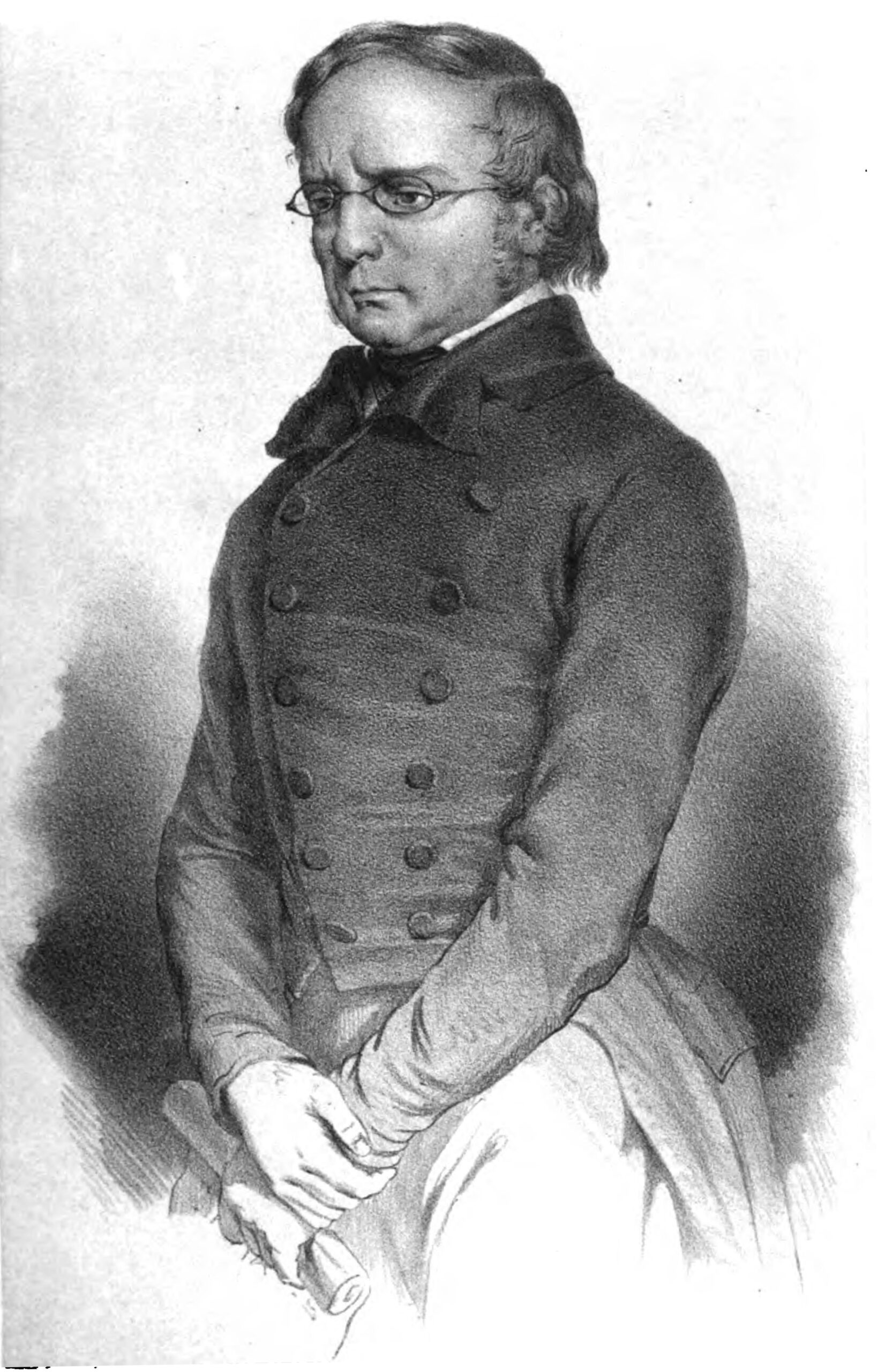
Vincenzo Gioberti, born on April 5, 1801, in Turin, Italy, is a seminal figure in the history of Italian unification and a key intellectual force behind the movement known as neoguelfismo. A philosopher, politician, and priest, Gioberti’s life and work profoundly influenced the ideological landscape of Italy during the 19th century. His vision of a unified Italy under a federal structure guided by the Papacy was a novel proposition that sought to reconcile the nation’s deep-rooted religious traditions with the burgeoning spirit of nationalism. This article explores the life of Vincenzo Gioberti, tracing his rise to fame, his intellectual contributions, and the historical context in which he lived.
Early Life and Religious Foundation
Vincenzo Gioberti was born in Turin, a city that was under French occupation at the time, as Napoleon Bonaparte’s empire dominated much of Europe. Growing up in a period of political instability and foreign rule, Gioberti was deeply influenced by the Catholic faith, which played a central role in his education and early life. From a young age, he was exposed to religious and clerical environments, which would later shape his philosophical outlook and political ideas.
Gioberti pursued his studies with a focus on theology, earning his degree in 1823. Two years later, in 1825, he was ordained as a priest. However, Gioberti was not content with the traditional confines of the priesthood. His spiritual life was deeply intertwined with a strong sense of patriotism, a desire to see Italy freed from foreign domination, and a vision of a nation united by common religious and cultural values.
Political Awakening and Exile
By 1830, Gioberti had joined the secret society known as the “Knights of Liberty,” a group inspired by liberal ideals that sought to challenge the conservative order imposed by foreign powers and local monarchies. This involvement marked the beginning of his political activism. Gioberti quickly realized that his longing for freedom was part of a larger national aspiration for Italian unity and independence. This led him to align himself with the ideas of Giuseppe Mazzini, a leading figure in the Italian unification movement, and to contribute writings to the influential journal Giovine Italia.
However, Gioberti’s political activities did not go unnoticed by the authorities. In 1833, his involvement with the Italian nationalist movement led to his arrest and subsequent exile from the Kingdom of Sardinia. Forced to leave his homeland, Gioberti first took refuge in Paris and later settled in Brussels, where he would spend the next 12 years in exile.
Intellectual Development and Break with Mazzini
Exile provided Gioberti with the opportunity to deepen his philosophical and political thinking. During this period, he began to distance himself from Mazzini’s revolutionary approach, which called for the overthrow of existing monarchies and the establishment of a republic. Instead, Gioberti envisioned a different path for Italian unification, one that would involve a federation of Italian states under the leadership of the Pope.
This idea crystallized in his most famous work, “Del primato morale e civile degli italiani” (“On the Moral and Civil Primacy of the Italians”), published in 1843. In this seminal text, Gioberti argued that Italy had a unique moral and spiritual mission due to its Catholic heritage and that this should serve as the foundation for a new political order. He proposed a federal union of Italian states with the Pope as the moral leader, a concept that became known as neoguelfismo. This movement sought to reconcile religious consciousness with patriotic fervor, a fusion that resonated with many Italians who were seeking a path to unification that did not entail violent revolution.
Return to Italy and Political Influence
Gioberti’s ideas gained widespread attention, and by the time he returned to Italy in 1848, his writings had made him a well-known figure. The year 1848 was a period of widespread revolutionary activity across Europe, including Italy, where various states were demanding constitutional reforms and national unification. Gioberti returned to Turin, where he found that his ideas had garnered support from a broad spectrum of society, including intellectuals, artisans, students, and even segments of the clergy.
In the newly established parliamentary system of the Kingdom of Sardinia, Gioberti was elected as a deputy in the first parliament convened by King Charles Albert. He quickly rose to prominence, becoming the President of the Chamber of Deputies. Gioberti’s influence extended beyond the legislative chamber; he was appointed as Minister of Public Instruction, where he sought to reform the educational system in line with his philosophical beliefs.
However, Gioberti’s political career was not without challenges. He opposed the resumption of the war against Austria, which led to a shift in his political alliances and eventually placed him in opposition to the prevailing government. Despite these challenges, Gioberti briefly served as Prime Minister of the Kingdom of Sardinia in 1849, a position that allowed him to further advocate for his vision of a federated Italy under Papal leadership.
Later Years and Shift in Ideals
The final years of Gioberti’s life were marked by a significant evolution in his political thought. The failures of the 1848 revolutions and the shifting political landscape in Italy led Gioberti to reconsider his earlier federalist and neoguelf ideals. In his later work, “Del Rinnovamento civile d’Italia” (“On the Civil Renewal of Italy”), published in 1851, Gioberti abandoned his previous support for a Papal-led federation. Instead, he advocated for a unified Italy under the leadership of the House of Savoy, the ruling dynasty of the Kingdom of Sardinia. This shift reflected the changing realities of Italian politics, where the dream of a Papal-led federation seemed increasingly untenable.
Gioberti’s final years were spent in Paris, where he served as a plenipotentiary representative of the Sardinian king. His diplomatic work, however, was cut short by his sudden death on October 26, 1852, at the age of 51. Gioberti’s death marked the end of a remarkable career that had a lasting impact on the intellectual and political development of Italy.
Legacy and Historical Significance
Vincenzo Gioberti’s contributions to Italian thought and the unification movement are complex and multifaceted. His early advocacy for a Papal-led Italian federation reflected the deep intertwining of religious and national identities in Italy during the 19th century. While his neoguelfism did not achieve the political goals Gioberti envisioned, it played a crucial role in shaping the discourse around Italian unification.
Gioberti’s ideas provided a counterpoint to the more radical republicanism of figures like Mazzini, offering a vision of unification that was more conservative and rooted in Italy’s Catholic tradition. This made his work appealing to a broad segment of Italian society, including the clergy and moderate liberals, who were wary of the revolutionary upheaval that Mazzini and his followers advocated.
Moreover, Gioberti’s philosophical writings, such as “La teorica del sovrannaturale” (“The Theory of the Supernatural”) and “La filosofia della rivelazione” (“The Philosophy of Revelation”), contributed to the broader intellectual currents of the time, influencing debates on the relationship between faith, reason, and political life. His efforts to integrate religious thought with political action reflected the broader European context, where similar debates were unfolding in countries like France and Germany.
Vincenzo Gioberti’s Key Works and Their Impact
In addition to “Del primato morale e civile degli italiani” and “Del Rinnovamento civile d’Italia,” Gioberti authored several other significant works that shaped both his contemporary political environment and later intellectual discourse. These include “La teorica del sovrannaturale,” where Gioberti explored the relationship between divine and human knowledge, and “Introduzione allo studio della filosofia” (“Introduction to the Study of Philosophy”), which laid out his views on the role of philosophy in understanding human existence.
Gioberti’s later work, “Il Gesuita moderno” (“The Modern Jesuit”), was a critical examination of the Jesuit order, reflecting his complex relationship with the Catholic Church and his evolving political views. This work was controversial and reflected Gioberti’s disillusionment with certain aspects of the Church’s role in Italian society.
Conclusion: The Enduring Legacy of Vincenzo Gioberti
Vincenzo Gioberti’s life and work remain a testament to the intellectual and political struggles that characterized Italy in the 19th century. His efforts to forge a new path for Italian unification, one that combined religious faith with national identity, set the stage for the broader unification movement that would eventually succeed in 1861.
Although Gioberti’s vision of a Papal-led federation did not materialize, his ideas influenced generations of Italian thinkers and politicians who grappled with the challenges of creating a unified nation. Gioberti’s legacy is one of intellectual courage and political innovation, rooted in a deep commitment to both his faith and his country.
As Italy moved towards unification, Gioberti’s works continued to be read and debated, offering insights into the complex interplay between religion, politics, and national identity. Today, Gioberti is remembered as one of the key figures in the Italian Risorgimento, a thinker whose ideas helped shape the course of Italian history.


