
Vitruvius, also known as Marcus Vitruvius Pollio, is a name that resonates deeply within the realms of architecture and engineering. Born around 80 BC, Vitruvius’s exact birthplace remains a mystery, with various theories suggesting locations ranging from Rome to Fano, and even Numidia in North Africa. Despite the ambiguity surrounding his early life, Vitruvius’s influence on the fields of architecture and engineering is unequivocal, with his legacy immortalized in his seminal work, De Architectura.
Early Life and Career
Vitruvius’s early life is shrouded in uncertainty. Historical records offer limited insights into his upbringing or education. What is known about him primarily comes from his own writings in De Architectura. It is believed that Vitruvius served as a military engineer under Julius Caesar and later under Augustus, the first Roman Emperor. His role as an overseer of war machines and constructions for the Roman army suggests that Vitruvius possessed a deep understanding of both the practical and theoretical aspects of engineering.
Vitruvius’s contributions to military engineering included the design and construction of fortifications, war machines, and other military structures. His expertise was not merely in the mechanical aspects but also in ensuring that these constructions were effective and sustainable in diverse environments. His career in the military likely provided him with the practical experience that would later inform his theoretical writings.
The Creation of De Architectura
After retiring from active service, Vitruvius turned his attention to writing. His magnum opus, De Architectura (On Architecture), was written between 29 and 23 BC. This ten-book treatise, dedicated to Emperor Augustus, serves as the only surviving major work on architecture from classical antiquity. Despite its profound influence today, De Architectura was not widely celebrated during Vitruvius’s lifetime, nor in the centuries immediately following his death.
De Architectura was more than just a manual on building techniques; it was a comprehensive guide that combined architecture with other disciplines, such as philosophy, art, and science. Vitruvius argued that a well-rounded architect must be proficient in a variety of fields, including mathematics, geometry, astronomy, and even medicine. This holistic approach set Vitruvius apart from his contemporaries and established a foundation for the interdisciplinary nature of architecture that persists to this day.
The Structure and Content of De Architectura
Vitruvius divided his work into ten books, each addressing different aspects of architecture and engineering:
-
Book I: This book introduces the broad scope of architecture and emphasizes the importance of an architect’s education. Vitruvius discusses the principles of design and urban planning, setting the stage for the more detailed discussions that follow.
-
Book II: In this book, Vitruvius delves into building materials and construction techniques. He traces the origins of architecture back to primitive shelters and explains how these evolved into more complex structures. This book also contains the famous description of the “primitive hut,” a concept that influenced architectural theory for centuries.
-
Books III and IV: These books focus on sacred architecture, particularly temples and other religious structures. Vitruvius provides detailed descriptions of the classical orders—Doric, Ionic, and Corinthian—and their appropriate use in temple design. His emphasis on proportion and symmetry in these buildings reflects his belief in the harmony between nature and architecture.
-
Book V: Vitruvius shifts his focus to public buildings, including theaters, basilicas, and forums. He discusses the design and layout of these structures, paying particular attention to acoustics and visibility, which were crucial in ancient Roman public life.
-
Books VI and VII: These books cover private buildings, with Book VI dedicated to the design of houses and villas, and Book VII addressing interior decoration, including flooring and plastering techniques. Vitruvius’s attention to detail in these books underscores his belief that architecture should be both functional and aesthetically pleasing.
-
Book VIII: Vitruvius explores the importance of water management in this book, discussing aqueducts, cisterns, and other hydraulic structures. His insights into the planning and construction of water systems highlight the critical role of engineering in supporting urban life in ancient Rome.
-
Book IX: This book is a departure from the others, focusing on astronomy and astrology. Vitruvius believed that understanding the stars and planets was essential for architects, as it influenced everything from the orientation of buildings to the design of sundials.
-
Book X: The final book of De Architectura is dedicated to machines and tools, including war machines, cranes, and hoists. Vitruvius’s descriptions of these devices reveal his deep knowledge of mechanics and his ability to apply this knowledge to practical challenges in construction and warfare.
Vitruvius’s Architectural Philosophy
Vitruvius’s architectural philosophy is encapsulated in the three principles he outlined: firmitas (durability), utilitas (utility), and venustas (beauty). He argued that a well-designed building must be strong enough to last, functional for its intended use, and aesthetically pleasing. This triad has become a cornerstone of architectural theory and continues to influence modern architects.
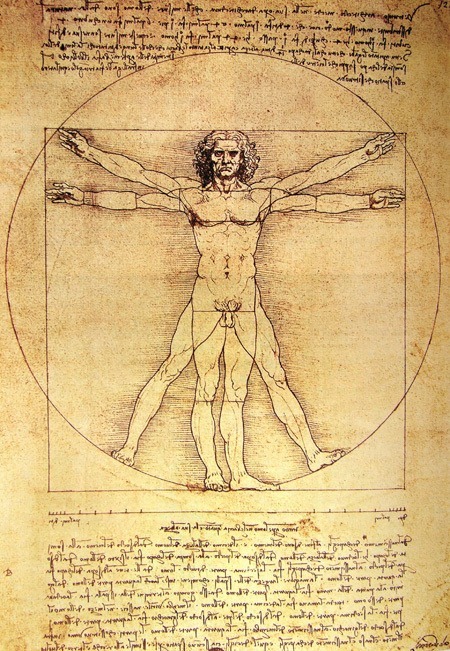
Vitruvius also emphasized the importance of proportion and symmetry in architecture, drawing parallels between the human body and the design of buildings. This concept is famously illustrated in Leonardo da Vinci’s Vitruvian Man, a drawing that explores the idea that the proportions of the human body are a microcosm of the universe. The image, based on Vitruvian principles, has become one of the most iconic representations of Renaissance humanism.
Vitruvius believed that architecture was a science as much as it was an art. He argued that architects should be well-versed in a wide range of disciplines, including mathematics, geometry, astronomy, and even medicine. This interdisciplinary approach was revolutionary for its time and set a standard for the education of architects that persists to this day.
Legacy and Influence
Although De Architectura did not gain immediate recognition, its influence grew significantly during the Renaissance. The rediscovery of Vitruvius’s work in the 15th century had a profound impact on Renaissance architecture, inspiring figures such as Leonardo da Vinci, Michelangelo, and Palladio. Vitruvius’s emphasis on proportion, symmetry, and the integration of multiple disciplines resonated with Renaissance ideals of harmony and beauty.
Vitruvius’s work also laid the foundation for the development of architectural theory. His writings provided a framework for understanding the principles of design and construction that would guide architects for centuries. Even today, De Architectura is considered essential reading for students of architecture and engineering, offering insights into the origins of many modern architectural concepts.
The Renaissance architects who revered Vitruvius were instrumental in shaping the built environment of their time. They drew directly from his principles, adapting them to new materials and technologies while staying true to his emphasis on proportion and harmony. Vitruvius’s influence can be seen in some of the most iconic structures of the Renaissance, including the Tempietto by Bramante and the Villa Rotonda by Palladio.
The Historical Context of Vitruvius’s Work
Vitruvius’s work must be understood within the broader context of Roman society and culture. The late Republic and early Empire periods were times of great change in Rome, marked by political upheaval, military conquests, and rapid urbanization. The construction of monumental buildings, such as the Forum of Augustus and the Pantheon, reflected Rome’s growing power and the emperor’s desire to leave a lasting legacy.
In this environment, architecture was not just about building structures; it was a means of expressing Rome’s values and projecting its power. Vitruvius’s emphasis on durability, utility, and beauty was aligned with the Roman ideal of gravitas, or seriousness, and his work provided a guide for creating buildings that would endure both physically and symbolically.
Vitruvius’s ideas also reflected the philosophical currents of his time. His belief in the importance of proportion and harmony was influenced by the Pythagorean and Platonic traditions, which viewed mathematics and geometry as fundamental to understanding the universe. By applying these principles to architecture, Vitruvius was aligning his work with the broader intellectual trends of the late Republic.
The Mystery of Vitruvius’s Life
Despite his lasting influence, much about Vitruvius’s life remains a mystery. The exact dates of his birth and death are unknown, as are many details about his personal life. Some scholars believe he may have lived until around 15 BC, but this is speculative. The lack of concrete information about Vitruvius’s life has only added to his mystique, making him a somewhat enigmatic figure in the history of architecture.
What is clear, however, is that Vitruvius was deeply committed to his craft. His passion for architecture and engineering is evident in the detailed descriptions and thoughtful reflections found throughout De Architectura. He was not just an architect; he was a philosopher, a scientist, and an artist, whose work has transcended time and continues to inspire new generations of architects and engineers.
Conclusion
Vitruvius’s life and work are a testament to the enduring power of ideas. Though his name might not be as widely recognized as some of his Renaissance admirers, his influence on architecture and engineering is profound and far-reaching. De Architectura remains a foundational text in these fields, offering insights that are as relevant today as they were over two millennia ago.
Through his writings, Vitruvius sought to elevate architecture from a practical craft to a disciplined art and science, one that requires a deep understanding of multiple fields of knowledge. His emphasis on the principles of firmitas, utilitas, and venustas continues to guide architects in the design of buildings that are not only functional and durable but also beautiful and inspiring.
As we look back on the achievements of Vitruvius, it is clear that his legacy is more than just the buildings he influenced or the theories he developed. It is a reminder of the power of interdisciplinary thinking, the importance of understanding the broader context in which we work, and the enduring relevance of the principles of good design.


