
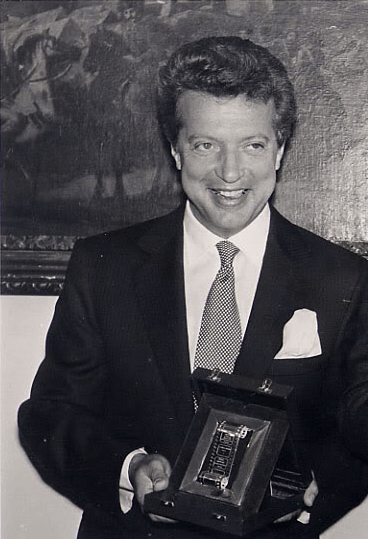
Vittorio Cecchi Gori is a name that has long been synonymous with Italian cinema, business, and public life. As the son of the legendary film producer Mario Cecchi Gori, Vittorio inherited a vast cinematic empire, which he expanded into a multimedia conglomerate. His life has been a mix of spectacular successes and significant challenges, both in his professional and personal endeavors. This article delves into the life, career, and controversies surrounding Vittorio Cecchi Gori, offering a detailed insight into the man who played a pivotal role in Italian cinema and television.
Early Life and Background
Born on April 27, 1942, in Florence, Italy, Vittorio Cecchi Gori grew up under the influence of his father, Mario Cecchi Gori, a pioneering figure in the Italian film industry. Mario was one of Italy’s most successful film producers, with a portfolio that included some of the most iconic films of the 20th century. From an early age, Vittorio was immersed in the world of cinema, learning the intricacies of film production and business management.
After completing his education, Vittorio joined his father in the family business, gradually taking on more responsibilities and learning the ropes of the film industry. His early years were marked by a deep respect for his father’s legacy, but also by a strong desire to make his own mark in the industry.
Taking the Helm: Expansion and Diversification
Following the death of his father on November 5, 1993, Vittorio Cecchi Gori took over the family business. Under his leadership, the company expanded beyond film production to encompass television, sports, and even politics. Vittorio’s vision was to create a multimedia empire that could rival the dominant players in Italy’s media landscape—Rai and Mediaset.
In 1995, Vittorio made a bold move by acquiring Videomusic and Telemontecarlo, two television networks that were struggling to compete with Italy’s established broadcasters. He also became a shareholder in Telepiù, Italy’s first pay-TV network. These acquisitions were part of Vittorio’s strategy to create a “third pole” in Italian television, providing an alternative to the Rai-Mediaset duopoly.
However, expanding into television proved to be more challenging than anticipated. The financial demands of running multiple networks, coupled with increasing competition and regulatory pressures, began to strain Cecchi Gori’s resources. Despite his efforts to innovate and compete, the venture ultimately led to significant financial difficulties.
Challenges and Downfall
By the early 2000s, the economic pressures on Vittorio Cecchi Gori’s empire had become insurmountable. In 2000, he was forced to sell his television assets, marking the beginning of a long period of financial instability. Despite these setbacks, Vittorio managed to retain ownership of several prominent movie theaters across Italy, ensuring that the Cecchi Gori name remained a fixture in the country’s cultural landscape.
The financial troubles that plagued his television ventures eventually spread to other areas of his business. These difficulties culminated in the collapse of Fiorentina, the prestigious football club that Vittorio had inherited from his father and had presided over since 1993. Fiorentina’s financial collapse in 2002 led to the club’s bankruptcy and subsequent demotion to the lower leagues of Italian football. The club was later resurrected as Florentia Viola by businessman Diego Della Valle.
Vittorio Cecchi Gori’s personal life also mirrored the tumult of his professional endeavors. His marriage to actress and producer Rita Rusić, which began in 1983, ended in a highly publicized divorce in 2000. The couple’s separation was marked by legal battles over the division of assets and custody of their children, Mario and Vittoria. After the divorce, Rita Rusić established herself as a successful film producer, further intensifying the rivalry between the former spouses.
Political Ambitions and Legal Troubles
In addition to his business and entertainment ventures, Vittorio Cecchi Gori also dabbled in politics. In 1994, he was elected as a senator for the Partito Popolare Italiano (PPI), serving until 1996. His political career, however, was short-lived and marred by controversy. In 2001, Cecchi Gori ran for election in the Acireale constituency under the L’Ulivo coalition but lost after securing only 33% of the vote. That same year, he was investigated for vote-buying, with allegations that he had paid supporters of the local football team, Acireale, in exchange for their votes.
Undeterred, Cecchi Gori continued to pursue political office, running in the 2006 elections as the top candidate for the Movimento per l’Autonomia in the Lazio 1 district. However, his efforts were unsuccessful, and he was not elected.
Vittorio’s legal troubles did not end with his political ambitions. In 2008, he was arrested on charges of bankruptcy fraud related to the collapse of his company, Safin Cinematografica. The case drew significant media attention, further tarnishing Cecchi Gori’s reputation. In 2015, his troubles deepened when he was among a group of former Italian lawmakers who had their pensions revoked due to legal convictions.
Despite these setbacks, Vittorio Cecchi Gori remained a prominent figure in Italy, both for his contributions to cinema and his involvement in public scandals. His life took another dramatic turn on December 25, 2017, when he was hospitalized after suffering a stroke. This health crisis led to a reconciliation with his ex-wife, Rita Rusić, and their children, whom he had not seen in over a decade.
Legacy in Cinema
Despite the controversies and financial troubles that marked his later years, Vittorio Cecchi Gori’s contributions to Italian cinema are undeniable. Under his leadership, the Cecchi Gori Group produced and distributed some of Italy’s most successful films, including “Il Postino” (1994), which won an Academy Award for Best Original Score, and “La Vita è Bella” (1997), which earned Roberto Benigni three Oscars, including Best Actor and Best Foreign Language Film.
Vittorio’s ability to identify and nurture cinematic talent was a key factor in his success. He worked with some of Italy’s most acclaimed directors, including Federico Fellini, Bernardo Bertolucci, and Giuseppe Tornatore, producing films that have become classics of Italian cinema.
In addition to his work as a producer, Vittorio Cecchi Gori was also a visionary in the business of film distribution. He was instrumental in introducing new technologies and strategies to the Italian film industry, including the establishment of multiplex cinemas, which revolutionized the way Italians consumed movies.
Personal Life and Relationships
Vittorio Cecchi Gori’s personal life has been as eventful as his professional career. His marriage to Rita Rusić was one of the most talked-about relationships in Italian showbiz, not only for their collaborations in film production but also for their public disputes. Following their divorce, Cecchi Gori had a high-profile relationship with actress and television personality Valeria Marini, which ended in 2005.
After his relationship with Marini, Vittorio was linked to several other women, but none of these relationships garnered the same level of public attention. Since 2006, he has been in a relationship with actress and model Mara Meis.
Despite the ups and downs of his personal life, Vittorio has remained a devoted father to his two children, Mario and Vittoria. His relationship with his children became even more important following his health crisis in 2017, which brought the family closer together after years of estrangement.
Conclusion
Vittorio Cecchi Gori is a figure who has experienced the highest peaks and deepest valleys of success and failure. His life story is a testament to the complexities of managing a multifaceted career that spans cinema, television, sports, and politics. Despite the legal troubles, financial difficulties, and personal scandals that have marred his reputation, Cecchi Gori’s impact on Italian cinema and entertainment remains significant.
His ability to navigate the competitive world of film production, coupled with his ambitious ventures into television and sports, made him one of Italy’s most influential media moguls of the late 20th century. Today, as he faces the consequences of his past decisions, Vittorio Cecchi Gori’s legacy continues to be a subject of both admiration and scrutiny.
As we look back on his life, it is clear that Vittorio Cecchi Gori’s story is far from a simple tale of rise and fall. It is a complex narrative of ambition, creativity, and resilience, shaped by the highs and lows of a man who dared to dream big and left an indelible mark on the world of Italian cinema.


