
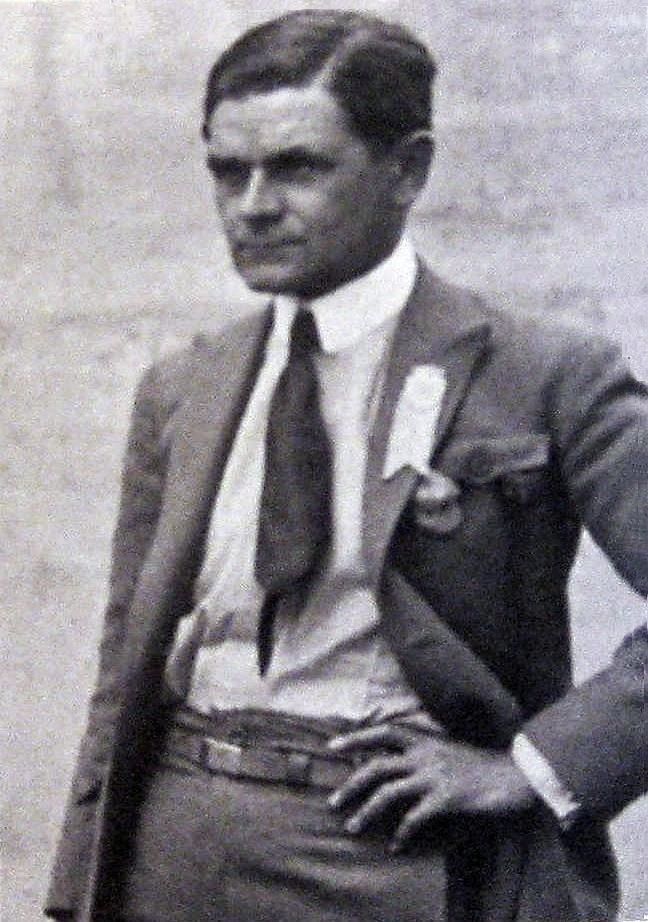
Vittorio Pozzo is a name that resonates with greatness in the world of football, particularly in Italy. As the only coach to have won two FIFA World Cups, his legacy is unparalleled. Born in the late 19th century, Pozzo’s contributions to football extend beyond his victories; he is a figure of innovation, discipline, and resilience in the sport. This article delves into the life of Vittorio Pozzo, tracing his early years, rise to fame, and the indelible marks he left on football.
Early Life and Education
Vittorio Pozzo was born on March 2, 1886, in Turin, Italy, into a family with modest means. His parents, hailing from Ponderano, a small town in the Biella province, were part of the lower middle class. Despite their limited resources, they ensured that Pozzo received a good education, enrolling him at the prestigious Liceo Cavour in Turin.
Pozzo’s early years were characterized by a keen interest in languages, travel, and sports—passions that would define his future. His love for football emerged during his time in school, but it was his desire to learn from the best that set him apart. Pozzo traveled to France, Switzerland, and England to study and work, immersing himself in the culture of modern football, which was still in its infancy.
The Birth of a Football Career
Vittorio Pozzo’s first foray into football was as a player. In the 1905-1906 season, at the age of 18, he played for the Swiss club Grasshoppers, a team based in Zurich. His time abroad broadened his understanding of the game and exposed him to different playing styles. However, his heart remained in Italy, and he soon returned to Turin, where he co-founded the Football Club Torinese, which would later become Torino Football Club.
Pozzo’s playing career was brief, lasting until 1911. He played as a midfielder and defender, known for his tactical awareness and leadership on the field. His early retirement from playing football did not mark the end of his involvement in the sport. Instead, it was the beginning of a legendary career in football management.
The Transition to Coaching
After retiring as a player, Vittorio Pozzo turned his attention to coaching and management. He became deeply involved with Torino Football Club, contributing to the development of new tactical methods and helping establish a strong football culture in Italy. His innovative approaches to training and strategy were ahead of their time, laying the groundwork for what would become known as the Italian style of play.
Pozzo’s involvement with the Italian national team began in 1912 when he was appointed as the team’s coach for the Stockholm Olympics. However, the Italian team’s performance was disappointing, as they were eliminated in the first round. Despite this setback, Pozzo continued to work with the national team intermittently over the next decade, during a time when international football was still largely amateur and undeveloped.
World War I and a New Beginning
The outbreak of World War I in 1914 put a temporary halt to Pozzo’s football career. He served as a lieutenant in the Italian Army’s Alpini Corps, an experience that profoundly influenced his coaching philosophy. Pozzo’s military background instilled in him a sense of discipline and tactical acumen, which he would later apply to his football teams. His wartime experiences also provided him with motivational stories, which he used to inspire his players in later years.
After the war, Pozzo returned to civilian life and took up a managerial role at Pirelli, one of Italy’s leading companies. However, football remained his true passion, and in 1929, he was called back to the national team by Leandro Arpinati, the head of the Italian Football Federation at the time.
The Golden Era: World Cup Triumphs
Vittorio Pozzo’s second stint with the Italian national team marked the beginning of the most successful period in the history of Italian football. He was appointed as the sole coach of the national team, a position that allowed him to implement his ideas and strategies without interference. Pozzo introduced several innovations, including the concept of pre-tournament training camps, which helped forge team unity and discipline.
Pozzo’s tactical philosophy was rooted in what would later be known as the “metodo” (method), a system that emphasized a strong defense, tireless midfielders, and quick counter-attacks. This approach was perfectly suited to the players at his disposal, particularly the legendary Giuseppe Meazza, who became the linchpin of Pozzo’s teams.
The first of Pozzo’s two World Cup victories came in 1934 when Italy hosted the tournament. The Italian team, under Pozzo’s guidance, played with a combination of flair and tenacity that proved too much for their opponents. The tournament was not without controversy, particularly the quarter-final match against Spain, which required a replay after a brutal first encounter. Italy eventually triumphed, and they went on to defeat Austria in the semi-finals and Czechoslovakia in the final, securing their first World Cup title.
Four years later, in 1938, Pozzo led Italy to another World Cup victory, this time in France. Despite the challenges of playing in hostile territory, the Italian team once again demonstrated their superiority. Pozzo’s tactical acumen was on full display as he guided the team through tough matches against Brazil in the semi-finals and Hungary in the final. Italy’s 4-2 victory over Hungary solidified Pozzo’s legacy as one of the greatest football managers of all time.
Pozzo’s Innovations and Legacy
Vittorio Pozzo’s impact on football extends beyond his World Cup victories. He is credited with several key innovations that have become standard practices in modern football. His emphasis on tactical discipline, physical fitness, and team unity were revolutionary at the time and have influenced generations of coaches.
Pozzo was also a pioneer in the use of psychological motivation. He often drew on his experiences from World War I to inspire his players, using stories of bravery and sacrifice to instill a sense of purpose and determination in his teams. This psychological edge was a crucial factor in Italy’s success during the 1930s.
Pozzo’s “metodo” system, which emphasized a 2-3-2-3 formation, was a precursor to the more rigid defensive systems that would later dominate Italian football, such as catenaccio. His ability to balance defensive solidity with attacking flair made his teams formidable opponents and set the standard for future Italian teams.
Post-War Challenges and Later Life
The outbreak of World War II brought an end to Vittorio Pozzo’s golden era. The war disrupted international football, and when it finally resumed, the world had changed. Pozzo, who had never formally joined the Fascist Party, nonetheless found himself associated with the regime due to his success during the Mussolini years. This association made him a target for criticism in post-war Italy, where the new political climate was hostile to anyone perceived as having ties to the former regime.
In 1948, under pressure from the Italian Football Federation, Pozzo resigned as the coach of the national team. His resignation marked the end of an era; he had served as Italy’s coach for an unprecedented 6,927 days, a record that remains unmatched. Despite his departure from the national team, Pozzo continued to contribute to Italian football, working as a journalist and advising the newly established Centro Tecnico Federale di Coverciano, the technical center for Italian football.
Tragedy struck in 1949 when Pozzo was called upon to identify the bodies of the players from the Torino football team, who had perished in the Superga air disaster. This event deeply affected Pozzo, as many of the players had been his former pupils and close friends.
Death and Posthumous Recognition
Vittorio Pozzo passed away on December 21, 1968, at the age of 82. His death marked the end of a remarkable life, one that had seen him rise from a modest background to become one of the most successful football managers in history. Despite his immense contributions to the sport, Pozzo’s legacy was somewhat overshadowed by the political controversies of his time.
However, in the decades following his death, there has been a renewed appreciation for Pozzo’s achievements. His tactical innovations, leadership, and the success he brought to Italian football are now widely recognized. In 2008, the Stadio Comunale in Biella, his hometown, was renamed in his honor, a fitting tribute to a man who had done so much for the sport.
Conclusion: The Enduring Legacy of Vittorio Pozzo
Vittorio Pozzo’s legacy in football is one of excellence, innovation, and resilience. His achievements as the only coach to win two FIFA World Cups, his pioneering tactical methods, and his leadership during one of the most challenging periods in history have cemented his place in the pantheon of football greats.
Pozzo’s story is not just one of success on the field but also of the complex interplay between sports, politics, and society. His ability to navigate these challenges and achieve greatness in the face of adversity is a testament to his character and determination.
Today, Vittorio Pozzo is remembered as a visionary who helped shape modern football. His influence can still be seen in the tactical approaches and training methods used by coaches around the world. As the sport continues to evolve, the principles that Pozzo championed—discipline, unity, and tactical intelligence—remain as relevant as ever.


