
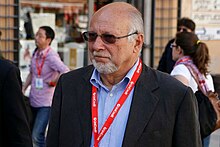
Vittorio Zucconi was one of Italy’s most renowned journalists, whose career spanned decades and continents, leaving an indelible mark on the world of journalism. Born on August 16, 1944, in Bastiglia, a small town in the province of Modena, Italy, Zucconi’s life was shaped by a rich heritage of journalism. His father, Guglielmo Zucconi, was a prominent journalist and director of influential Italian publications, which undoubtedly influenced Vittorio’s own path in life. Over the course of his illustrious career, Zucconi became known for his insightful reporting, engaging writing, and his ability to convey the nuances of international affairs to his readers.
Early Life and Education
Zucconi’s early years were spent in Milan, where his family relocated when he was still young. Milan, a bustling hub of culture and media, provided the perfect backdrop for Zucconi’s formative years. He attended the prestigious Parini High School, where he began honing his journalistic skills by writing and directing the school newspaper, “La Zanzara.” This early exposure to journalism, combined with the influence of his father, set the stage for Zucconi’s future career.
After completing high school, Zucconi enrolled at the University of Milan, where he pursued a degree in Letters and Philosophy. His academic background, coupled with his burgeoning interest in journalism, provided him with a solid foundation for his future work. During these years, he developed a keen understanding of the cultural and political landscape of Italy, knowledge that would later inform his reporting and commentary.
The Beginnings of a Distinguished Career
Vittorio Zucconi began his professional career in the early 1960s, working as a crime reporter for “La Notte,” a Milanese daily newspaper. His early work in journalism was marked by a commitment to uncovering the truth and providing his readers with clear, concise, and accurate reporting. His talents soon caught the attention of larger publications, and he was offered a position at “La Stampa,” one of Italy’s leading newspapers.
At “La Stampa,” Zucconi’s career truly began to flourish. He was appointed as a correspondent, first in Brussels and then in the United States. These assignments allowed him to cover significant international events and provided him with a broader perspective on global affairs. His time in the United States, in particular, would prove to be a pivotal period in his career, as it deepened his understanding of American politics and society, themes that he would return to repeatedly in his later work.
Reporting During the Cold War
One of the most challenging and significant periods of Zucconi’s career was during the Cold War. As a correspondent for the “Corriere della Sera” in Moscow, Zucconi found himself at the heart of one of the most tense and complex geopolitical environments of the 20th century. Reporting from the Soviet Union during this period required not only journalistic skill but also a deep understanding of the intricacies of international relations.
Zucconi’s work in Moscow was characterized by his ability to convey the realities of life behind the Iron Curtain to his readers in the West. His reports were marked by a combination of rigorous analysis and vivid storytelling, which brought the complexities of the Cold War to life for his audience. This period also solidified Zucconi’s reputation as one of Italy’s foremost international correspondents.
The Lockheed Scandal and Zucconi’s Investigative Journalism
In 1976, Zucconi was at the center of one of the most significant journalistic scoops of the decade—the Lockheed scandal. This international bribery scandal involved the sale of Lockheed aircraft to several countries, including Italy, where it was revealed that bribes had been paid to top government officials. Zucconi’s investigative reporting on this scandal not only demonstrated his skills as a journalist but also underscored his commitment to uncovering corruption and holding those in power accountable.
His reporting on the Lockheed scandal earned him widespread recognition and established him as a leading figure in Italian journalism. It also highlighted his ability to navigate complex and sensitive issues with both integrity and tenacity, qualities that would define his career.
Zucconi’s Literary Contributions
In addition to his work as a journalist, Vittorio Zucconi was also a prolific author. Over the course of his career, he wrote numerous books that explored a wide range of topics, from international politics to personal reflections on Italian and American culture. His books often drew on his extensive experience as a correspondent, offering readers a deeper understanding of the issues he covered in his journalism.
Some of Zucconi’s most notable works include “Si fa presto a dire America” (1988), which explored the complexities of American society, and “Gli spiriti non dimenticano” (2003), a poignant reflection on the life and legacy of the Native American leader Crazy Horse. These works, like his journalism, were marked by Zucconi’s ability to combine deep analysis with engaging storytelling.
In “Si fa presto a dire America,” Zucconi provided Italian readers with an insider’s view of the United States, demystifying the country while also highlighting its contradictions and complexities. This book, along with others like “Si fa presto a dire Russia” and “Viaggio in America,” cemented Zucconi’s reputation as an astute observer of global affairs.
His literary work also included more personal reflections, such as “La scommessa. Cento ragioni per amare l’Italia,” which he co-authored with his father, Guglielmo Zucconi. This book was a heartfelt exploration of Italy’s cultural and historical heritage, reflecting Zucconi’s deep love for his homeland.
Zucconi’s Role in American Journalism and Media
In 1985, Vittorio Zucconi made a significant decision to permanently relocate to Washington, D.C., where he continued his work as a correspondent for “la Repubblica,” one of Italy’s most influential newspapers. This move marked a new chapter in his career, allowing him to become even more deeply immersed in American society and politics.
Zucconi’s reporting from the United States during this period was characterized by his keen insights into American life and his ability to convey the nuances of American politics to his Italian readers. He covered several U.S. presidential elections, providing in-depth analysis and commentary that was both informative and accessible.
In addition to his work as a correspondent, Zucconi also contributed to American journalism in other ways. He served as a commentator and analyst on various media platforms, sharing his expertise on international affairs with a broader audience. His work was widely respected for its depth and clarity, making him a sought-after voice in discussions about global issues.
Teaching and Later Career
Later in his career, Zucconi expanded his influence by taking on a role as an educator. In 2007, he began teaching contemporary Italian history at Middlebury College in Vermont, where he also offered summer journalism courses for postgraduate students. This move into academia allowed Zucconi to share his wealth of knowledge and experience with a new generation of journalists and scholars.
Zucconi’s teaching was marked by the same passion and commitment that defined his journalism. He was known for his ability to engage students with his stories and insights, helping them to understand the complexities of both Italian history and the broader world. His work in academia was a natural extension of his career in journalism, allowing him to continue to influence and shape the field even as he entered the later stages of his life.
Awards and Recognition
Throughout his career, Vittorio Zucconi received numerous accolades and honors for his contributions to journalism and literature. One of the most significant of these was his appointment as a Grande Ufficiale of the Order of Merit of the Italian Republic in 2009, a recognition of his outstanding contributions to Italian culture and journalism.
This honor, bestowed by then-President Giorgio Napolitano, was a testament to Zucconi’s influence and legacy. It recognized not only his achievements as a journalist but also his role in shaping the way Italians understood both their own country and the world beyond.
In addition to this prestigious award, Zucconi was also celebrated for his work as the director of “Repubblica.it” and his role at Radio Capital, where he hosted the popular show “TG Zero.” These positions allowed him to continue influencing public discourse in Italy, even as he spent much of his time in the United States.
Personal Life and Legacy
Vittorio Zucconi’s personal life was as rich and full as his professional career. He married Alisa Tibaldi in 1969, with whom he had two children, Guido and Chiara. Zucconi was known for his deep love for his family, and his personal experiences often informed his writing and reporting.
Zucconi passed away on May 25, 2019, in Washington, D.C., after a long illness. He was 74 years old. His death marked the end of an era in Italian journalism, but his legacy continues to live on through his writings, his students, and the countless readers and listeners who were influenced by his work.
Conclusion: Zucconi’s Enduring Influence
Vittorio Zucconi’s life and career were defined by a relentless pursuit of truth and a deep commitment to the principles of journalism. His work as a correspondent, author, and educator left a lasting impact on both Italian and international journalism, and his insights into global affairs continue to resonate today.
Zucconi’s ability to convey the complexities of the world in a way that was both engaging and accessible made him one of the most respected journalists of his generation. His legacy is one of integrity, intellectual curiosity, and a deep love for both Italy and the world at large.
Today, Vittorio Zucconi is remembered not only for his contributions to journalism but also for the way he inspired others to see the world through a more informed and thoughtful lens. His life serves as a reminder of the power of journalism to shape our understanding of the world and to bridge the gaps between cultures and nations.


