
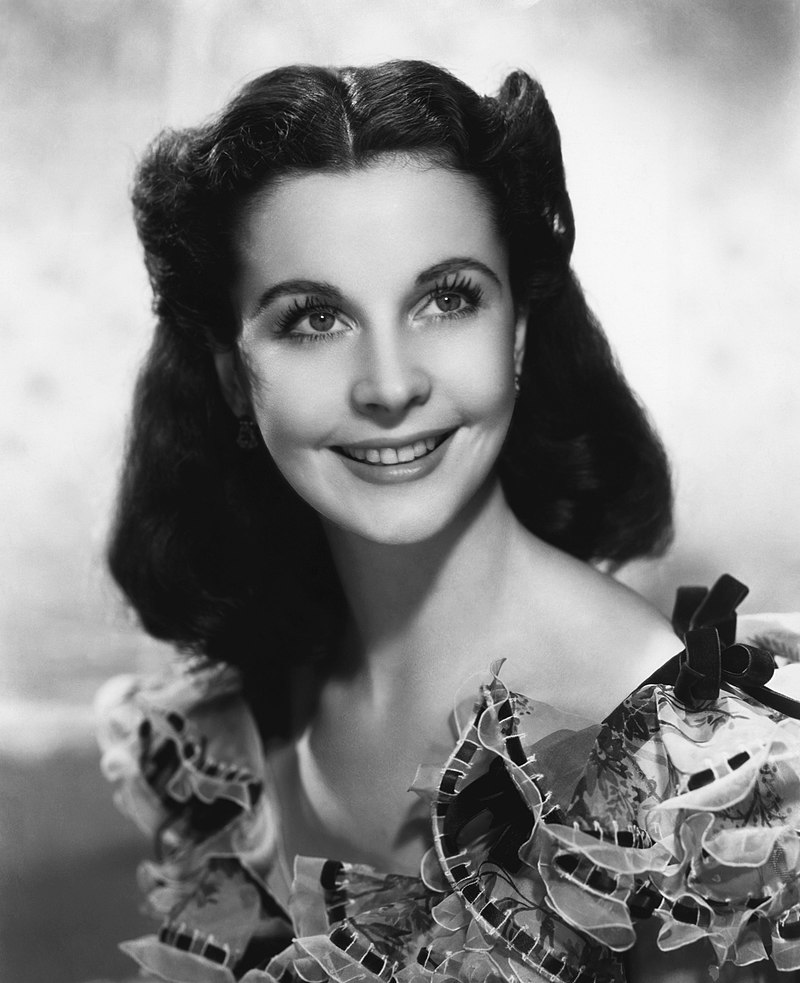
Vivien Leigh, a name that echoes through the annals of cinema history, is best remembered for her iconic portrayal of Scarlett O’Hara in “Gone with the Wind” and Blanche DuBois in “A Streetcar Named Desire.” Her life was marked by both immense success and personal turmoil, reflecting the complex nature of the characters she brought to life on screen. Born on November 5, 1913, in Darjeeling, India, as Vivian Mary Hartley, Leigh’s journey to fame and her subsequent legacy are a testament to her extraordinary talent, beauty, and resilience. This article explores the life, career, and enduring influence of Vivien Leigh, providing insights into her age, rise to fame, and the significant highlights that defined her career.
Early Life and Background
Vivien Leigh’s early years were spent in the exotic setting of British colonial India, where her father was a high-ranking official. The vibrant colors, diverse cultures, and the grandeur of the colonial lifestyle played a role in shaping the young Vivien’s imagination. At the age of six, her family moved back to England, where she was enrolled in a convent school run by Catholic nuns. This strict and disciplined environment was a stark contrast to the freedom she had known in India, but it also provided her with a strong educational foundation.
From a young age, Vivien displayed a keen interest in the performing arts. Her natural beauty and poise were evident, and she was drawn to the stage, dreaming of becoming an actress. At eighteen, she took a significant step towards realizing this dream by enrolling in the Royal Academy of Dramatic Art (RADA) in London, one of the most prestigious acting schools in the world. Her time at RADA was pivotal, honing her skills and preparing her for the challenges of a career in acting.
The Road to Stardom
Vivien Leigh’s entry into the world of acting began modestly with small roles in British films and theatre productions. In 1932, she made her film debut in “Things Are Looking Up,” but it wasn’t until 1935, with her performance in “The Mask of Virtue,” that she began to attract attention. Her captivating stage presence and striking looks made her a star on the London stage, and soon, Hollywood came calling.
In 1938, Leigh auditioned for the role that would change her life forever—Scarlett O’Hara in “Gone with the Wind.” The film, based on Margaret Mitchell’s bestselling novel, was one of the most highly anticipated projects in Hollywood history. The casting process for Scarlett was legendary, with numerous actresses vying for the role. However, it was Leigh’s fiery screen test that convinced producer David O. Selznick that she was the perfect choice to play the headstrong Southern belle.
The Impact of “Gone with the Wind”
“Gone with the Wind,” released in 1939, was an immediate sensation, breaking box office records and winning ten Academy Awards, including Best Picture. Leigh’s portrayal of Scarlett O’Hara was nothing short of extraordinary. She embodied the character’s charm, determination, and vulnerability, creating a performance that remains iconic to this day. For her work, Leigh was awarded the Academy Award for Best Actress, solidifying her place as one of Hollywood’s leading stars.
However, the success of “Gone with the Wind” was a double-edged sword for Leigh. While it brought her international fame, it also typecast her as a specific kind of character—strong-willed, passionate, and often troubled women. This typecasting, combined with the immense pressure of her newfound stardom, took a toll on her mental health, a struggle that would continue throughout her life.
Marriage to Laurence Olivier
One of the most significant relationships in Vivien Leigh’s life was her marriage to the renowned actor Laurence Olivier. The two met in 1936 while working together on the film “Fire Over England,” and their chemistry was undeniable. Despite both being married to others at the time, they embarked on a passionate love affair that became one of the most famous romances in Hollywood history.
In 1940, after divorcing their respective spouses, Leigh and Olivier married, forming a powerful partnership both on and off the screen. They starred together in several films and stage productions, including “That Hamilton Woman” (1941) and Shakespeare’s “Hamlet” and “Macbeth.” Their marriage, however, was far from perfect. Leigh’s mental health issues, including bipolar disorder and bouts of depression, strained their relationship. Despite their love and professional collaboration, the couple divorced in 1960.
“A Streetcar Named Desire” and Continued Success
Vivien Leigh’s second most iconic role came in 1951 when she portrayed Blanche DuBois in the film adaptation of Tennessee Williams’ play “A Streetcar Named Desire.” Leigh had already played Blanche on stage in London’s West End, and her performance was lauded by critics and audiences alike. The film, directed by Elia Kazan, co-starred Marlon Brando as Stanley Kowalski, and their intense on-screen chemistry created a cinematic masterpiece.
Leigh’s portrayal of Blanche, a woman descending into madness, was deeply personal. The role mirrored her own struggles with mental illness, and she drew upon her experiences to bring a raw and poignant depth to the character. Her performance earned her a second Academy Award for Best Actress, making her one of the few actresses to have won the award twice.
The Later Years and Decline
Despite her professional success, Vivien Leigh’s personal life was fraught with difficulties. Her mental health continued to deteriorate, exacerbated by her turbulent relationship with Olivier and the pressures of maintaining her career. She was often hospitalized for her condition, which, at the time, was not well understood or effectively treated.
In addition to her mental health struggles, Leigh’s physical health began to decline. She developed chronic tuberculosis, a condition that would eventually lead to her untimely death. Despite these challenges, Leigh continued to work, appearing in films such as “The Deep Blue Sea” (1955) and “The Roman Spring of Mrs. Stone” (1961). However, the rigors of filming and the demands of her career took a toll, and by the early 1960s, she had largely retired from acting.
Leigh spent her final years in relative seclusion, cared for by her close friends and her partner, actor John Merivale. On July 7, 1967, Vivien Leigh passed away at the age of 53, due to complications from tuberculosis. Her death marked the end of an era in Hollywood, but her legacy as one of the greatest actresses of all time was firmly established.
Legacy and Cultural Impact
Vivien Leigh’s impact on the world of cinema and theatre is profound. Her performances in “Gone with the Wind” and “A Streetcar Named Desire” are considered some of the greatest in film history, showcasing her ability to bring complex and often troubled characters to life with nuance and intensity. Leigh’s work has influenced generations of actresses, and her portrayal of Scarlett O’Hara remains a benchmark for strong female characters in cinema.
Beyond her acting, Leigh’s life story—marked by immense talent, beauty, and personal struggle—has fascinated fans and scholars alike. Her battles with mental illness, in particular, have brought attention to the challenges faced by many in the entertainment industry, highlighting the importance of mental health awareness and support.
In 2006, nearly 40 years after her death, a British poll named Vivien Leigh the most beautiful British woman of all time, a testament to her enduring appeal and the timelessness of her beauty. Her legacy continues to be celebrated through retrospectives, biographies, and academic studies, ensuring that her contributions to the arts will never be forgotten.
Historical Context and Influence
Vivien Leigh’s career spanned a period of great change in the film industry. She emerged as a star during Hollywood’s Golden Age, a time when the studio system reigned supreme, and actors were often under long-term contracts with major studios. Leigh, however, was an anomaly in this system. Despite her success, she remained deeply committed to the theatre, often preferring the stage to the screen.
Her work in theatre, particularly her performances in Shakespearean roles, showcased her versatility as an actress and her dedication to her craft. Leigh’s portrayal of characters like Lady Macbeth and Cleopatra are still remembered for their power and complexity. Her ability to seamlessly transition between the stage and screen was rare, making her one of the most respected actresses of her time.
Leigh’s influence also extended to her personal style and public image. Her androgynous beauty, combined with her elegance and grace, set her apart from other actresses of her era. She was a fashion icon, known for her impeccable sense of style both on and off the screen. Her portrayal of strong, independent women resonated with audiences, particularly during a time when traditional gender roles were being challenged.
Conclusion
Vivien Leigh’s life was a complex tapestry of triumphs and tragedies, both on screen and off. Her extraordinary talent and beauty made her a star, but it was her ability to infuse her performances with deep emotion and authenticity that solidified her place in the pantheon of great actors. Despite the challenges she faced, including her struggles with mental illness, Leigh’s legacy is one of enduring brilliance.
Today, Vivien Leigh is remembered not only for her iconic roles in “Gone with the Wind” and “A Streetcar Named Desire” but also for her contributions to the art of acting. Her performances continue to inspire and captivate audiences, ensuring that her place in the history of cinema remains secure. As we look back on her life and career, it is clear that Vivien Leigh was more than just a star—she was a true artist, whose work continues to resonate with generations of fans and performers alike.


