
Introduction
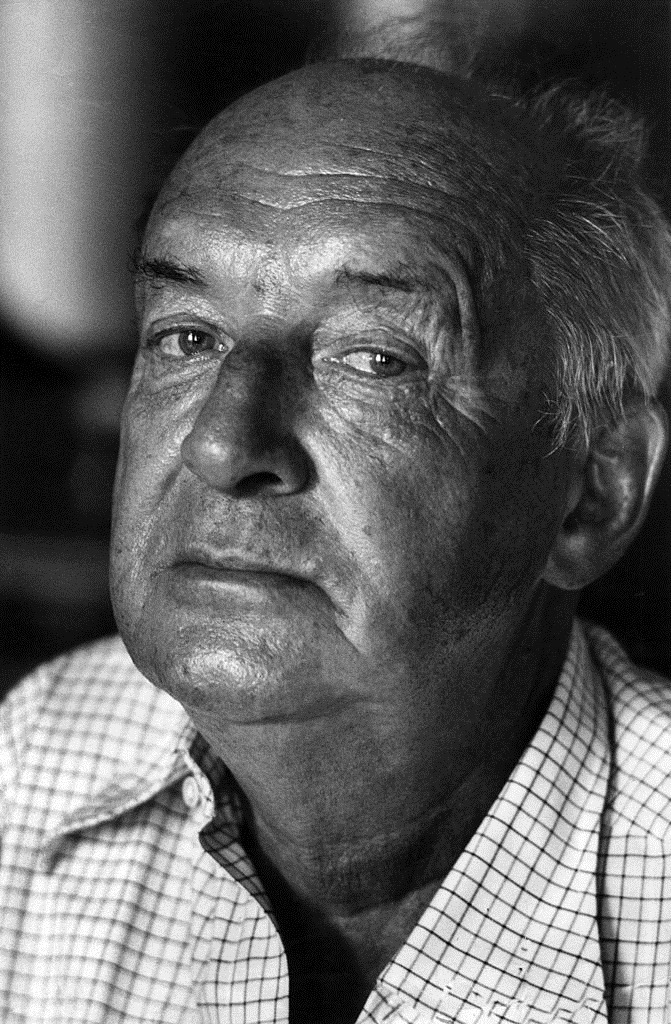
Vladimir Nabokov, one of the most celebrated literary figures of the 20th century, was born on April 22, 1899, in St. Petersburg, Russia. His life and work are characterized by a remarkable fusion of Russian and European literary traditions, combined with an American sensibility. Nabokov’s contributions to literature, particularly his novel Lolita, have left an indelible mark on the literary world. This article provides a comprehensive exploration of Nabokov’s life, his rise to fame, and the highlights of his prolific career, offering detailed insights and historical context to understand the nuances of his legacy.
Early Life and Background
Vladimir Nabokov was born into a distinguished Russian family, with deep roots in the country’s aristocracy. His father, Vladimir Dmitrievich Nabokov, was a prominent liberal politician, journalist, and lawyer, while his mother, Elena Ivanovna Rukavishnikova, came from a wealthy and cultured family. Nabokov’s early years were spent in an environment steeped in intellectual and cultural richness. He was raised in a trilingual household, fluent in Russian, English, and French, which would later influence his literary style and themes.
Nabokov’s childhood in St. Petersburg was marked by privilege and an exposure to the finest aspects of Russian culture. However, the Russian Revolution of 1917 drastically altered the course of his life. The Nabokov family, staunch opponents of the Bolsheviks, was forced to flee Russia in 1919, eventually settling in Western Europe. This displacement profoundly impacted Nabokov, instilling in him a sense of nostalgia and loss that would permeate much of his writing.
Education and Early Literary Career
After leaving Russia, Nabokov continued his education in England, where he attended Trinity College, Cambridge, studying French and Russian literature. His time at Cambridge was formative, as it solidified his passion for literature and introduced him to the broader European literary tradition. Graduating in 1922, Nabokov moved to Berlin, where he began his literary career in earnest.
Nabokov’s early works were written in Russian, catering primarily to the émigré community in Europe. His first novel, Masenka (1926), was well-received and set the tone for his subsequent works, which often explored themes of exile, memory, and identity. Over the next decade, Nabokov published several novels, including King, Queen, Knave (1928), The Defense (1930), and Invitation to a Beheading (1936). These works, though not widely known outside the Russian émigré community at the time, showcased Nabokov’s developing literary voice, characterized by intricate wordplay, a deep engagement with literary form, and a fascination with psychological complexity.
Passion for Entomology
In addition to his literary pursuits, Nabokov had a lifelong passion for entomology, particularly the study of butterflies. This interest began in his childhood and became a significant aspect of his life. His love for butterflies was not merely a hobby; Nabokov was a serious lepidopterist, and his scientific contributions in this field were respected by his peers.
In 1940, after moving to the United States, Nabokov became a researcher at the Harvard Museum of Comparative Zoology, where he focused on butterfly taxonomy. His scientific work, particularly his research on the Polyommatus blues, earned him recognition in the scientific community. Nabokov’s dual career as a writer and an entomologist is unique, reflecting his multifaceted intellect and his ability to find beauty and meaning in both art and nature.
American Years and Literary Success
Nabokov’s move to the United States marked a significant turning point in his career. After becoming an American citizen in 1945, he began writing primarily in English, which allowed him to reach a broader audience. During this period, Nabokov taught literature at several institutions, including Wellesley College and Cornell University, where he was known for his captivating lectures on Russian and European literature.
It was during his time in the United States that Nabokov wrote his most famous novel, Lolita (1955). The novel, which tells the story of an older man’s obsession with a twelve-year-old girl, was both controversial and groundbreaking. Lolita catapulted Nabokov to international fame, becoming a bestseller and a cultural phenomenon. The novel’s exploration of taboo subjects, combined with its intricate narrative style and lyrical prose, earned it a place in the canon of great literature, despite—or perhaps because of—the moral debates it sparked.
Following the success of Lolita, Nabokov published several other significant works, including Pnin (1957) and Pale Fire (1962). Pnin is a novel about a Russian émigré professor in the United States, reflecting Nabokov’s own experiences and observations of American academic life. Pale Fire, on the other hand, is a complex and innovative work that blends poetry and prose, showcasing Nabokov’s mastery of literary form and his penchant for playful, yet profound, storytelling.
Literary Themes and Style
Nabokov’s writing is characterized by its intricate structure, linguistic creativity, and deep engagement with themes of memory, exile, and the interplay between reality and illusion. His novels often feature unreliable narrators, complex wordplay, and a rich intertextuality that draws on his extensive knowledge of European and Russian literature.
One of the recurring themes in Nabokov’s work is the concept of the “otherworld”—a realm of heightened reality that exists beyond the mundane world. This idea is explored in various ways throughout his oeuvre, from the surreal elements in Invitation to a Beheading to the metafictional playfulness of Pale Fire. Nabokov’s interest in the nature of reality and perception is also evident in his use of doubles and mirror images, which serve as metaphors for the fragmented and multifaceted nature of human identity.
Another key aspect of Nabokov’s writing is his use of synesthesia, a condition he personally experienced. Synesthesia, the association of specific colors with certain letters or sounds, is a sensory phenomenon that Nabokov frequently referenced in his work. This blending of sensory experiences contributed to the vivid and sometimes disorienting quality of his prose, enhancing the immersive and otherworldly atmosphere of his narratives.
Nabokov as a Literary Critic
In addition to his work as a novelist, Nabokov was an accomplished literary critic. His critical essays and lectures on Russian literature, particularly his analysis of the works of Nikolai Gogol, are considered essential reading for students of literature. Nabokov’s critical approach was highly individualistic, focusing on the aesthetic and structural aspects of literature rather than on social or political contexts.
One of Nabokov’s most significant contributions to literary criticism was his translation and commentary on Alexander Pushkin’s Eugene Onegin. Nabokov’s translation, accompanied by extensive notes, was a monumental scholarly achievement, reflecting his deep respect for Pushkin and his commitment to preserving the nuances of the original text. However, his approach to translation was not without controversy, as some critics felt that his literal adherence to the original Russian sacrificed the poetic qualities of the work.
Later Life and Legacy
In 1961, Nabokov and his wife, Vera, moved to Montreux, Switzerland, where he spent the remainder of his life. Despite his relocation to Europe, Nabokov continued to write in English and remained a prominent figure in the international literary scene. His later works, including Ada or Ardor: A Family Chronicle (1969) and Transparent Things (1972), further explored themes of time, memory, and the fluidity of reality.
Nabokov’s influence on literature is profound and far-reaching. His innovative use of language, narrative structure, and literary allusion has inspired countless writers and continues to be studied and admired. Nabokov’s ability to blend the intellectual rigor of Russian literature with the stylistic experimentation of modernist European and American traditions makes his work unique and enduring.
Vladimir Nabokov passed away on July 2, 1977, in Montreux, Switzerland, at the age of 78. His death marked the end of a literary career that spanned more than five decades and produced some of the most acclaimed and controversial works of the 20th century.
Conclusion
Vladimir Nabokov’s life and work represent a fusion of cultures, languages, and artistic traditions. From his aristocratic Russian upbringing to his years in Europe and the United States, Nabokov navigated the complexities of exile, identity, and creativity with a brilliance that has left an indelible mark on world literature. His novels, with their intricate structures and explorations of the human psyche, continue to challenge and inspire readers and writers alike.
Nabokov’s legacy as a writer, critic, and thinker is one of innovation and profound artistic achievement. His work invites readers to look beyond the surface of reality, to question their perceptions, and to find beauty in the complexity of life and language. As we continue to explore his rich body of work, Nabokov remains a towering figure in the landscape of modern literature, a writer whose influence will undoubtedly endure for generations to come.


