
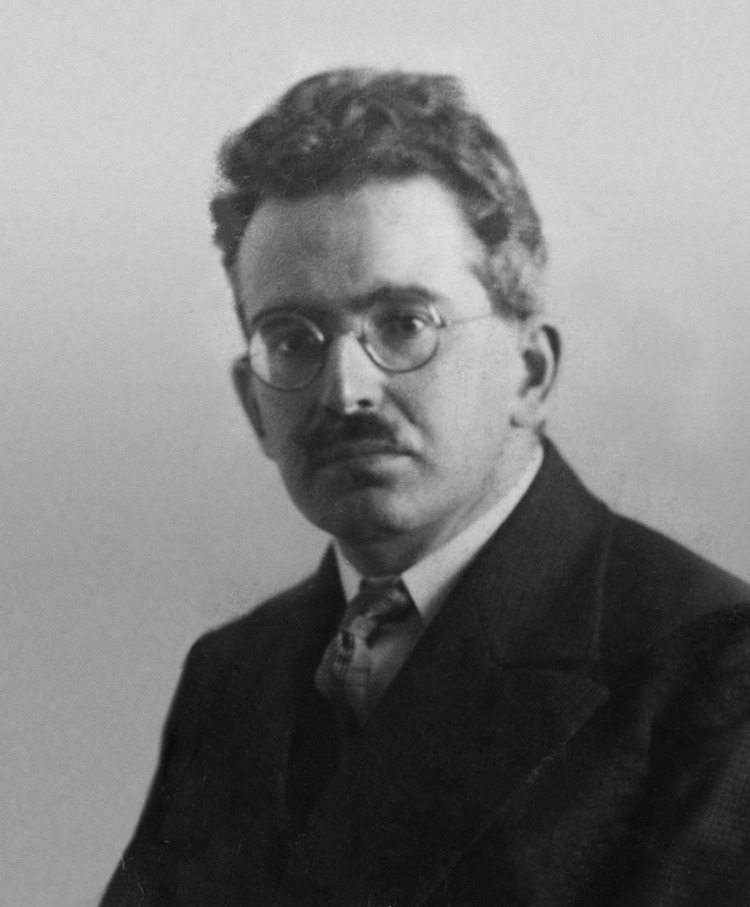
Walter Benjamin is a towering figure in the realms of philosophy, literature, and critical theory. Born on July 15, 1892, in Berlin, Germany, Benjamin’s life was marked by profound intellectual achievements, political turmoil, and personal tragedies. His contributions to cultural criticism, historical materialism, and aesthetic theory have left an indelible mark on 20th-century thought. This comprehensive exploration delves into his age, rise to fame, and significant life highlights, offering detailed insights and historical context.
Early Life and Education
Walter Benjamin was born into a wealthy Jewish family in the Charlottenburg district of Berlin. His father, Emil Benjamin, was an art dealer and antiques trader, while his mother, Paula Schönflies, came from a prosperous family of merchants. Growing up in this affluent environment, Benjamin had access to a rich cultural and intellectual milieu from an early age.
His early education was heavily influenced by the progressive educational methods of Gustav Wyneken, a theorist of the German Youth Movement (Jugendbewegung). From 1905 to 1907, Benjamin attended Wyneken’s school, Landerziehungsheim, in the Thuringia region. This experience shaped his intellectual development and introduced him to ideas that would influence his later work.
Academic Pursuits and Early Career
Benjamin returned to Berlin in 1907 and completed his secondary education in 1912. He began writing for the magazine “Der Anfang,” which was influenced by Wyneken’s ideas. Benjamin’s academic journey took him to the University of Berlin and later to the University of Freiburg, where he studied under prominent philosophers such as Heinrich Rickert. During his time in Freiburg, he formed a close bond with the poet Fritz Heinle, who tragically committed suicide in 1914.
With the outbreak of World War I, Benjamin avoided conscription and distanced himself from Wyneken, who supported the war. He moved to Munich in 1915, where he studied with the phenomenologist Moritz Geiger and developed a lifelong friendship with the scholar Gershom Scholem.
In 1916, Benjamin met and married Dora Kellner. The couple had a son, Stefan, in 1918. By then, they had relocated to Bern, Switzerland, where Benjamin earned his doctorate in philosophy with a dissertation on the concept of art criticism in German Romanticism.
Intellectual Contributions and Theoretical Work
Benjamin’s early intellectual work included critical essays, translations, and reviews. He became known for his unique blend of literary criticism, historical analysis, and philosophical reflection. One of his early significant works was his translation of Charles Baudelaire’s poetry, which highlighted his interest in the relationship between modernity and urban life.
In the 1920s, Benjamin’s intellectual pursuits led him to explore Marxism, influenced by his relationship with the Latvian revolutionary Asja Lacis. This period also saw his deepening friendship with Theodor W. Adorno, a prominent member of the Frankfurt School of Critical Theory. Despite his growing reputation, Benjamin faced financial difficulties and professional setbacks, such as the rejection of his habilitation thesis by the University of Frankfurt in 1925.
The Arcades Project and Urban Modernity
One of Benjamin’s most ambitious and unfinished projects was the “Arcades Project” (Passagenwerk), a sprawling, fragmented work that sought to analyze the cultural and social history of 19th-century Paris through its arcades, or covered shopping streets. This work combined elements of literary criticism, sociology, and philosophy, reflecting Benjamin’s interest in the interplay between culture and economy.
Benjamin’s fascination with urban modernity is evident in his essays on Baudelaire and his reflections on the impact of technology on art and culture. His seminal essay “The Work of Art in the Age of Mechanical Reproduction” (1935) remains a cornerstone of media theory, exploring how mass production transforms the nature and perception of art.
Political Turmoil and Exile
The rise of the Nazi regime in Germany forced Benjamin into exile. In 1933, he left Germany for Paris, where he continued his intellectual work despite increasing financial and personal difficulties. He spent time in various European cities, including Ibiza, Sanremo, and Svendborg, often seeking refuge with friends like Bertolt Brecht.
During this period, Benjamin wrote important essays on Franz Kafka and continued to work on his Baudelaire project. However, his financial situation grew increasingly precarious, and the outbreak of World War II further complicated his circumstances.
Final Years and Tragic Death
In 1940, with the fall of France imminent, Benjamin attempted to flee to the United States. He obtained an emergency visa but was trapped at the French-Spanish border in Portbou when Spanish authorities denied him entry. Facing the prospect of being handed over to the Gestapo, Benjamin took his own life on the night of September 26-27, 1940, using an overdose of morphine. His death was a tragic end to a life marked by intellectual brilliance and political adversity.
Legacy and Influence
Walter Benjamin’s legacy is vast and multifaceted. His writings have had a profound impact on a wide range of disciplines, including philosophy, literary criticism, media studies, and cultural theory. His ideas on history, memory, and the aesthetics of modernity continue to resonate with scholars and thinkers around the world.
Benjamin’s concept of the “aura” in art, his reflections on the commodification of culture, and his analyses of urban life have become foundational texts in the study of modernity. His unfinished “Arcades Project” remains a monumental, though enigmatic, testament to his intellectual ambition and innovative approach to cultural criticism.
Conclusion
Walter Benjamin’s life and work represent a unique blend of intellectual rigor, cultural criticism, and political engagement. His contributions to the understanding of modernity, art, and history have left an enduring legacy that continues to inspire and challenge scholars today. Despite the tragic end to his life, Benjamin’s ideas live on, offering profound insights into the complexities of the modern world.


